How to Grow Buckwheat

Buckwheat At a Glance
Difficulty
Easy
Category
Grain
Sun Exposure
Full Sun, Partial Sun
Frost Tolerance
Frost Tender
Cold Hardiness
Survives to 2°C
Plant Family
Polygonaceae
Growing Season
Warm Season
Plant Lifecycle
Annual
How to Start It
★ Recommended for beginners
Buckwheat is killed by frost, so sow it 1 to 2 weeks after your last frost, once the soil is warm. Scatter the seeds about 10 cm apart, press them 1 cm deep and rake the soil over them. They sprout in just 3 to 5 days and cover the ground fast. For grain, sow at least 10 weeks before your first fall frost.
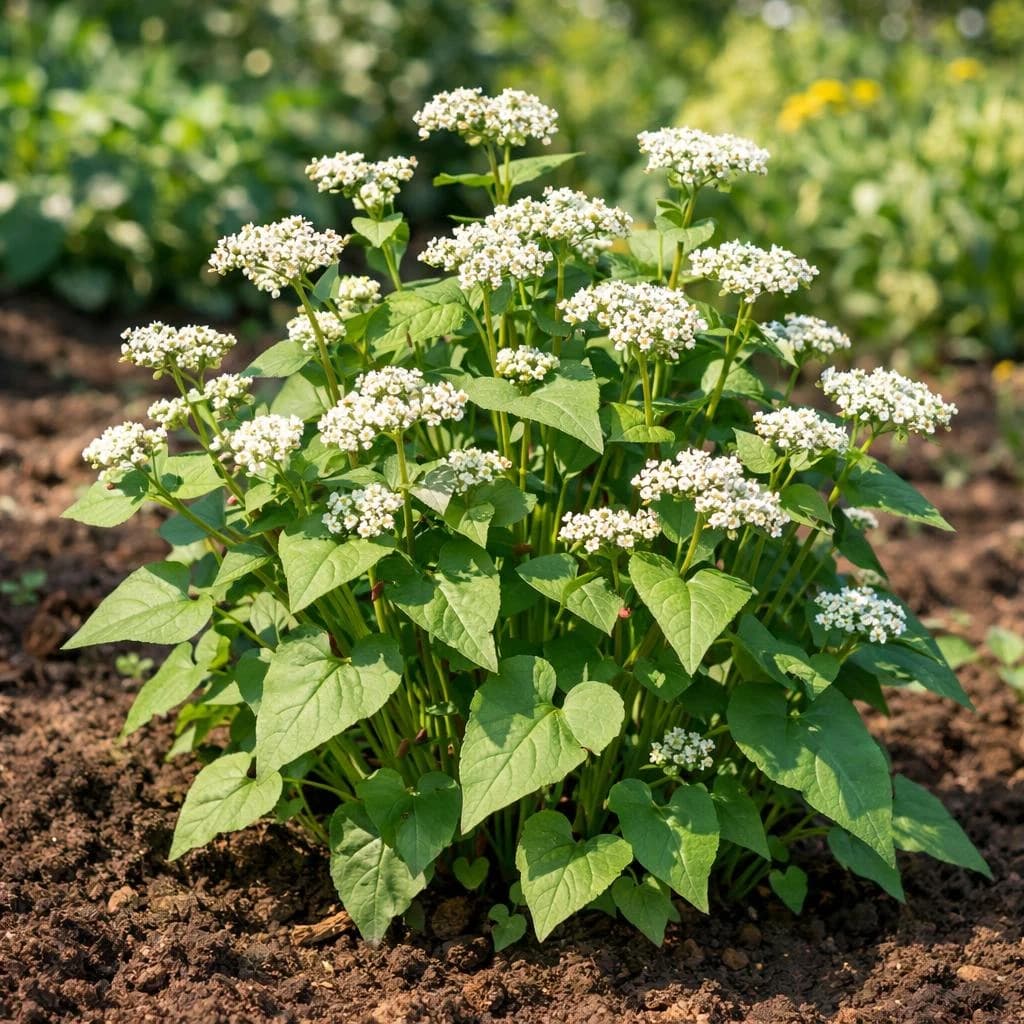
Buckwheat is not a true grain, but it is used like one, and it is one of the fastest plants you can grow, flowering in about 4 to 6 weeks. It smothers weeds and grows in poor soil, and bees flock to its small white flowers. You can grow it for its seeds, or as a cover crop: cut it down when it flowers and leave it on the soil to feed it.
When To Start
First chance to plant
10 Days After Last Frost
Last chance to plant
30 Days Before First Frost
When should you plant Buckwheat?
Your planting dates depend on your local climate. Sign up and add your location to unlock personalized dates.
Your Buckwheat Planting Window
Start planting
May 15, 2026
Last chance
Sep 10, 2026
Your Buckwheat Calendar
Set your location to turn these into exact dates and reminders.
Sow buckwheat now that the soil is warm
1 week after your last frost· every year
Cut buckwheat when most seeds are dark brown
75 days after your last frost· every year· optional
Did you water your buckwheat seedlings today? Keep the top of the soil damp until they are up and growing.
About 1 days after you plant it
Time to thin the buckwheat seedlings: snip the extras at soil level so each one has room to grow.
About 15 days after you plant it
Your buckwheat is shooting up! It grows quickly and shades out weeds, so it needs little care.
About 28 days after you plant it
Your buckwheat is close to harvest. Cut it when most of the seeds have turned dark.
About 52 days after you plant it
Picking time may be here: check your buckwheat.
About 70 days after you plant it
The Journey Ahead
Buckwheat's Lifecycle
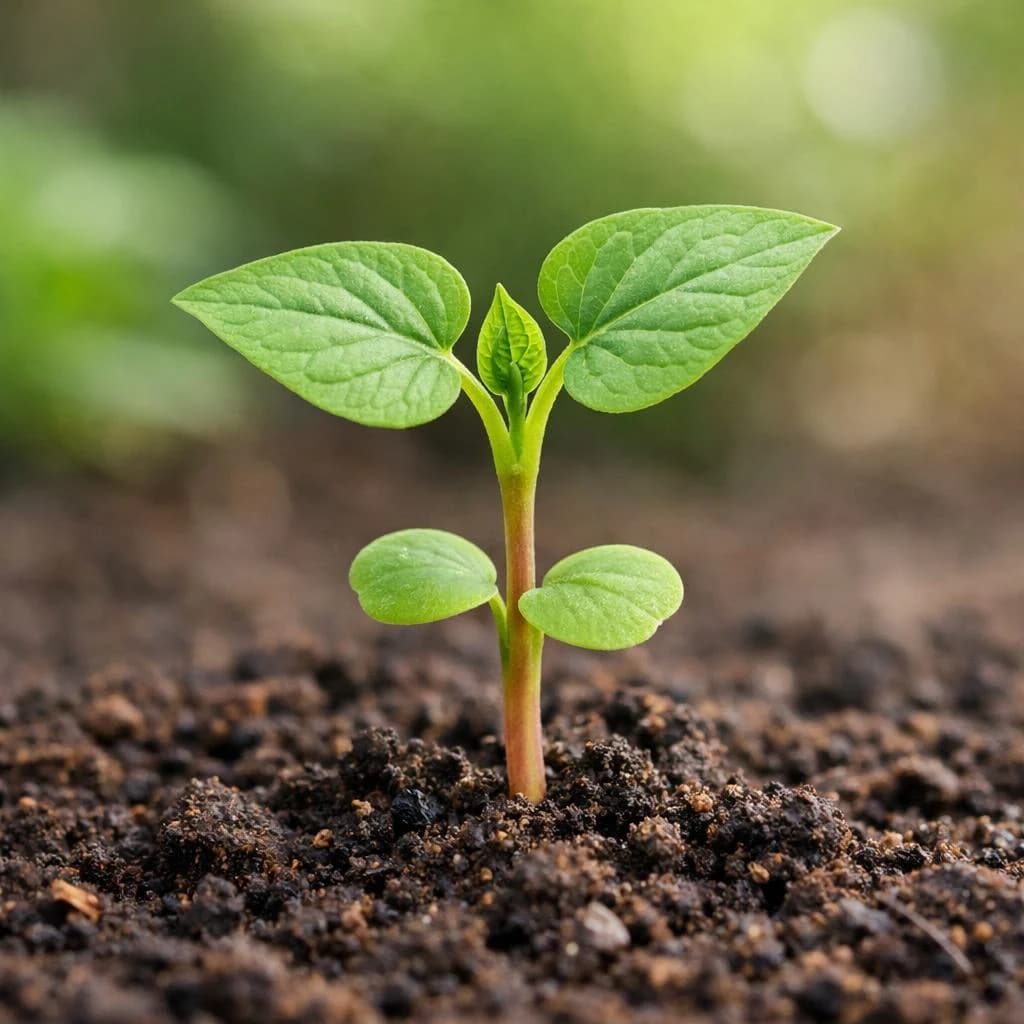
Seedling
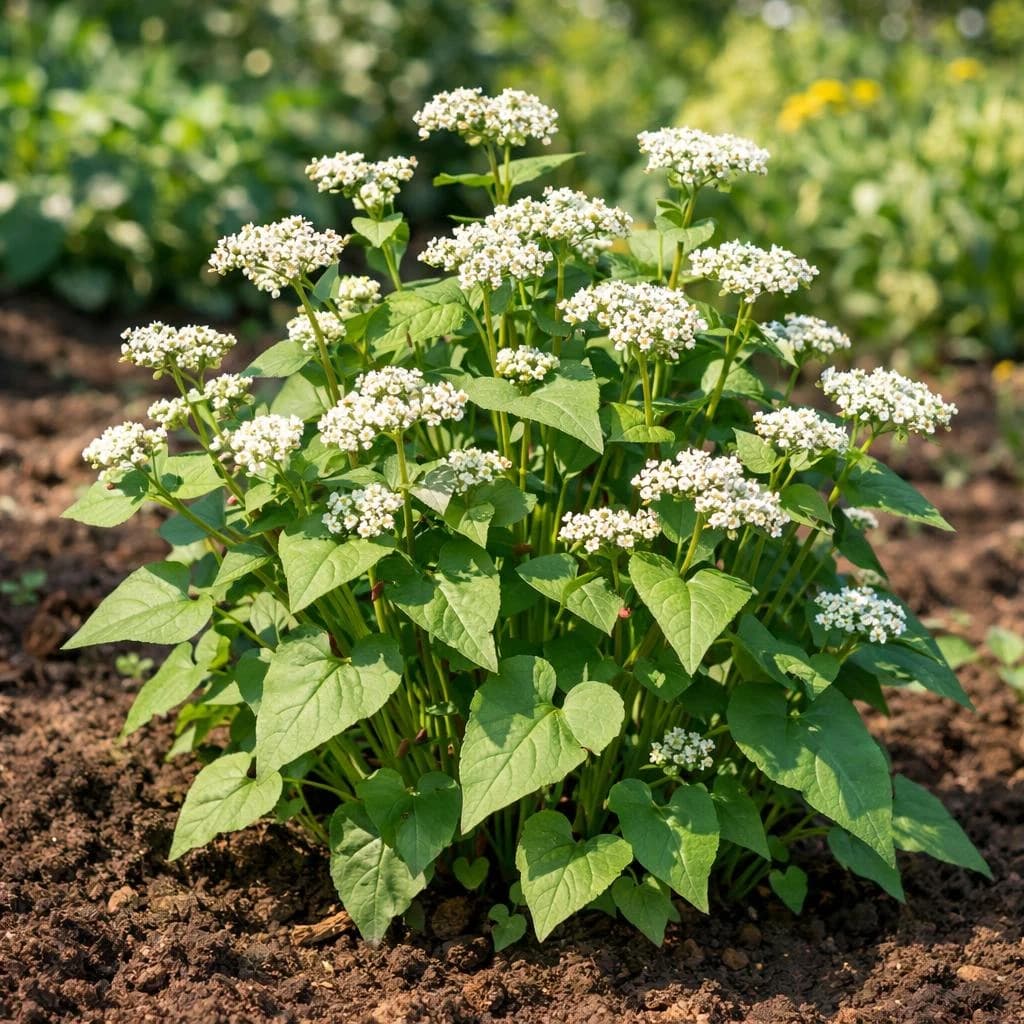
Mature Plant
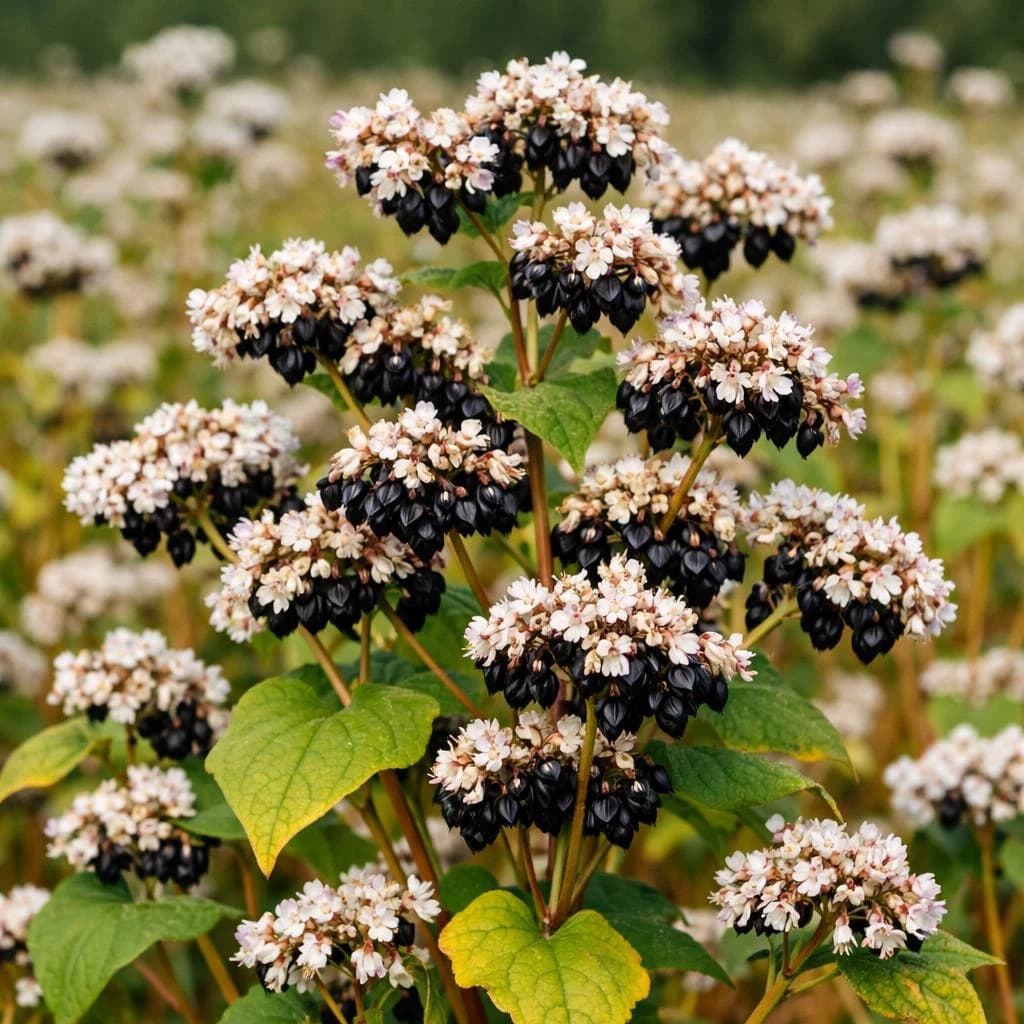
Seed Production
Step 1
Prepare Your Space
1 cm
Seeding Depth
10 cm
Plant Spacing
30 cm
Row Spacing
9
Plants / Sq Ft
Vertical Growing
Yes: Trellis.
Method: Trellis.
Succession Planting
Yes.
Good Companions
Bad Companions
Step 2
Planting & Sprouting
Expect sprouts in 3–5 days
Growing Tips
- 1Grow buckwheat in full sun for the most flowers and seeds.
- 2It is happy in poor or ordinary soil, so skip the compost, as rich soil makes tall, leafy plants that fall over.
- 3Water the seeds until they sprout, then only in long dry spells, since buckwheat handles some drought.
- 4Sow it thickly so the plants shade out weeds, and you will rarely need to weed.
- 5Few pests bother it, and its flowers bring in bees, hoverflies and small wasps that help the rest of your garden.
Seedling Phase
Step 3
Growth & Maturity
~70
Days to Maturity
75 cm
Mature Height
30 cm
Mature Width
Pests to Watch For
Diseases to Watch For
Mature Plant
Step 4
Harvesting
Harvest Window
21 days
When to Pick
Harvest seeds when they turn dark
How to Harvest
- 1Buckwheat is ready about 10 weeks after sowing, when about three quarters of the seeds have turned dark brown.
- 2The seeds ripen a few at a time and drop easily, so do not wait for every last one.
- 3Cut the stems near the ground on a dry morning and lay them on a sheet to dry for about a week.
- 4Beat or rub the dry plants over the sheet to knock the seeds loose, then blow away the bits of leaf in a light breeze.
- 5Store the dry seeds in a sealed jar, then grind them into flour for pancakes and noodles.
- 6If you grow it to feed the soil instead, cut it down in full flower, before any seeds form, and leave it on the bed.
Step 5
Saving Seeds
How to Save Seeds
Buckwheat needs bees or other insects to carry pollen from plant to plant, so it can cross with other buckwheat varieties flowering nearby. Grow a patch of at least a few dozen plants so they pollinate each other well. Save the plumpest seeds from the main harvest, and make sure they are fully dry before storing, since damp seed goes mouldy. Store them labelled somewhere cool, dark and dry, where they keep about 2 to 3 years.
Seed Production
Still have a question?
Ask your coach about your buckwheat.
This page covers what we thought to write down. Your buckwheat will do something it never mentions, and that is the day a coach beats a guide. Ask Coach Lumen one question right now, free, no account.