
Plants Not Growing? Start With the Soil.
5 min read
What You'll Learn
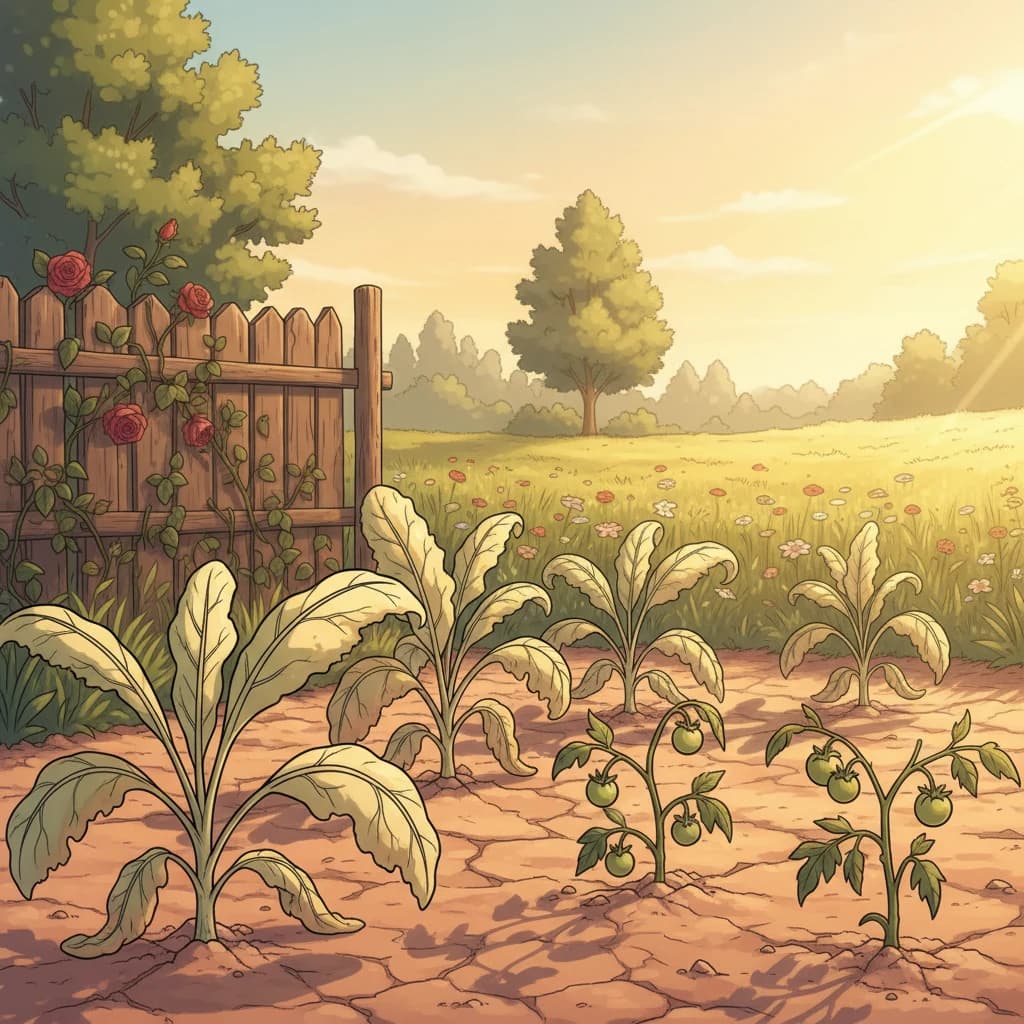
If your plants look weak or won't fruit, the soil is almost always why. Here's how a top layer of compost, no digging, fixes most of it.
Why Your Plants Look Tired
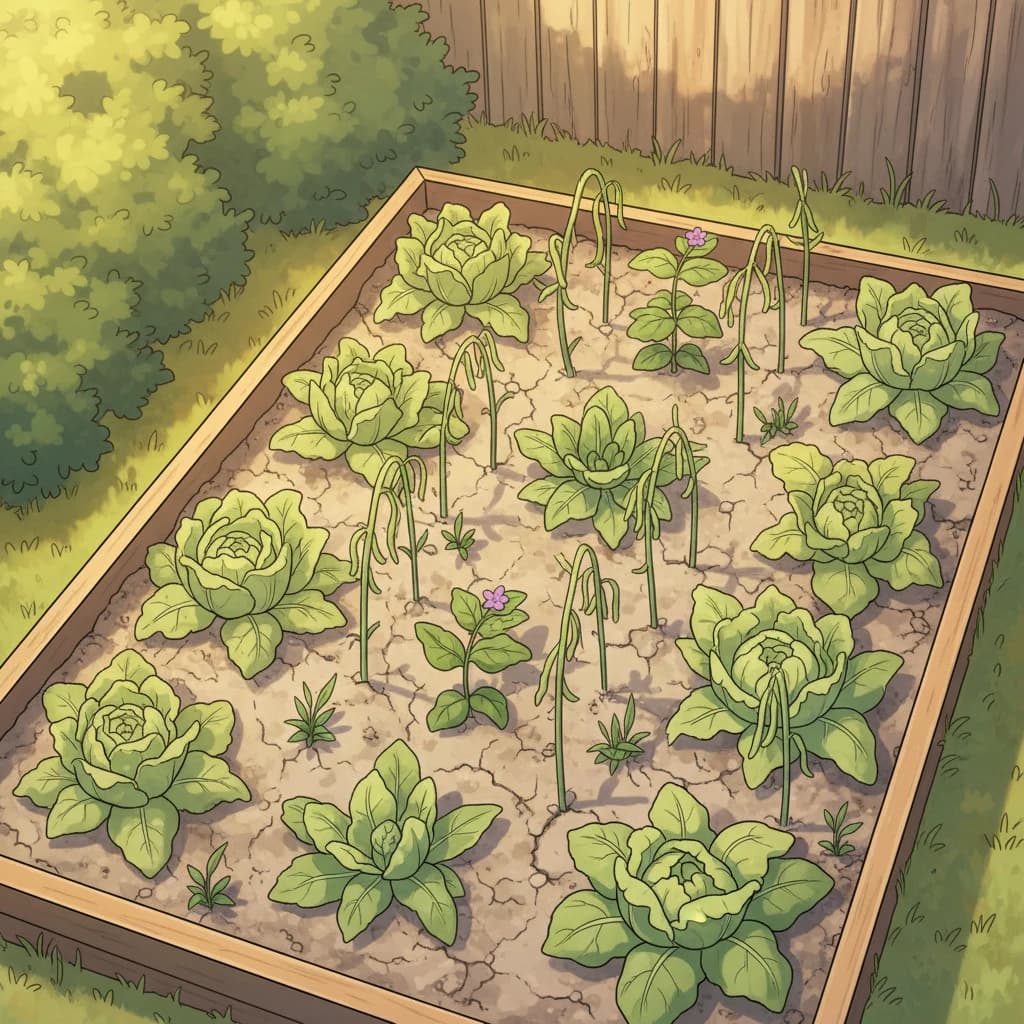
You planted everything right. Watered when you were supposed to. Got the sun figured out. And the plants still look… off. Yellow leaves. Stunted growth. Nothing fruiting. What gives?
Nine times out of ten, the soil is what's going wrong. People obsess over watering schedules and sun direction, but if the dirt under your plants is dead or wrong, none of that other stuff matters. Healthy soil is the whole game.
Here's the good news: fixing soil is way easier than people think. You don't need to dig anything up. You don't need to test pH with a kit. You just need compost, and you put it on top.
This lesson is about why soil matters more than people realize, how to spot bad soil before it kills your plants, and how to fix it without breaking your back. By the end you'll know exactly what to look for, what to do about it, and what's happening underground that makes the fix work.
Soil Is Everything
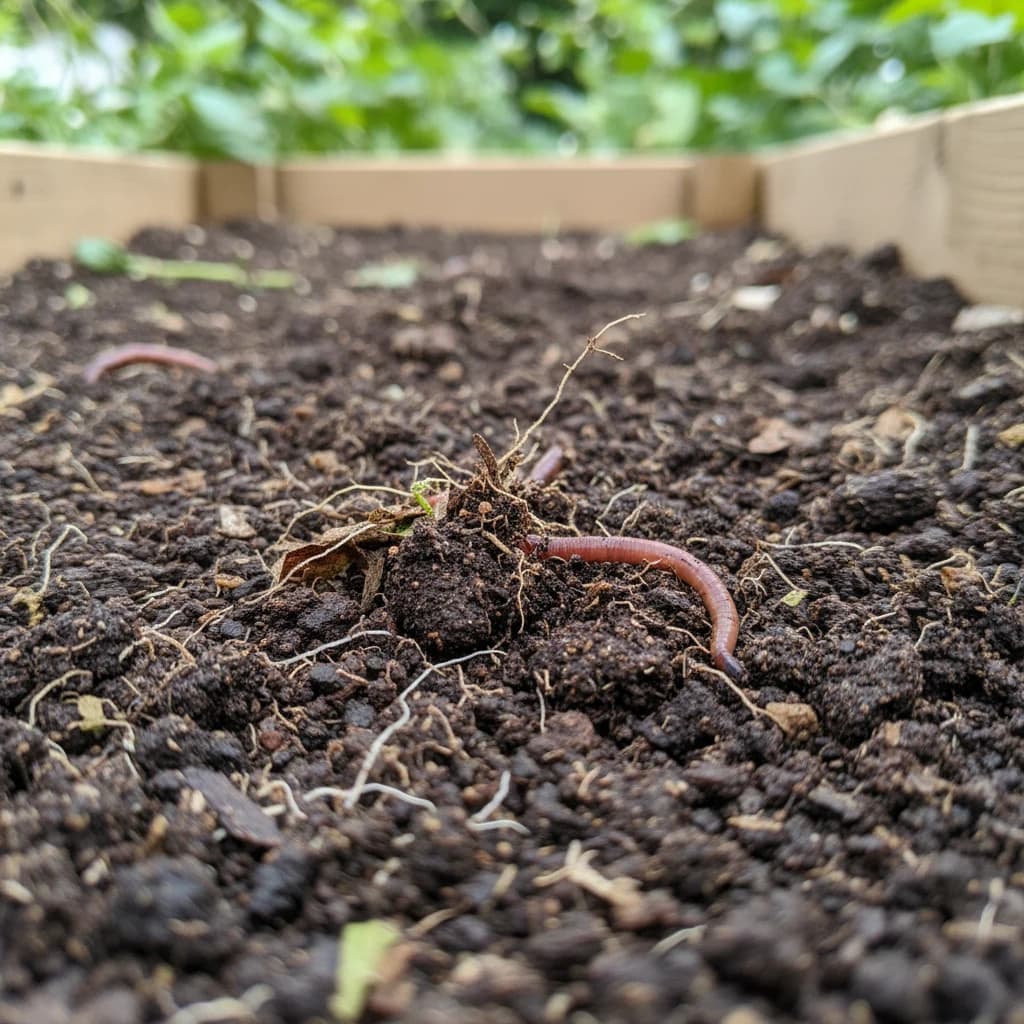
Soil isn't just "dirt." It's a living system. Healthy soil holds the right amount of water (not too much, not too little), feeds your plants slowly through tiny life forms in the dirt, and gives roots room to spread and breathe.
Three things make soil good:
- Food: plants pull nutrients from soil. Without nutrients, they starve, even with perfect water and sun. The big three nutrients are nitrogen (for leaves), phosphorus (for roots and flowers), and potassium (for fruit and overall health). Healthy soil has all three plus dozens of trace minerals.
- Drainage: roots need air. Soil that holds water like a sponge will rot a plant. Soil that drains too fast can't hold any food. Good soil holds onto water for a few days, then dries enough to let air back in.
- Life: worms, fungi, and tiny bugs break down dead leaves into food the plant can use. Dead soil has none of this. Without life in the soil, plants depend entirely on what you feed them. With life, the soil feeds itself.
When all three are dialed in, plants grow themselves. You barely have to do anything.
How To Tell Your Soil Is Bad
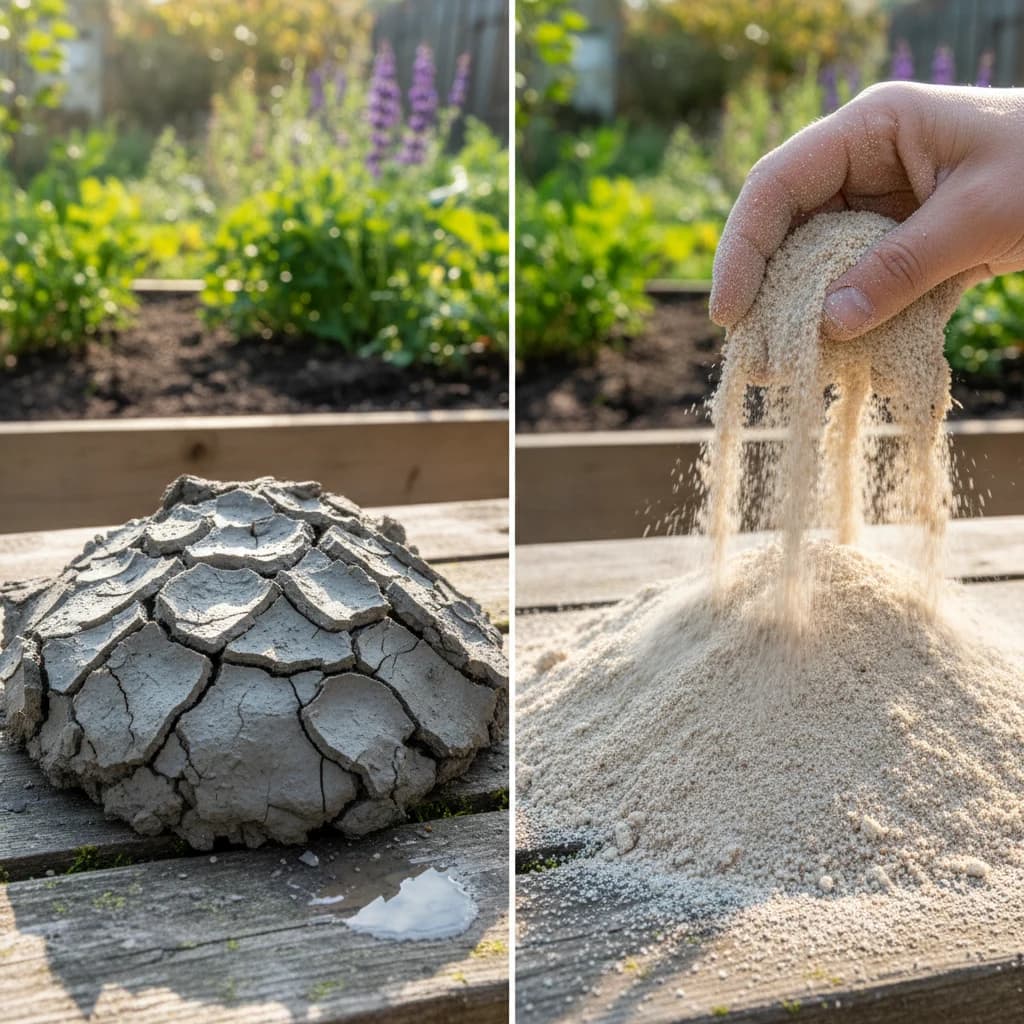
You don't need a lab to know if your soil is in trouble. The clues are right there:
- Water pools on top. Your soil is too packed (often clay). Roots can't push through it.
- Water disappears in seconds. Your soil is too sandy. Nothing sticks around long enough to feed the plant.
- It's gray or pale: healthy soil is dark brown or black. Pale soil usually means low organic matter.
- No worms when you dig: worms are the best sign of life. If you turn over a shovelful and see none, the soil is sleeping.
- Roots stay shallow: pull up a struggling plant. If the roots stayed in a tight ball near the surface, they hit something they couldn't push through.
- It smells wrong: healthy soil smells earthy and sweet, like a forest floor after rain. Sour, stinky, or chemical-smelling soil is a sign something's off (often too wet, or contaminated).
Tip
Squeeze a handful of damp soil. If it forms a hard ball that won't break apart, it's too clay-heavy. If it falls apart instantly, too sandy. The sweet spot crumbles easily but holds its shape for a moment.
The Compost Fix
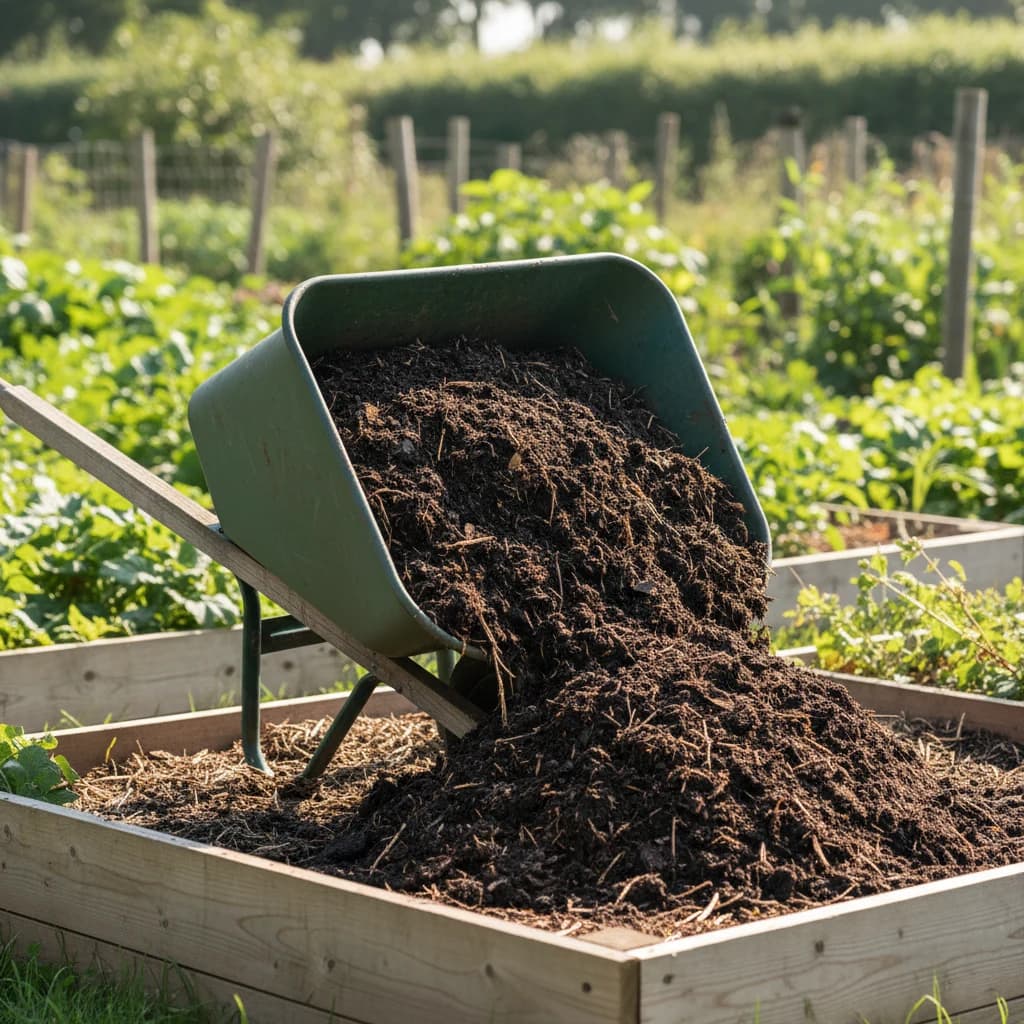
Here's the part most people overcomplicate. To fix bad soil, just add a 2-inch layer of compost on top. That's it. Don't dig it in. Don't till. Don't mix.
The compost does the work for you. Rain pulls nutrients down into the soil. Worms come up to eat the compost and tunnel it deeper, mixing as they go. Over a season or two, your bad soil turns into great soil. No digging required.
This is called top-dressing, and it's how nature does it. A forest floor builds rich soil from the leaves that drop on top: same idea.
If your soil is really bad (packed clay you can't push a shovel into, or pure sand) start with a thicker layer (4 to 6 inches) the first year. The fix takes longer, but it still works.
Did You Know?
No-dig gardening (the science behind top-dressing) actually grows MORE food than tilled gardens after the first year. Tilling breaks up the underground network of fungi that feed plants. Once you stop digging, the soil heals itself and gets better every year.
How Much, How Often
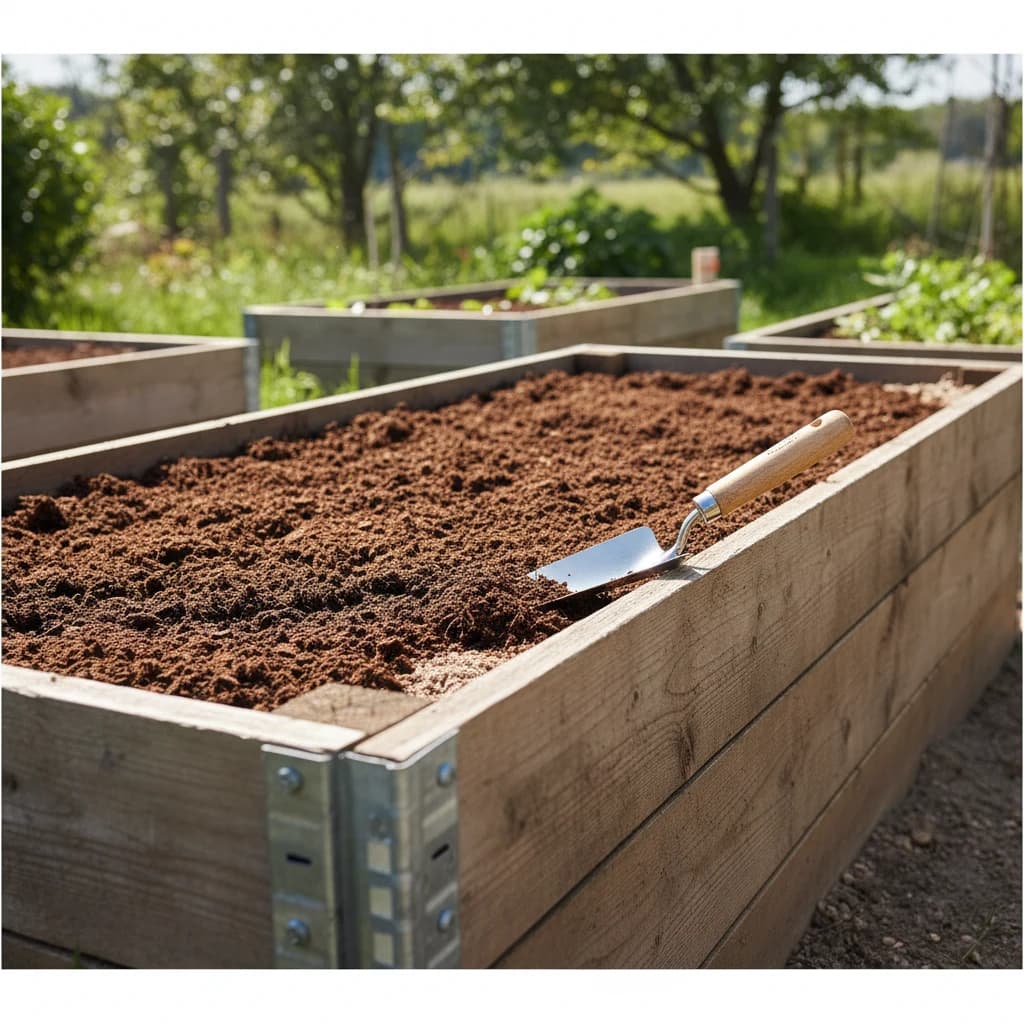
You don't need a math degree for this. Here's the rule:
- New beds. Start with a 3 to 4-inch layer of compost on top. Plant straight into it.
- Existing beds: top up with 1 to 2 inches once a year. Spring before planting, or fall after harvest.
- Pots and containers: refresh the top inch every spring. Pots run out of food faster than ground beds.
Where do you get compost? Three options, all good:
- Make your own: kitchen scraps, yard waste, dead leaves, in a bin or pile. Free, slow, and the highest quality once it's done. Takes 6 to 12 months from scraps to finished compost.
- Bagged compost, any garden center sells it. Look for "finished" or "aged" on the label. Around $5 to $10 per bag, and one bag covers about 4 square feet at 2 inches deep.
- Bulk delivery, many municipalities sell compost by the cubic yard, often cheap. Best deal if you have a big garden or multiple beds.
Tip
Don't use fresh manure or unfinished compost. It can burn your plants. Finished compost is dark, crumbly, and smells like a forest floor. If it still smells like a barn, let it sit another month.
What's Happening Underground
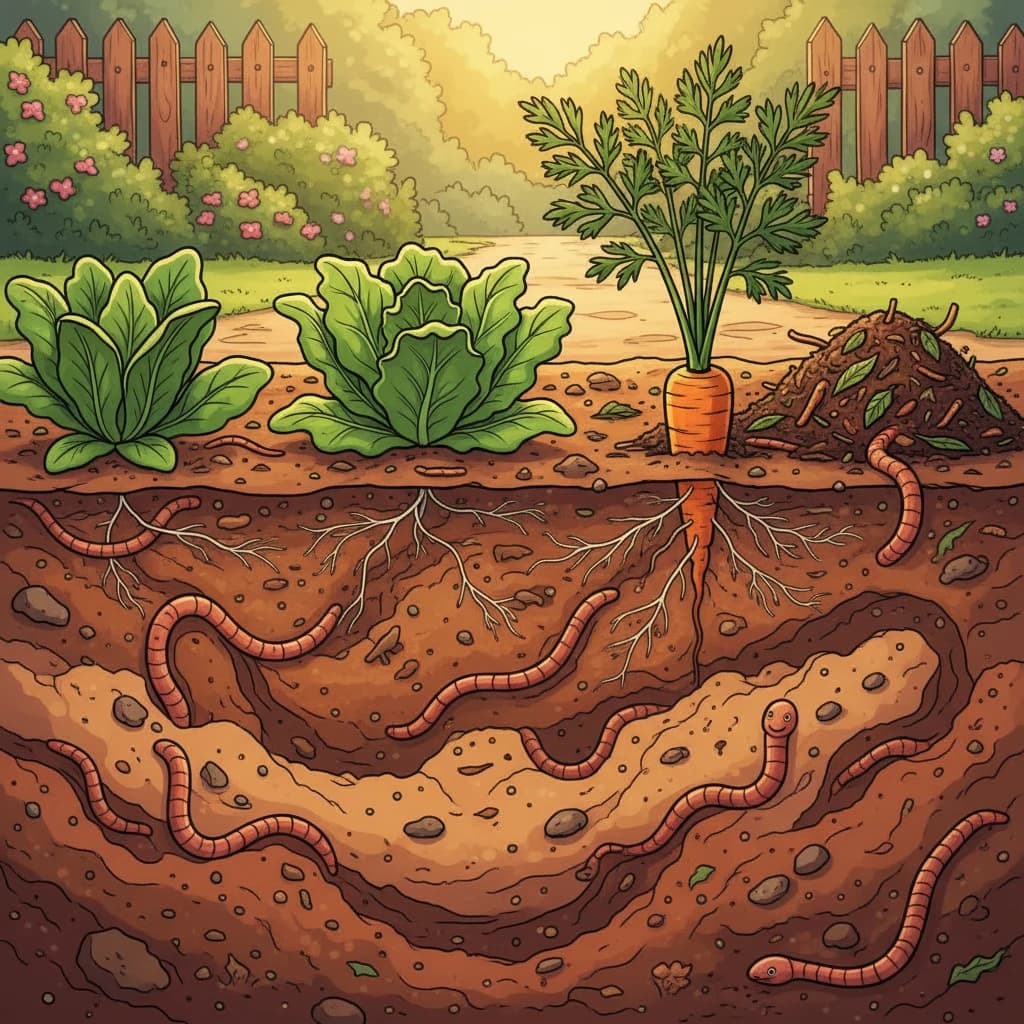
This is the part that's actually fun. Once you start top-dressing with compost, an entire underground crew goes to work for you.
Worms eat the compost on top and pull it down into the soil. Their tunnels create channels for air and water. Their poop (called "worm castings") is one of the most powerful natural fertilizers on earth: better than any bagged product.
At the same time, fungi (called mycorrhizae) start growing through the soil. These tiny threads connect to plant roots and trade nutrients with them. The plant feeds the fungi sugar; the fungi feed the plant water and minerals from way deeper than the roots could reach.
You don't see any of this happening. But the change builds fast:
- Year one: soil looks slightly darker on top, a few worms visible when you dig, plants noticeably healthier.
- Year two: soil is visibly richer 4 inches down, dozens of worms, plants growing fast and producing well.
- Year three: soil is dark and crumbly to a foot deep, alive with worms and fungi, plants thriving with almost no extra fertilizer.
Did You Know?
A single tablespoon of healthy soil contains more living organisms than there are humans on Earth. Most of them are working for you.
What This Means For You
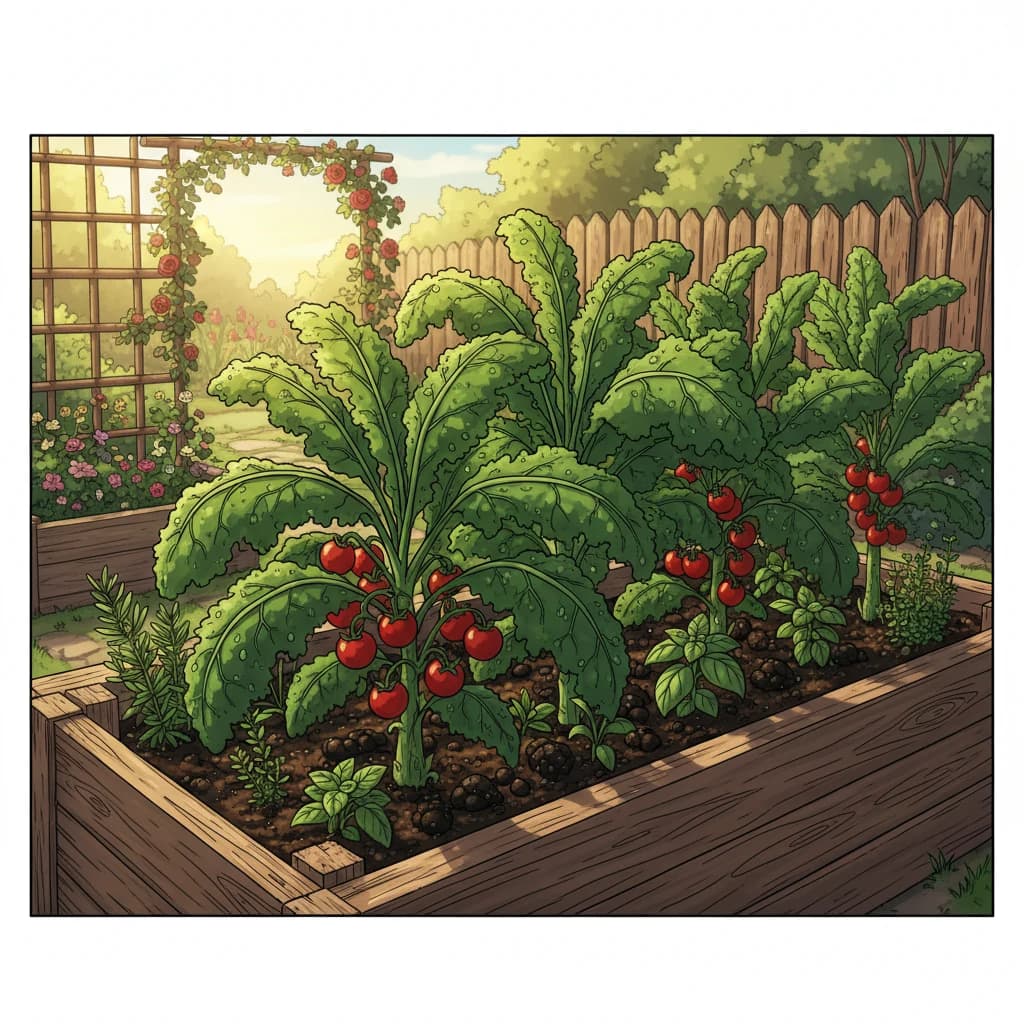
If your plants aren't growing well, stop blaming yourself. Stop second-guessing your watering. Look at the soil first.
What to take away
- Soil is the foundation. Get it right and most other problems disappear.
- You can spot bad soil by water pooling, pale color, no worms, or a wrong smell.
- The fix is a 2-inch layer of compost on top: no digging, no mixing.
- Top-dressing once a year keeps soil healthy forever.
- Worms and fungi do the real work. Your job is to feed them with compost.
Mistakes to skip
- Don't till every spring. It feels productive but it kills the soil life that's been working for you.
- Don't add chemical fertilizers when the soil is bad. They feed the plant short-term but starve the soil long-term.
- Don't dig up "just to check." Healthy soil doesn't need inspecting. Trust the process.
Next time a plant looks sad, grab a handful of soil and have a real look. Nine times out of ten, that's where the answer is.
Check Your Understanding
Answer these questions to complete the article and see how other readers responded.
Question 1 of 3
Your tomato plants are stunted and yellow. According to this lesson, what should you check first?
Want more like this?
New articles as we write them, plus planting dates for where you grow.
More to read

Why Did Your Seedlings Sprout, Flop Over, and Die?
They came up perfect, then folded at the soil line like something bit them. What actually attacks baby seedlings, why too much care invites it, and the two easy habits that stop it for good.

Why Do Some Seeds Sprout in Days and Others Take Three Weeks?
Radishes explode overnight while carrots sulk for weeks, and it isn't your fault. Seed coats, built-in timers, and the overnight soak that talks a slow seed into hurrying up.

How Does a Seed Know It's Safe to Sprout?
Seeds are always checking three things before they commit. What water, warmth and depth each tell the seed, why nothing sprouts in a cold room, and how to give the all-clear signal on purpose.