
Setting Up Drip Irrigation
6 min read
What You'll Learn
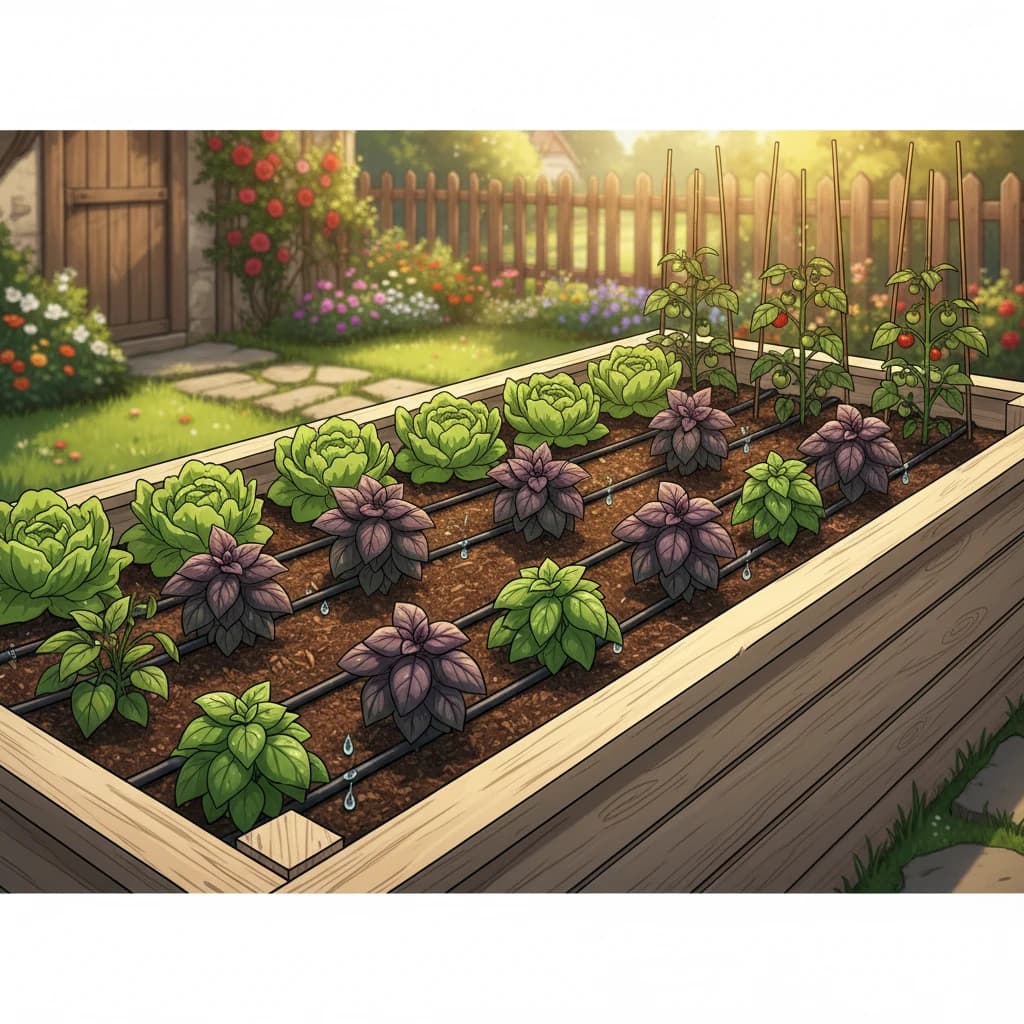
Drip irrigation is the easiest way to keep beds watered without thinking about it. Here's the whole setup: hoses, emitters, valves, and a timer that does the work for you.
The Easiest Way To Water Your Garden
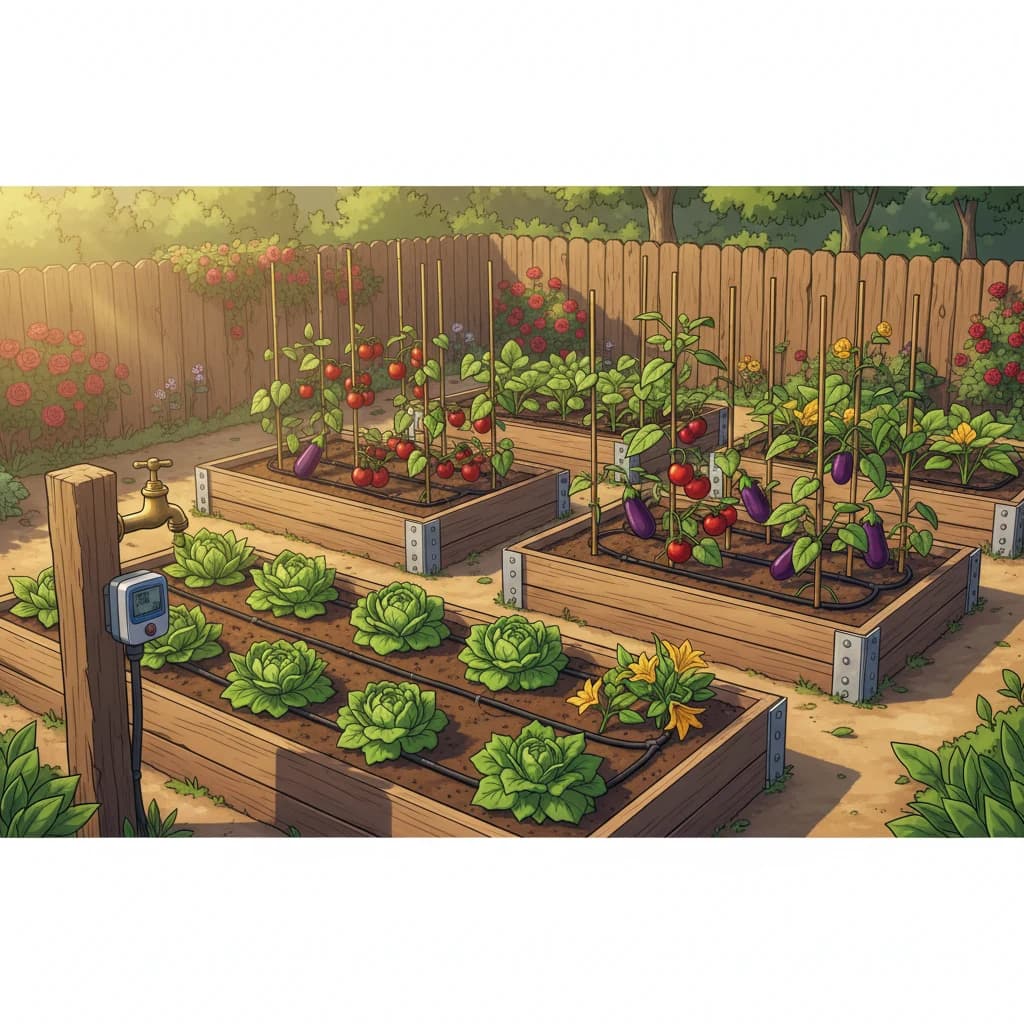
Here's something nobody tells you when you start growing food: watering is the most boring part. You forget. You go on vacation. The hose drags through the bed and snaps a tomato stem. The plants get thirsty when it's hot, drowned when it rains, and you spend more time on a hose than actually gardening.
Drip irrigation fixes all of it. You set it up once, plug it into a timer, and the garden waters itself. Plants get a steady, even drink right at the roots: no wasted water, no wet leaves, no dragging hoses around.
We just put a system together for a backyard build, and people keep asking how we did it. So here's the whole thing, every part, why it matters, and how it fits together. By the end of this lesson you'll be able to set up your own.
The Big Hose (Backbone)
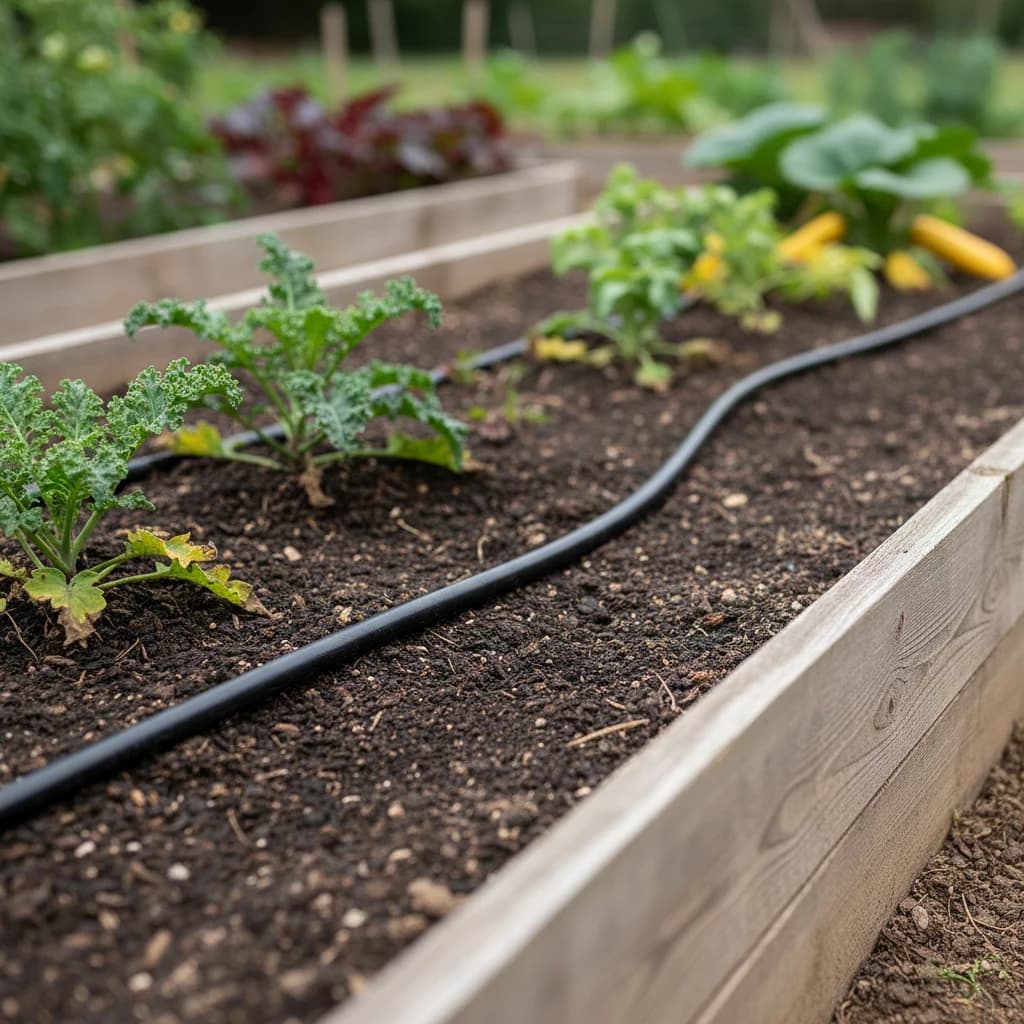
The first piece is the main line: the bigger hose that carries water from your tap to the area where your beds are. It runs around the edge of your yard or along the back of your beds.
Two sizes to pick from:
- 1/2 inch: works for most home gardens. Easy to bend, fits standard fittings, plenty of pressure for a backyard setup.
- 3/4 inch. Use this if your run is over 100 feet, or if you've got a lot of beds branching off. More water pressure, less drop along the line.
You can run the main line on top of the soil (cheap and quick) or bury it a few inches down for a cleaner look. For permanent beds, bury it. For seasonal setups, on top is fine.
How many beds can one main line serve? In a normal home setup with decent water pressure, a 1/2-inch line can serve 6 to 8 raised beds. If you've got more than that, step up to 3/4 inch or run two separate main lines.
Tip
Black tubing breaks down in sunlight over a few years. If you're leaving it on top, that matters. Buried, it lasts way longer.
The Small Hoses (Branches)
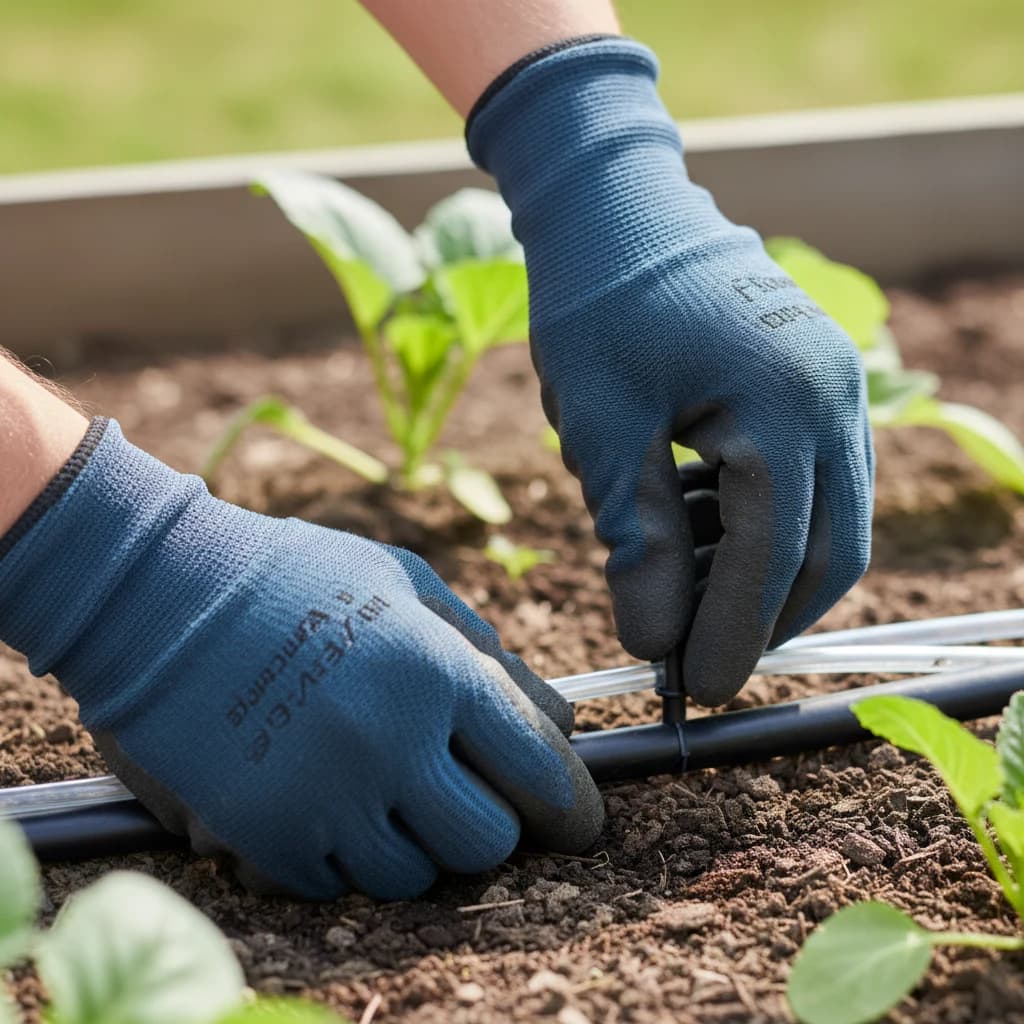
From the main line, you run smaller 1/4-inch tubing to each individual bed. This is what actually gets the water to the plants.
The 1/4-inch is thin and flexible: easy to weave between plants, easy to cut to length. You connect it to the main line with a tiny barbed fitting that punctures the bigger hose. Push the fitting in, push the small tube on, done.
If your beds are raised, run the 1/4-inch underground from the main line and up the inside of the bed before you fill it with soil. Once it's covered, you'll never see it again. Looks clean.
A useful trick for raised beds: leave a little extra slack where the tube comes up out of the ground. That way you can move it around later if you ever change the planting layout.
Emitters (How The Water Comes Out)
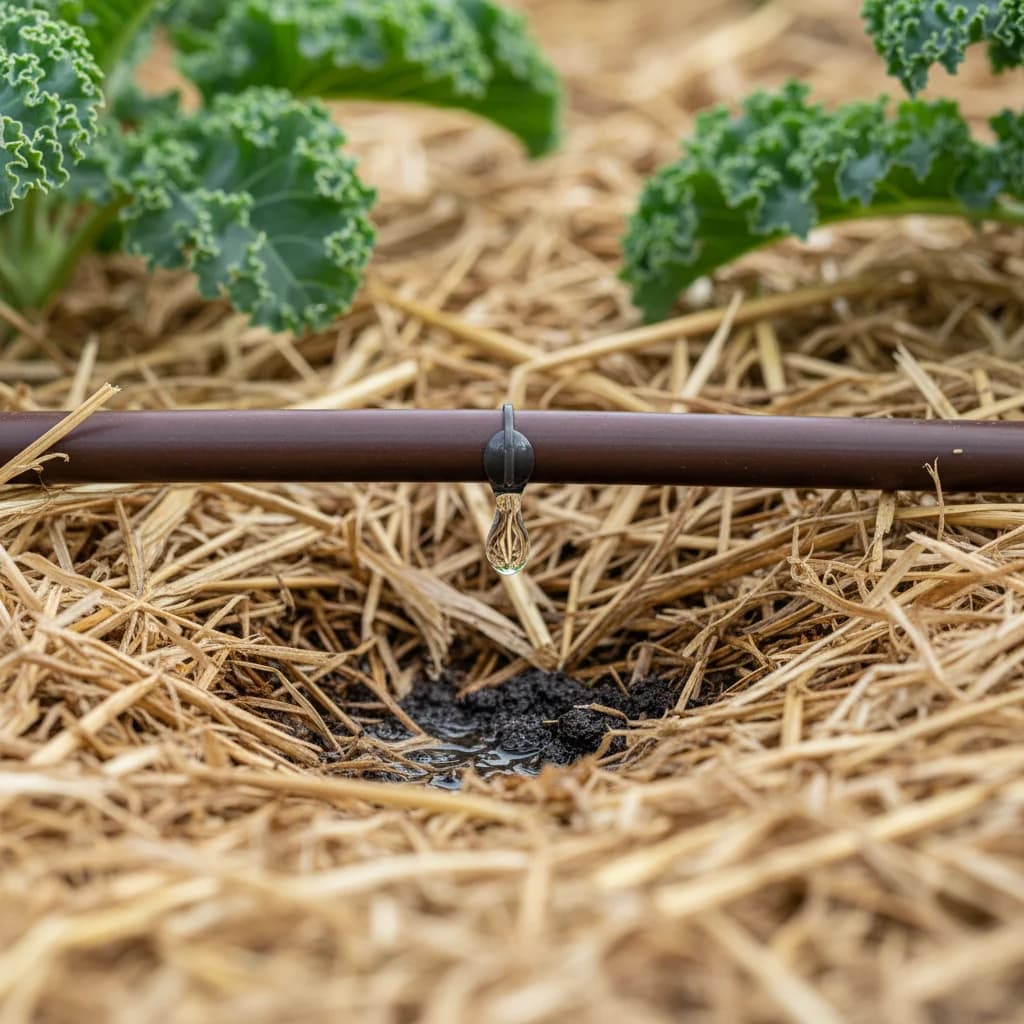
The 1/4-inch line itself doesn't drip. You need emitters to do that. These are little parts that control how fast the water comes out (usually measured in gallons per hour, or GPH).
A few types:
- Pre-built drip line: 1/4-inch tubing with emitters already installed every 6 or 12 inches. This is what we use. Cut to length, connect, done. Easiest by far.
- Push-in emitters. You punch a hole in regular 1/4-inch tubing and stick an emitter in wherever you want one. Good for spacing them precisely around bigger plants.
- Spray emitters, for plants that like water on the leaves (rare). Most veggies prefer drip.
For most beds, 0.5 to 1 GPH per emitter is the sweet spot. Less than that and the soil dries out between waterings; more and you're soaking the bed. The pre-built drip line at most hardware stores is 0.5 GPH at 6-inch spacing. That's perfect for raised beds.
Did You Know?
Drip emitters use up to 50% less water than sprinklers because nothing evaporates off leaves or runs down the path. They put water exactly where the roots are. That alone usually pays for the system in one season if you're on metered water.
On/Off Valves (Bed Control)
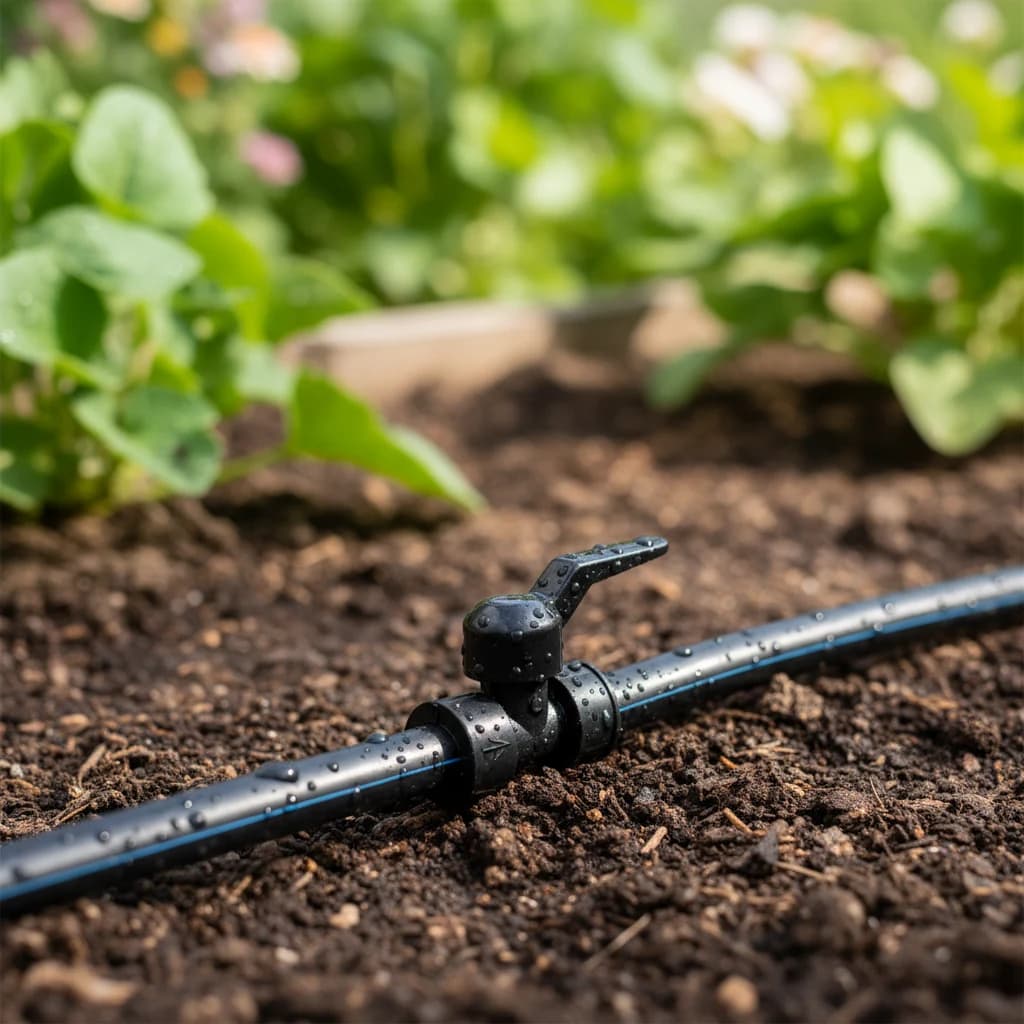
If you've got more than one bed, you'll want on/off valves on each branch. These are small inline valves that let you shut water to one bed without affecting the others.
Why does this matter? You don't always want to water everything the same. Tomatoes need less water as fruit ripens. Newly planted seeds need more water than established plants. Garlic gets shut off completely a few weeks before harvest.
A valve per bed lets you fine-tune without rebuilding the system every time something changes.
Where to put them: install each valve at the start of its 1/4-inch branch, where it leaves the main line. Keep them above ground (not buried) so you can reach them without digging.
Tip
Label your valves. After two months you won't remember which one goes to which bed, especially if they're hidden under the soil. A bit of waterproof tape with a Sharpie note saves a lot of guessing.
The Timer (The Magic Part)
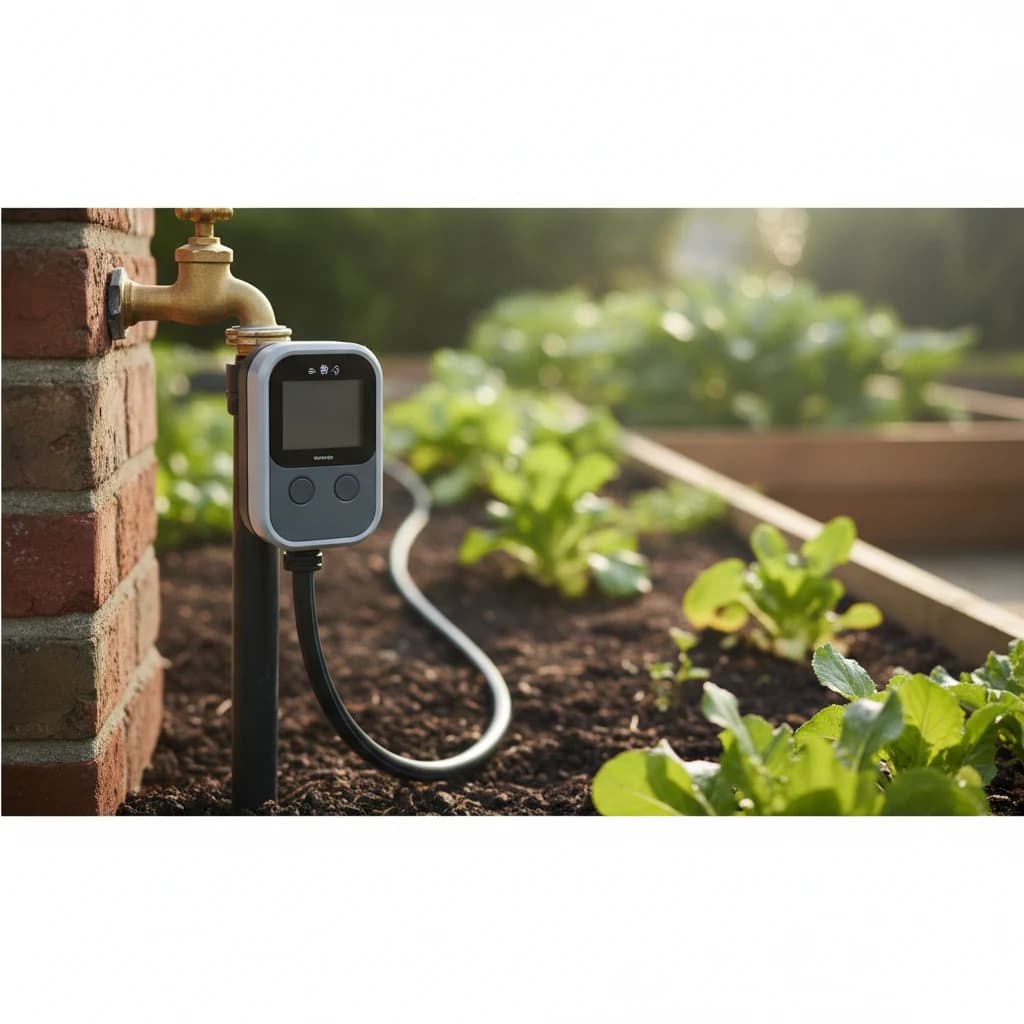
The timer is what turns this into a "set it and forget it" system. You plug it in once, set the schedule, and the garden waters itself.
Three kinds to know:
- Mechanical timer: cheap (often under $20). Twist a dial to set how long it runs, like a kitchen timer. Works fine but you have to turn it on every time.
- Battery digital timer: middle of the road. Set days, times, and durations on a small screen. Runs on batteries that last a season or two.
- Smart timer (phone-connected): what we use. Connects to wifi, set everything from your phone. Some even check the local weather forecast and skip a cycle if rain is coming. Ours has a splitter so it runs front yard and back yard on separate schedules from one tap.
A good starting schedule for a typical raised bed: 15 to 20 minutes, three times a week, early morning. Adjust up if plants look thirsty (drooping by midday, soil dry an inch down) or down if the soil stays soggy.
Tip
Whatever timer you pick, set it to water early morning (5 to 7 AM). Plants soak it up before the sun heats things up, and the soil dries by evening so you don't get fungus or mold.
Putting It All Together
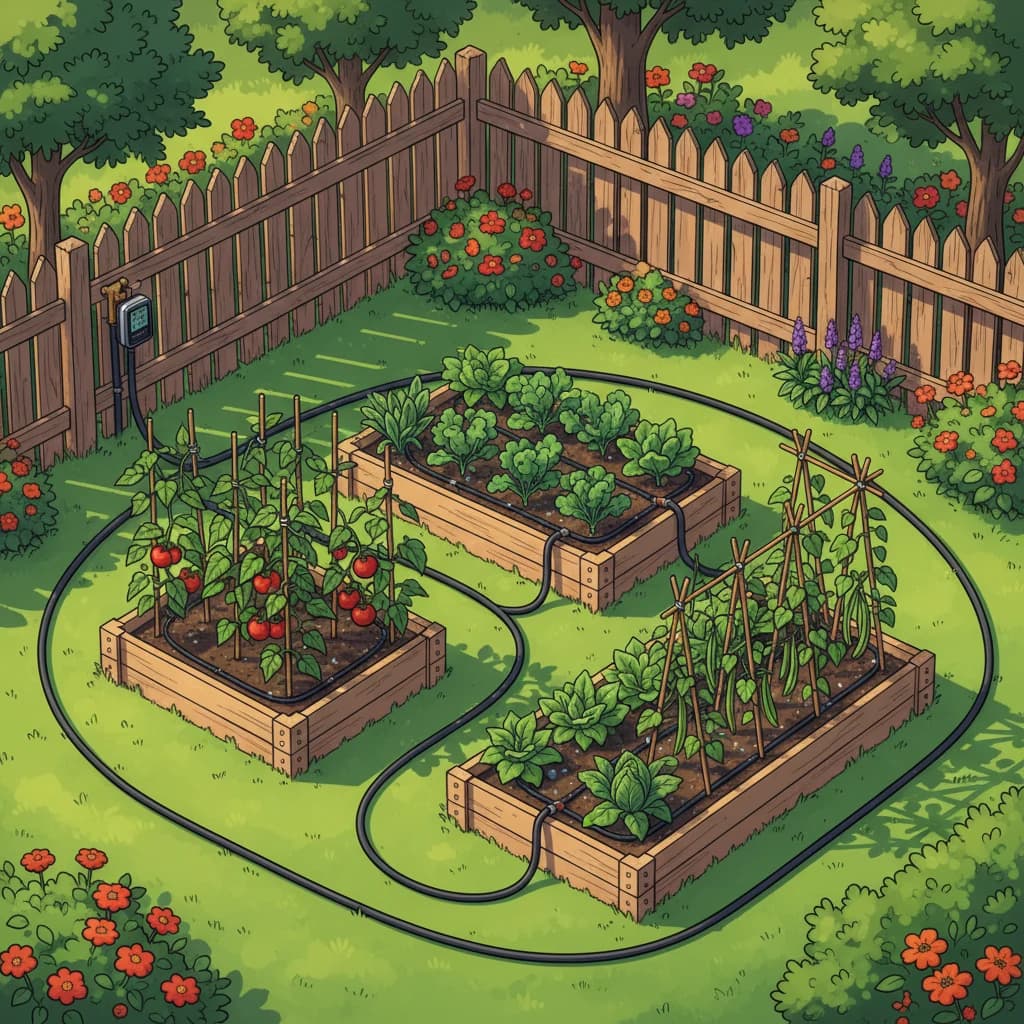
The full setup
- Start at the tap. Screw on the timer.
- Connect the main line. Run 1/2-inch (or 3/4-inch) tubing from the timer along the perimeter of your beds.
- Branch off to each bed. Punch in barbed connectors on the main line, push 1/4-inch tubing through them.
- Add a valve. Inline valve on each 1/4-inch branch so you can shut down individual beds.
- Lay the drip line. Run pre-built drip tubing through each bed, snaking around plants.
- Cap the ends. End-of-line caps stop water shooting out the far end.
- Test it. Turn on the timer manually for 5 minutes. Walk every bed and watch the drip. Fix any leaks.
Total cost for a small backyard setup: usually $80 to $150. Total time once you've done it once: about an afternoon.
Questions people always ask
- Winterizing, in cold climates, drain the system before the first hard freeze. Open all valves and let it run dry, then disconnect from the tap and store the timer indoors. Buried main line can stay underground; just blow out any leftover water.
- How long it lasts, buried 1/2-inch main line: 10+ years. Surface tubing: 3 to 5 years before sun damage starts. Emitters: they clog eventually, especially with hard water, replace any that stop dripping. Timer batteries: replace yearly.
- Hard water: minerals in well water can clog emitters. A small inline filter ($15) right after the timer keeps everything dripping clean.
What to take away
- Drip irrigation is the easiest way to keep a garden watered.
- A main line carries water; small lines branch to each bed.
- Pre-built drip tubing with built-in emitters is the simplest option.
- A valve per bed lets you control beds individually.
- A timer makes it set-and-forget. Smart ones can read the weather.
Once you've put one of these together, you'll wonder how you ever watered any other way.
Check Your Understanding
Answer these questions to complete the article and see how other readers responded.
Question 1 of 3
In a typical home drip system, what does the 1/2-inch tubing do?
Want more like this?
New articles as we write them, plus planting dates for where you grow.
More to read

Why Did Your Seedlings Sprout, Flop Over, and Die?
They came up perfect, then folded at the soil line like something bit them. What actually attacks baby seedlings, why too much care invites it, and the two easy habits that stop it for good.

Why Do Some Seeds Sprout in Days and Others Take Three Weeks?
Radishes explode overnight while carrots sulk for weeks, and it isn't your fault. Seed coats, built-in timers, and the overnight soak that talks a slow seed into hurrying up.

How Does a Seed Know It's Safe to Sprout?
Seeds are always checking three things before they commit. What water, warmth and depth each tell the seed, why nothing sprouts in a cold room, and how to give the all-clear signal on purpose.