How to Grow Chestnut
Chestnut At a Glance
Difficulty
Moderate
Category
Nut
Sun Exposure
Full Sun
Frost Tolerance
Frost Hardy
Cold Hardiness
Survives to -25°C
Plant Family
Fagaceae
Growing Season
Warm Season
Plant Lifecycle
Perennial
How to Start It
★ Recommended for beginners
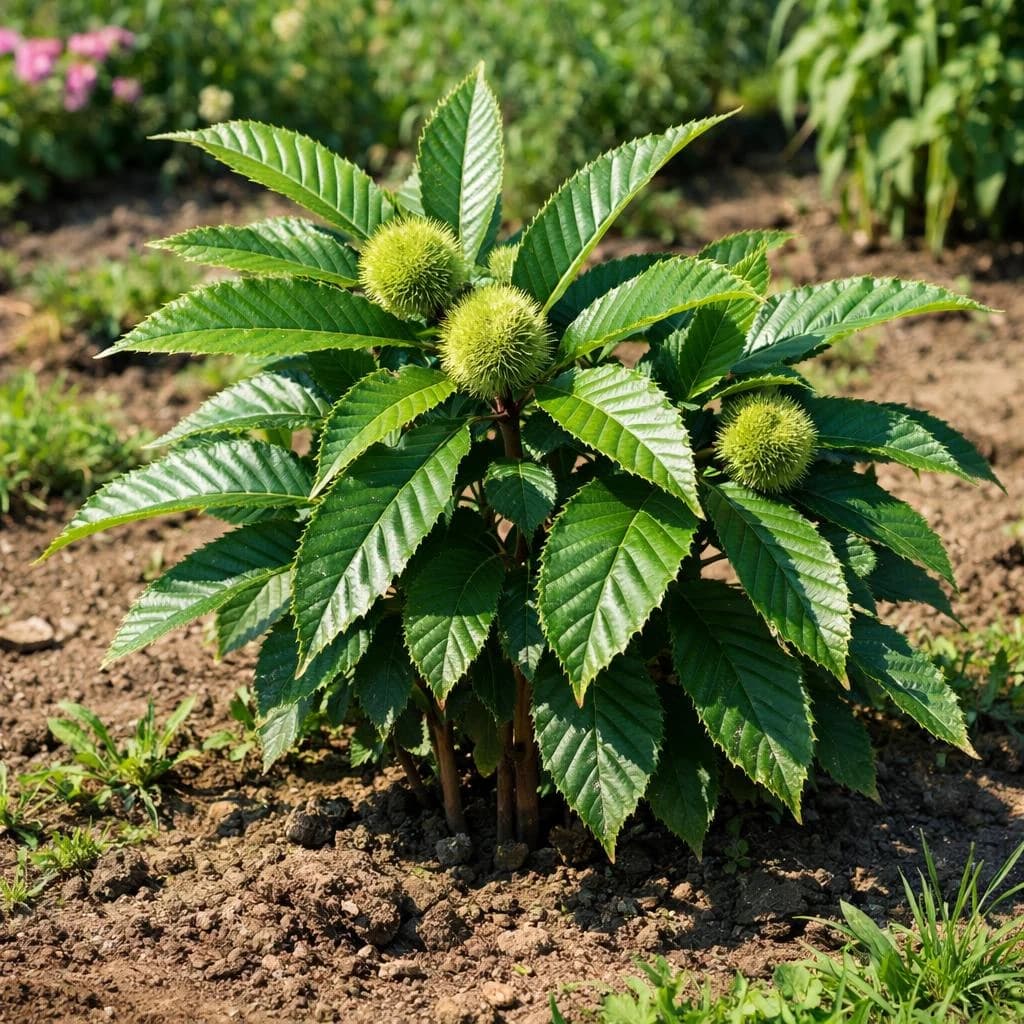
Buy two young trees, because a chestnut needs a second chestnut tree nearby to make nuts. Plant them in early spring while they are still bare and asleep, about 12 m apart, in a sunny spot with soil that drains well and is not limey. Pick a hardy, blight-resistant type sold for your area.
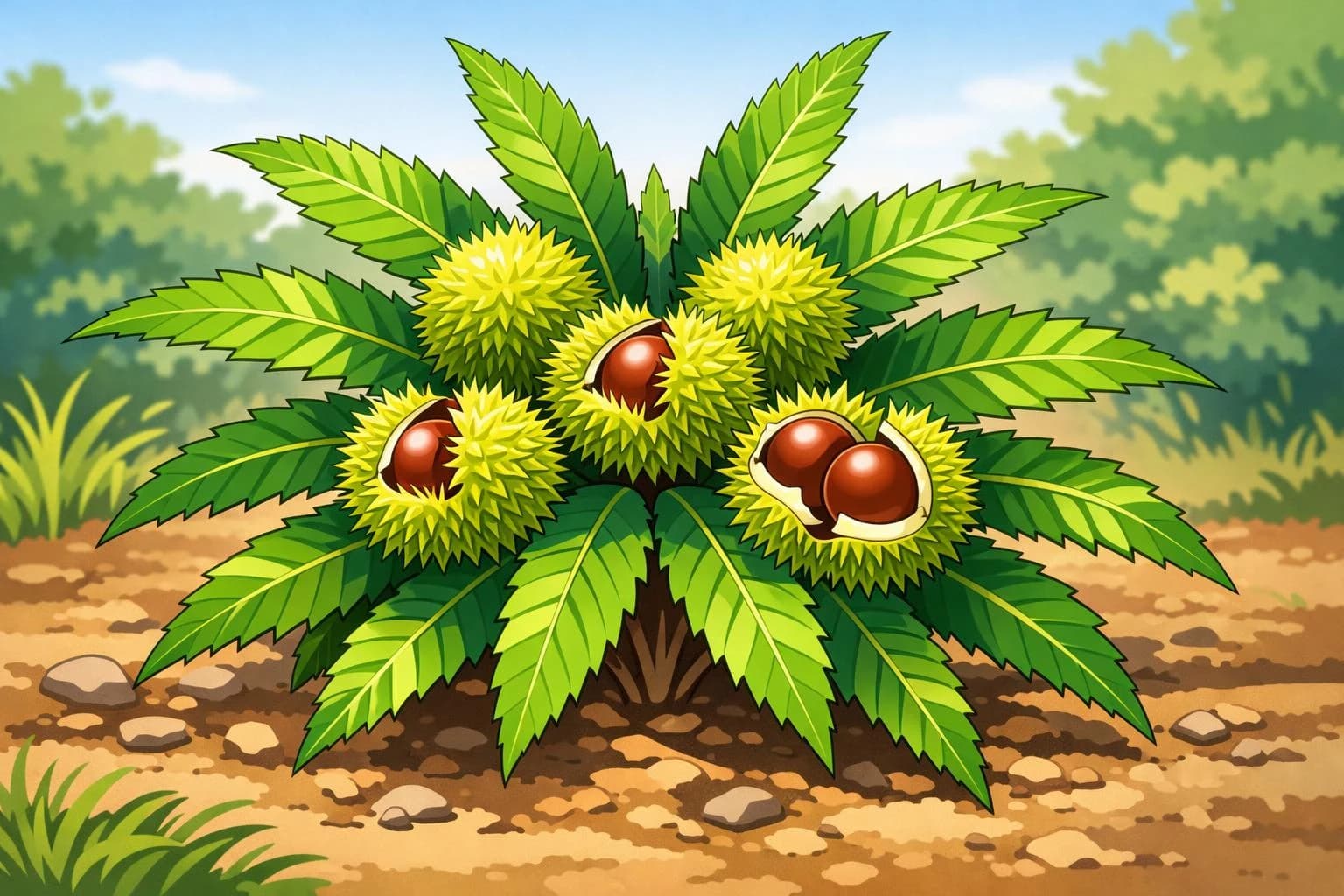
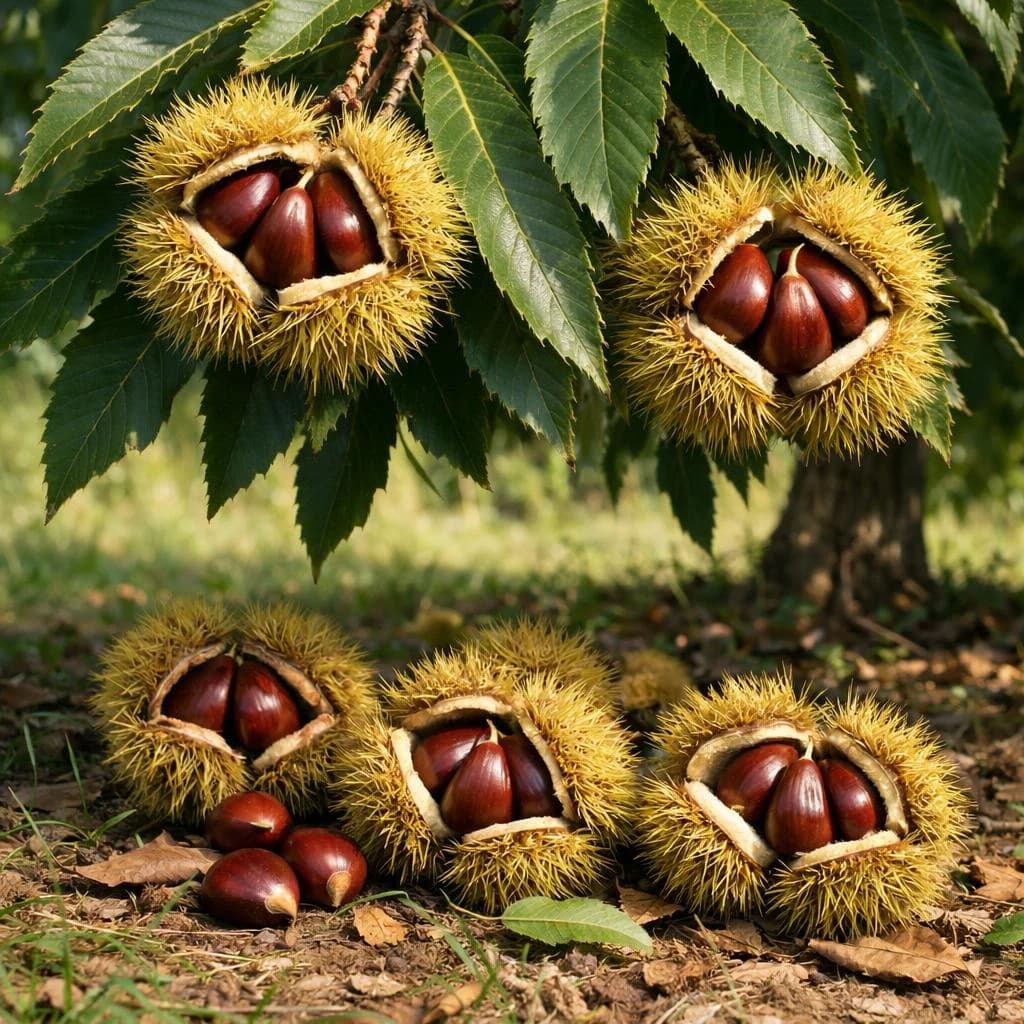
A chestnut is a big, long-lived tree, so it suits a large growing space rather than a balcony, and it starts bearing in about 4 years. Do not mix it up with horse chestnut, a different tree whose shiny nuts are poisonous: true chestnuts grow inside very spiny husks.
When To Start
Chestnut needs warmth. Wait until your last frost has passed and the soil has warmed before sowing.
We do not have exact sowing dates for this one yet.
When should you plant Chestnut?
Your planting dates depend on your local climate. Sign up and add your location to unlock personalized dates.
Your Chestnut Planting Window
Start planting
May 15, 2026
Last chance
Sep 10, 2026
Your Chestnut Calendar
Set your location to turn these into exact dates and reminders.
Plant two chestnut trees in sunny, well-drained soil
3 weeks before your last frost
Gather chestnuts as the spiny husks split and drop
2 weeks before your first frost· every year
Water your new chestnut plants well while they settle in. Deep and slow is best.
About 1 days after you plant it
How are your chestnut trees settling in? Water them deeply once a week in their first season.
About 30 days after you plant it
Your young chestnuts are building roots. Keep grass and weeds pulled back from the base of each tree.
About 90 days after you plant it
The Journey Ahead
Chestnut's Lifecycle

Seedling

Mature Plant
Seed Production
Step 1
Prepare Your Space
1200 cm
Plant Spacing
1400 cm
Row Spacing
Vertical Growing
No.
Succession Planting
No.
Good Companions
Bad Companions
Step 2
Planting & Sprouting
Growing Tips
- 1Plant chestnuts in full sun, where they have room to grow into large trees.
- 2They need soil that drains well and is slightly acidic, and they struggle in heavy, wet or limey ground.
- 3Water young trees deeply once a week in their first 2 to 3 summers, then they can mostly fend for themselves.
- 4Spread compost and a ring of mulch around the base each spring, keeping it a hand's width from the trunk.
- 5Pick up fallen nuts every day or two, so weevil grubs inside cannot get into the soil and come back next year.
- 6In areas where chestnut blight is found, choose a blight-resistant type.
Seedling Phase
Step 3
Growth & Maturity
2000 cm
Mature Height
1500 cm
Mature Width
Pests to Watch For
Diseases to Watch For
Mature Plant
Step 4
Harvesting
Harvest Window
30 days
When to Pick
Gather in autumn when the spiny burrs split and the nuts fall
How to Harvest
- 1Chestnuts are ready in fall, when the spiny husks turn brown, split open and drop to the ground.
- 2Wear thick gloves, or roll the husks under your boot, to free the shiny brown nuts inside.
- 3Gather them every day or two, before squirrels do.
- 4Keep fresh chestnuts in a bag in the fridge and use them within a few weeks, because they are moist and spoil quickly.
- 5Cut an X in the shell before roasting or boiling, so they do not burst.
Step 5
Saving Seeds
Seed Production
Still have a question?
Ask your coach about your chestnut.
This page covers what we thought to write down. Your chestnut will do something it never mentions, and that is the day a coach beats a guide. Ask Coach Lumen one question right now, free, no account.