
Produce No Waste
7 min read
What You'll Learn
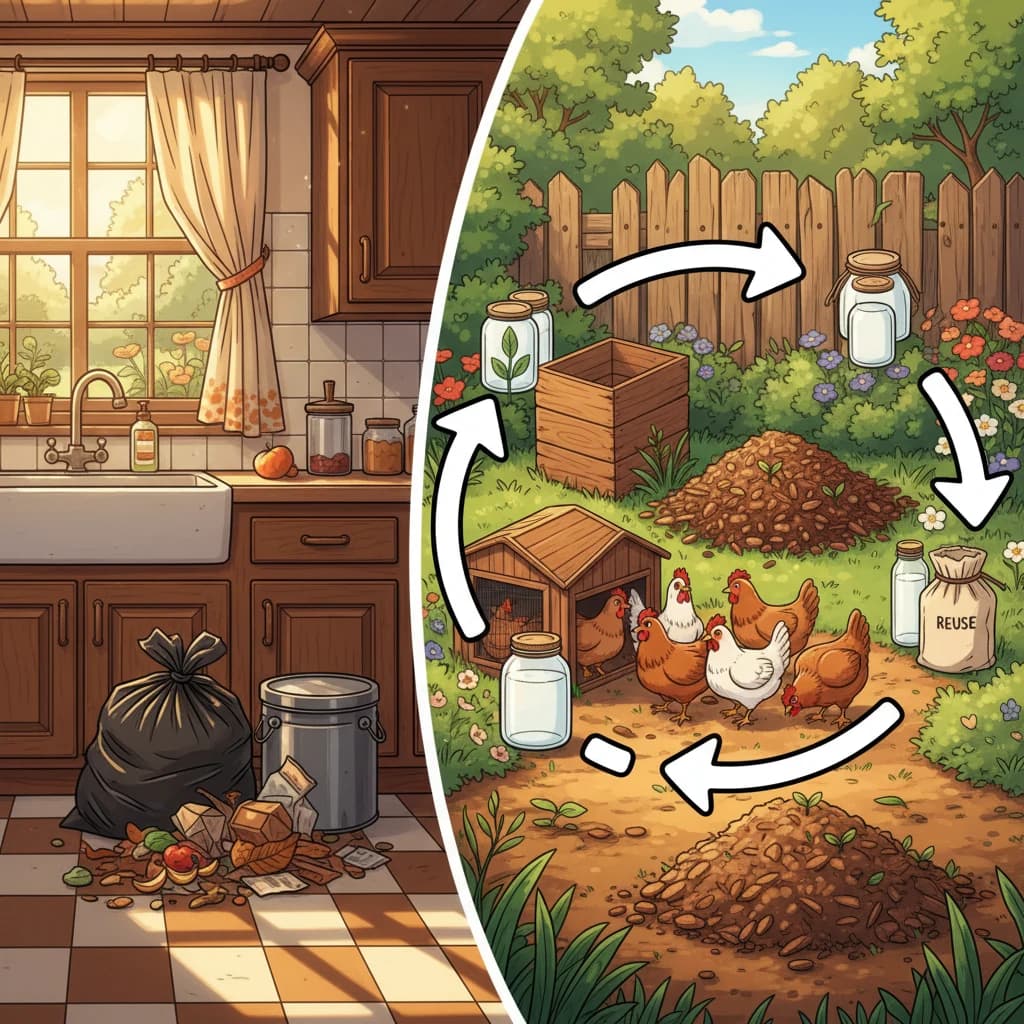
In a permaculture system, "waste" is just a resource in the wrong place. Every output of one element should become the input of another. The principle that closes the loops.
Waste Is a Design Failure
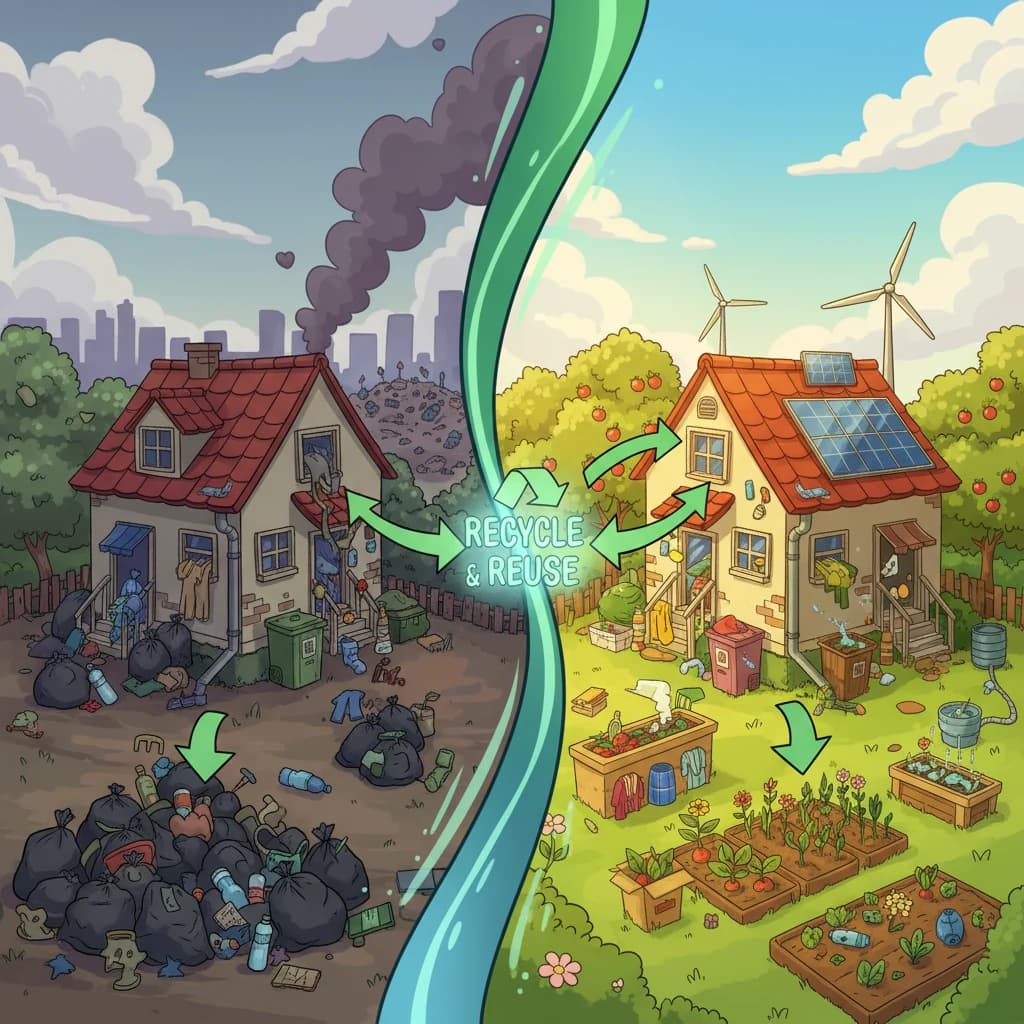
In a natural system, nothing is wasted. A leaf falls, decomposes, feeds the tree above it. An animal dies, becomes food for scavengers and microbes, returns to soil. Every output is somebody's input. The system runs in closed loops.
Mollison's third principle: produce no waste. Or put another way — every output of one element should be designed to be the input of another. When something is leaving your site as "garbage," that's a design failure. The waste is real; the design just hasn't caught up yet.
The Three Buckets of Output
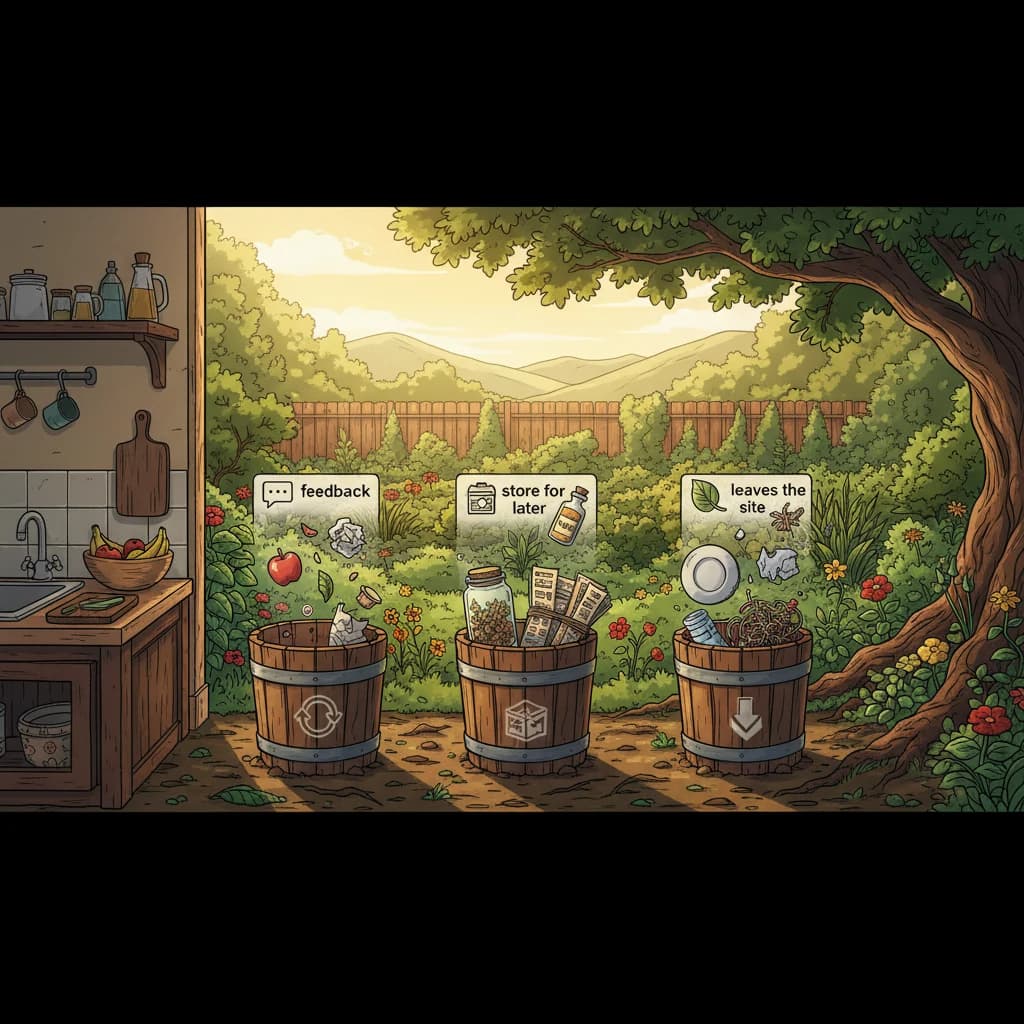
Everything your site produces falls into one of three buckets:
- Feed back into the system — kitchen scraps to compost, leaves to mulch, prunings to firewood. The biggest bucket in a well-designed system.
- Store for later — preserved food, saved seeds, dried herbs. Outputs that you'll consume yourself in time.
- Leaves the site — surplus to neighbors, recycling, landfill. The smallest bucket — and the one a permaculture design tries to shrink.
The job is to push as much as possible from the third bucket into the first two.
Closing the Kitchen Loop
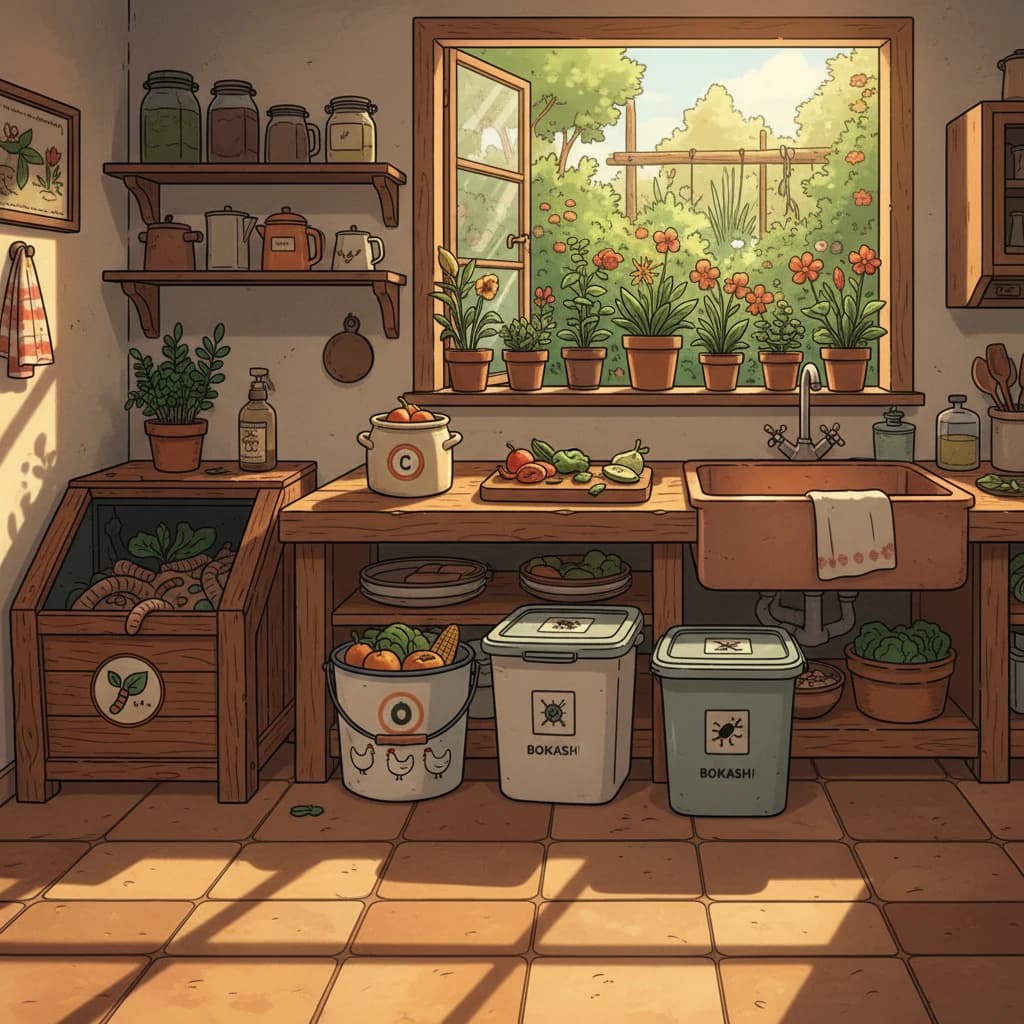
Most homes start with kitchen waste because it's the easiest. A typical household generates 4-6 lbs of kitchen scraps a week. That's 200-300 lbs a year going to landfill — and it could all be soil.
Routes for kitchen scraps:
- Compost pile — for everything plant-based. Bedrock of the system.
- Worm bin — for fruit and vegetable scraps, coffee grounds, paper. Produces the richest fertilizer on earth.
- Chickens — for almost everything edible. Get eggs and pest control on the way to compost.
- Bokashi bucket — for what compost can't handle (meat, dairy, oily scraps). Ferments and then gets buried.
Most kitchens can route 95%+ of their food waste this way. The remaining 5% is bones the dog can't have and the occasional wrapper.
Tip
Don't set up all four kitchen-loop systems at once. Start with one — usually a compost pile or a worm bin — get comfortable, then add the next. Layered slowly, the whole system feels effortless. All at once, it feels like a lifestyle change.
Closing the Garden Loop
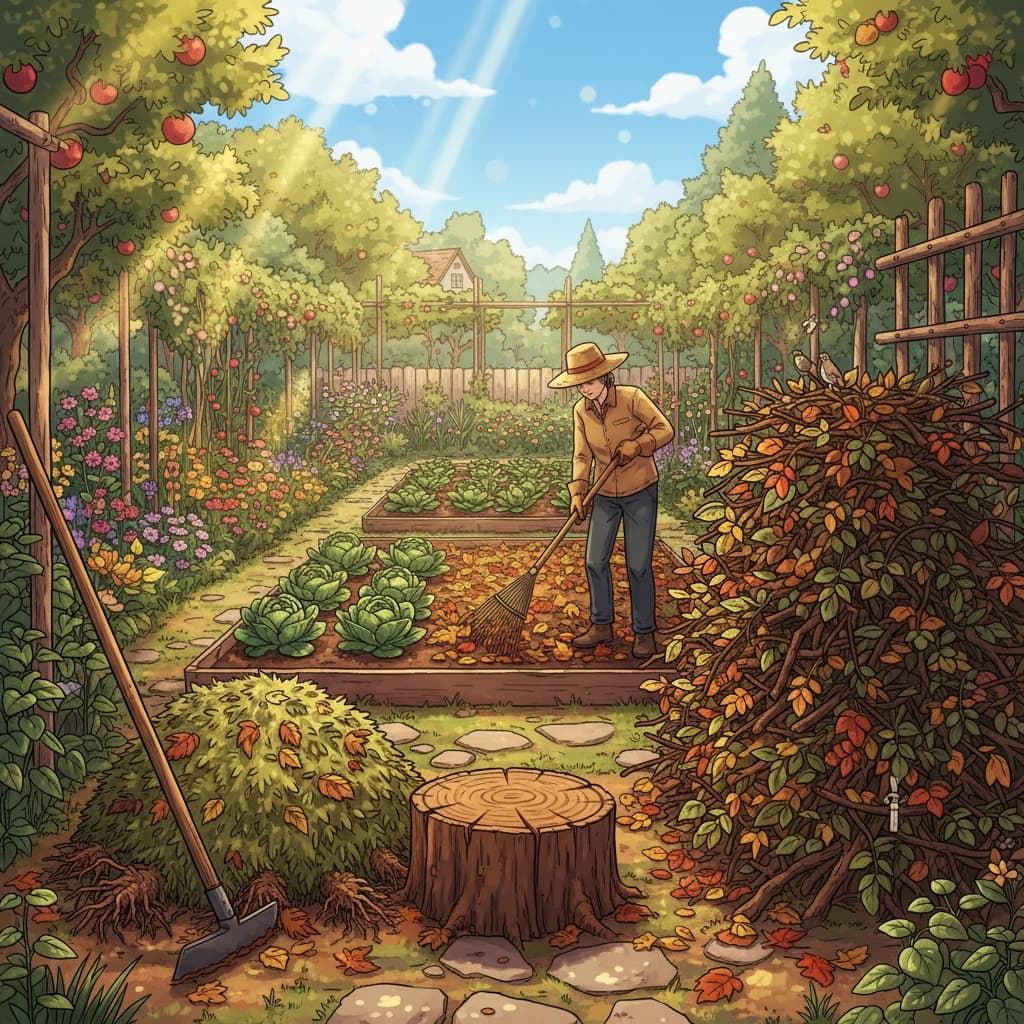
Garden output is even bigger than kitchen output by volume. Every pulled weed, every pruning, every spent plant, every leaf that falls — all of it can be designed back in.
- Chop and drop. Pull a weed, cut it into pieces, leave it on the soil where it grew. The plant's nutrients return to the same square foot it pulled them from.
- Mulch piles in place. Rake autumn leaves directly onto garden beds where they'll break down by spring. Don't even bag them.
- Habitat piles. Stack prunings in a corner. Rotting wood becomes habitat for beetles, lizards, salamanders, and beneficial insects.
- Cover crops. Plant a quick-growing crop (clover, vetch, buckwheat) on bare beds between vegetables. Grow biomass while the bed isn't producing food, then chop and drop it for the next round.
- Coppice. Some trees (willow, hazel, mulberry) can be cut to the ground every few years and they regrow stronger. Free firewood and biomass forever.
Did You Know?
A typical suburban yard generates more biomass per year than the average backyard food garden actually consumes. Most of that biomass currently leaves as bagged "yard waste." Closing that loop alone eliminates the need for any external soil amendments — the yard fertilizes itself.
The Hardest Loop — Human Outputs
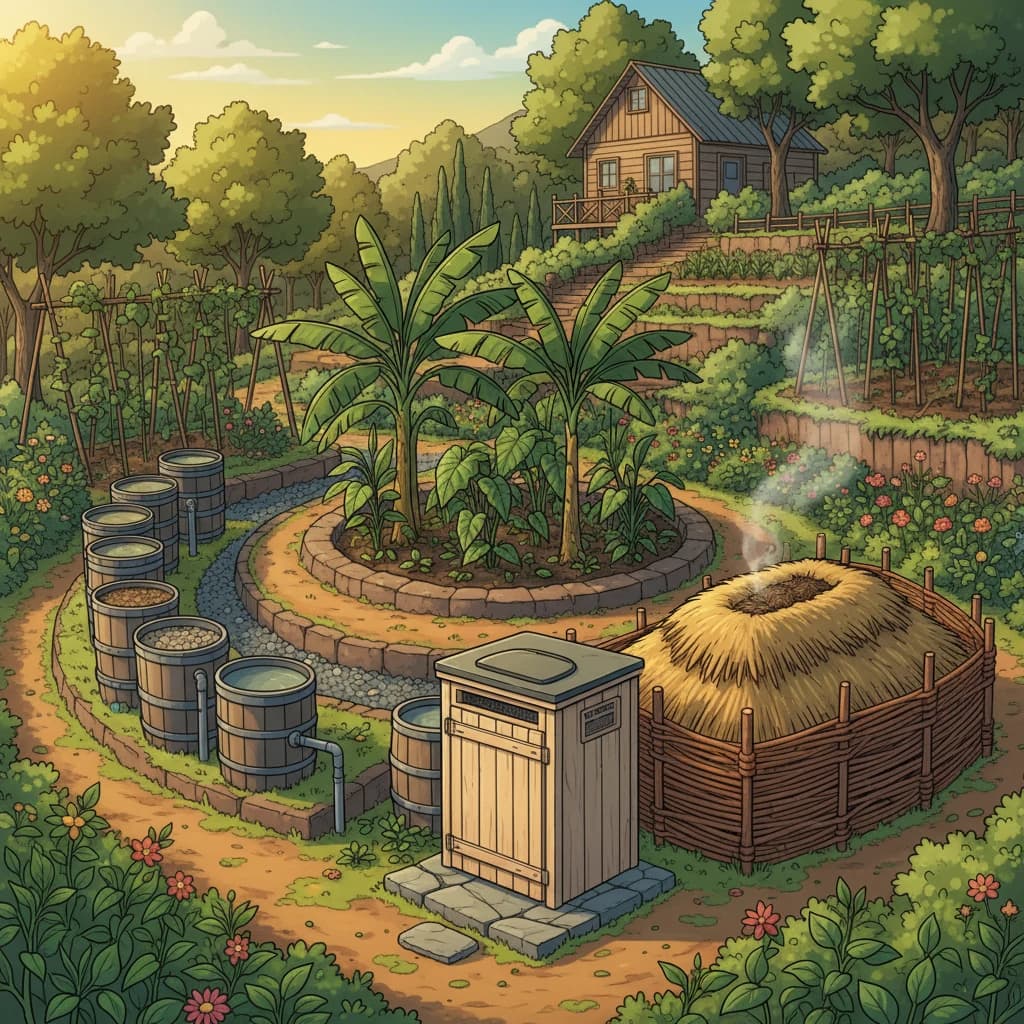
The biggest waste stream from a typical home isn't kitchen or garden — it's human waste and water. Closing those loops is the most powerful and the most culturally taboo.
- Greywater (sink, shower, washing machine drain water) can be diverted into garden beds. A simple greywater system requires no electricity and waters trees indefinitely.
- Composting toilets turn human waste into safe soil amendment over a 1-2 year cycle. Used worldwide for decades. Code-compliant systems exist.
- Humanure is real — but it requires care, knowledge, and willingness to handle a topic most people avoid. Don't start here unless you're committed to learning the safety practices.
These systems aren't for every household. But understanding that they exist — and that millions of people use them safely — changes how you think about "waste."
When Waste Genuinely Leaves
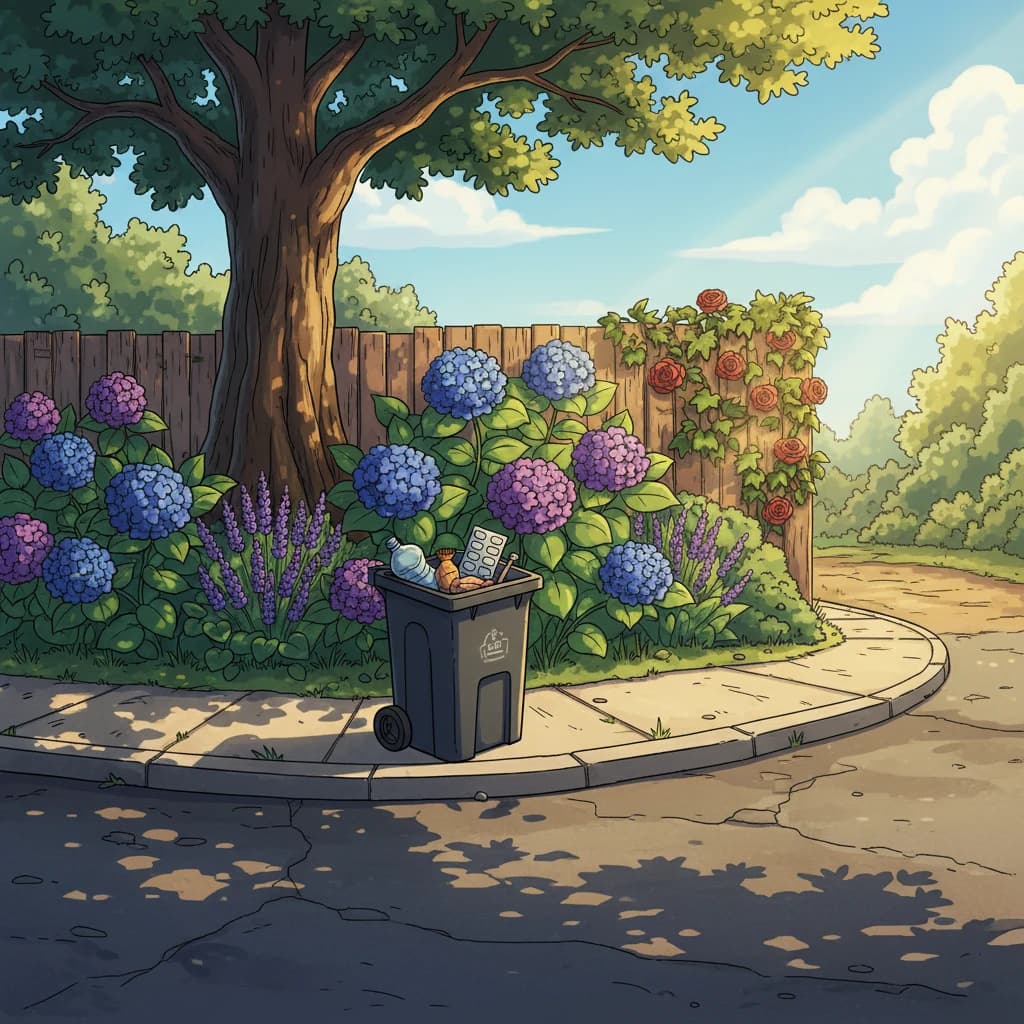
Even with full closed-loop systems, some waste genuinely leaves. That's OK.
- Plastic packaging — recycle what you can, refuse what you can ahead of buying it.
- Bones, hard shells — eventually compost but slowly. Some sites bury them in long-term beds.
- Industrial-process outputs (treated wood, painted materials) — these don't belong in your loops. Deal with them as conventional waste.
The metric is: how small can the "leaves the site" pile get? A conventional household fills a 96-gallon trash bin weekly. A serious permaculture household can run a small kitchen-scraps-only bag every other week.
What This Means For You
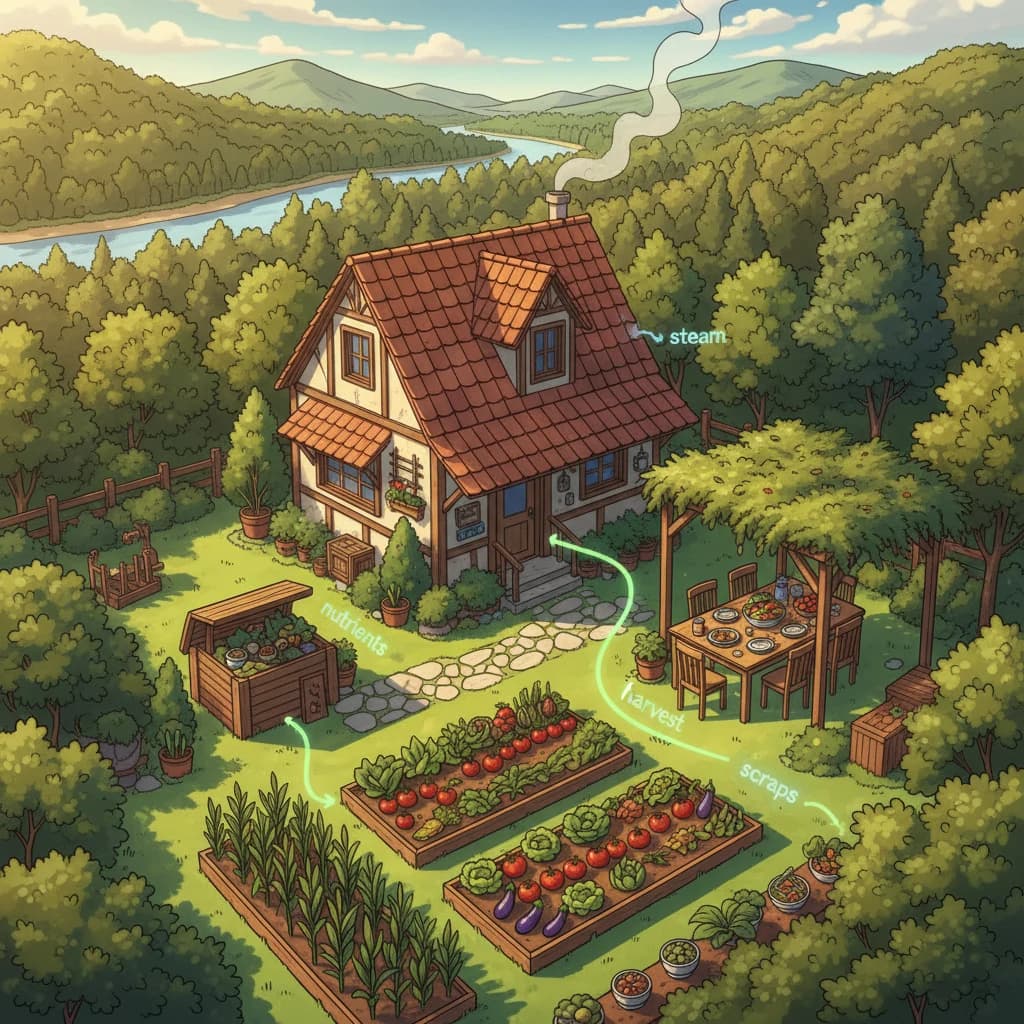
Produce no waste is the principle that turns "trash" into "uncashed checks."
What to take away
- Waste is just resources in the wrong place. Every output should become an input.
- Three buckets — feed back, store for later, leaves the site. Goal: shrink the third.
- Kitchen first, garden second. Compost, worm bin, chickens, bokashi.
- Cover crops and chop-and-drop are how you close the garden loop.
- Greywater and composting toilets close the biggest loops most people ignore.
Mistakes to skip
- Don't set up everything at once. One loop at a time, well-tuned, beats five half-broken systems.
- Don't buy fancy gear before learning the basic version. A homemade compost pile teaches you what a $400 tumbler hides.
- Don't feel guilty about the residual waste. Some leaves the site. The goal is "as little as reasonably possible," not zero.
Next lesson: Use Small and Slow Solutions — the principle that prevents more permaculture failures than any other.
Check Your Understanding
Answer these questions to complete the lesson and see how other learners responded.
Question 1 of 3
In permaculture thinking, what is "waste"?
Enjoying the Academy?
Sign up for free to track your progress, earn skills, and get personalized planting dates.
Sign Up for Free