
Catch and Store Energy
7 min read
What You'll Learn
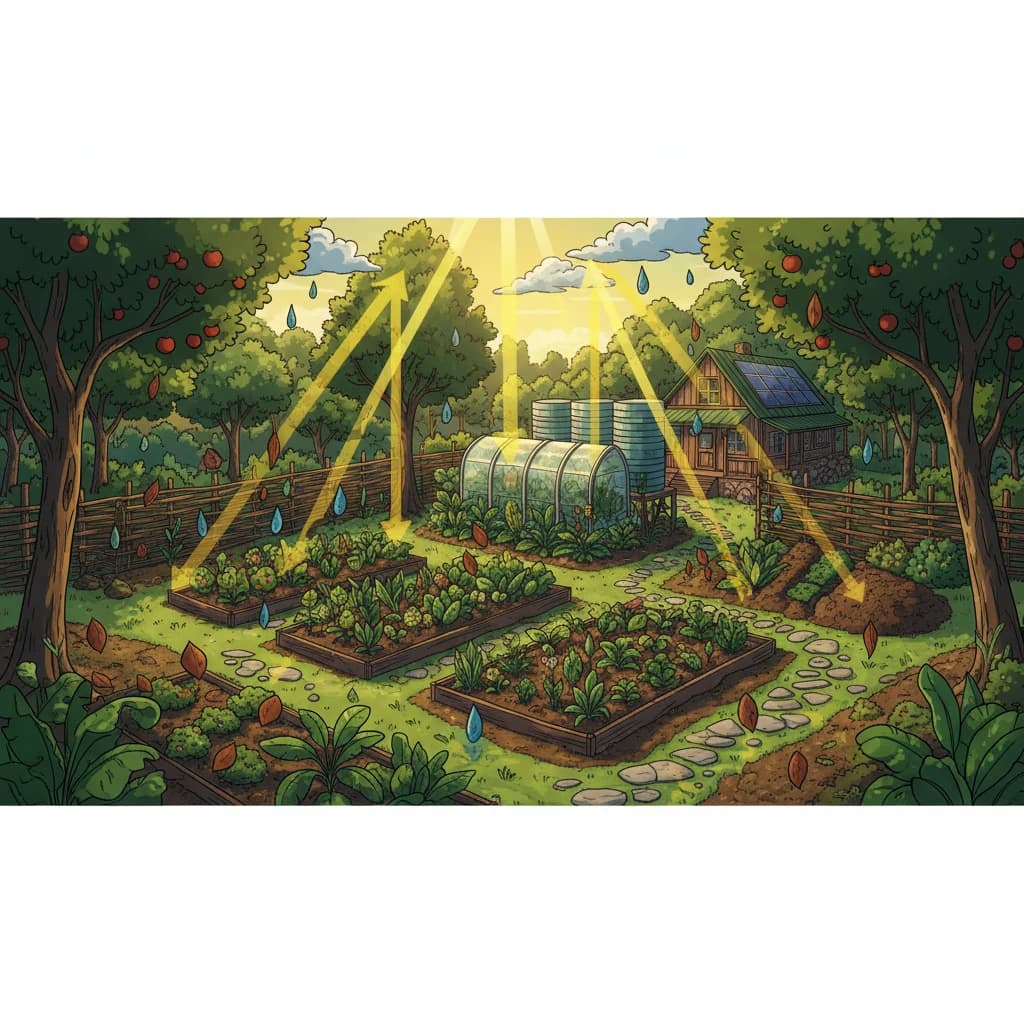
Every resource that enters your site — sunlight, rain, wind, leaves, food scraps — should get used as many times as possible before leaving. The principle that turns gardens into accumulating wealth.
Energy Wants to Leave
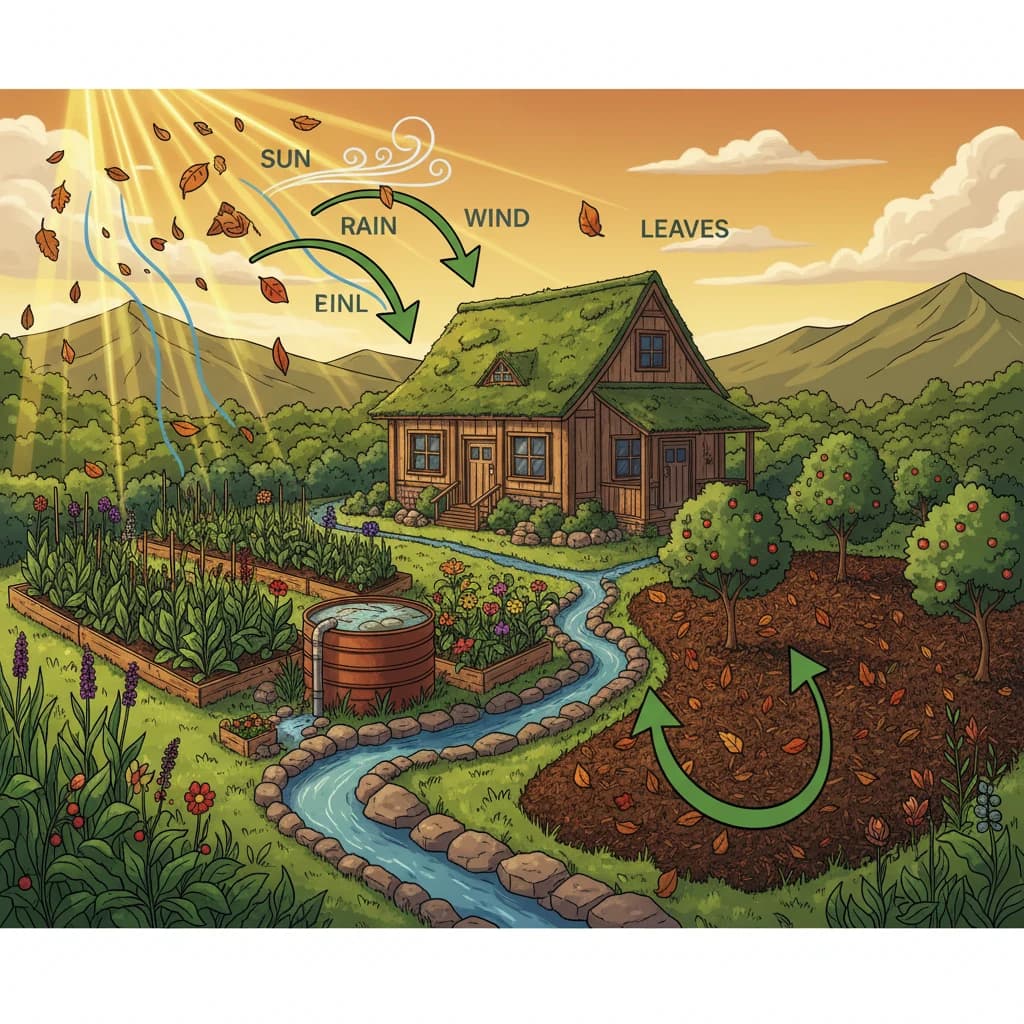
Sunlight hits your site, warms the ground, and most of it bounces back into space. Rain falls, runs off, and ends up in the storm drain. Leaves drop, get raked up, and get hauled away. Food scraps go in the trash. Wind blows past, doing nothing for you.
Mollison's second principle: catch and store energy. Every one of those flows is a resource. A permaculture site is designed so they linger — collected, stored, and used as many times as possible before they leave.
The Big Six Energies
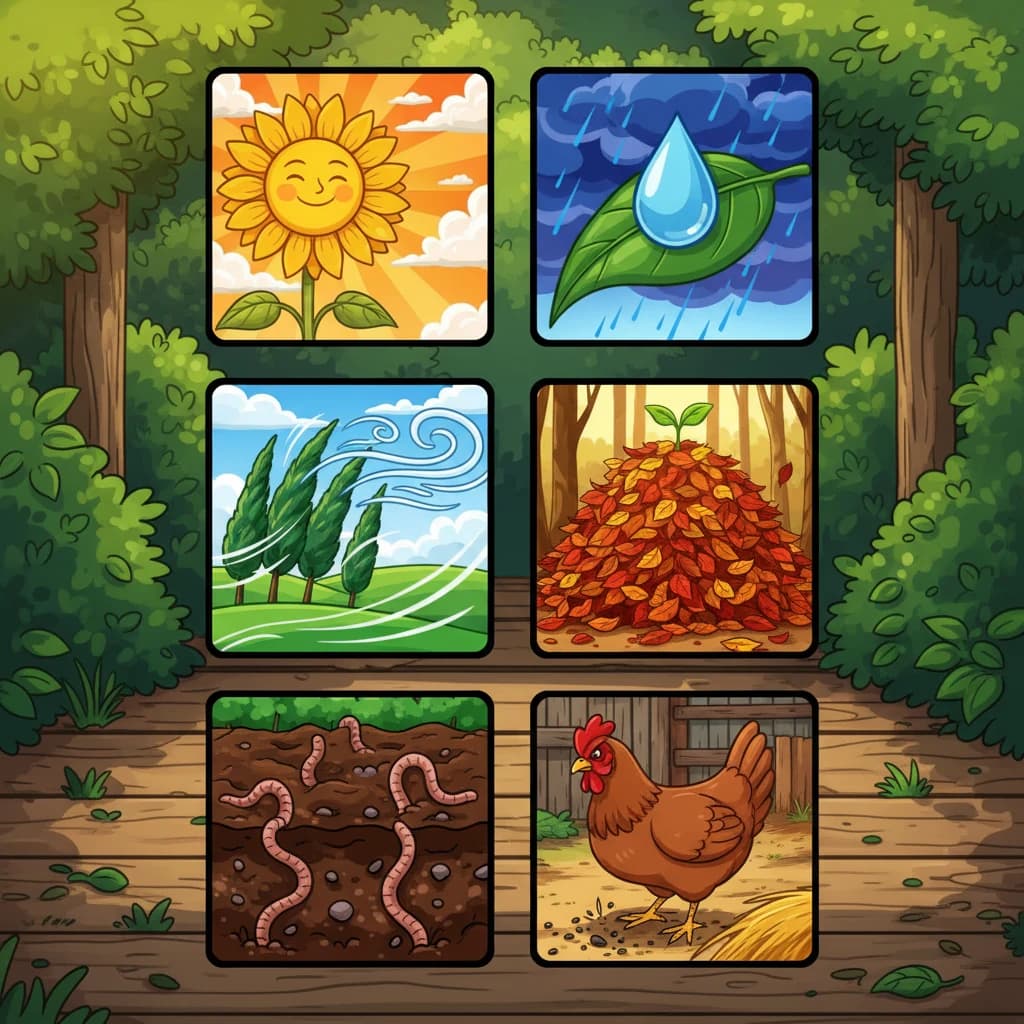
Six kinds of energy hit a typical site:
- Solar energy — the obvious one. Plants capture it via photosynthesis. So can solar panels, dark surfaces that warm up, and water in tanks.
- Water (rain, snow, dew) — falls for free. Most sites send 80%+ of it back out as runoff. A well-designed site holds it.
- Wind — moves seeds, cools surfaces, stresses plants. Can be used (windmills, ventilation) or shielded against (windbreaks).
- Biomass — leaves, branches, weeds, grass clippings. Looks like waste. Is actually pre-fertilized soil-builder.
- Soil life — bacteria, fungi, worms doing free work underground. The richer the soil life, the more "energy" your site holds.
- Animal effort — chickens scratching, cows grazing, bees pollinating. Domestic animals are mobile energy converters.
The discipline is: make sure each of these does as much work as possible before leaving the site.
How Plants Catch and Store
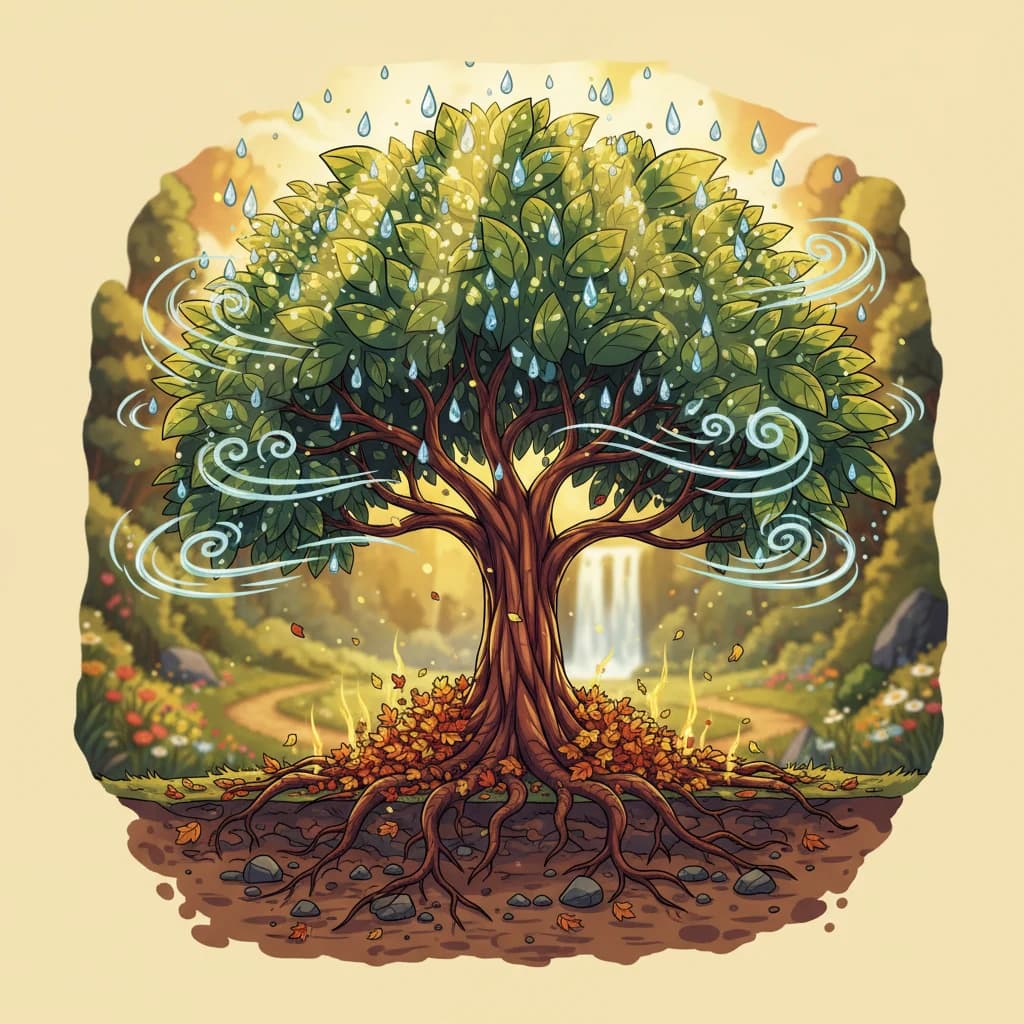
Plants are nature's energy-catchers. A single tree:
- Catches sunlight in its leaves and converts it to sugars (energy stored in plant tissue).
- Catches rainwater in its canopy, slows the drop, and lets the soil absorb it instead of running off.
- Catches biomass by dropping leaves, which become next year's soil.
- Catches wind in its canopy and slows it for everything downwind.
- Provides habitat for birds and pollinators (more biological energy).
Plant a tree and you've installed a five-way energy catcher. Plant a forest of them and you have a system. This is why permaculture obsesses about trees — they capture more energy more ways than anything else.
Water Storage — The Highest-Leverage Move
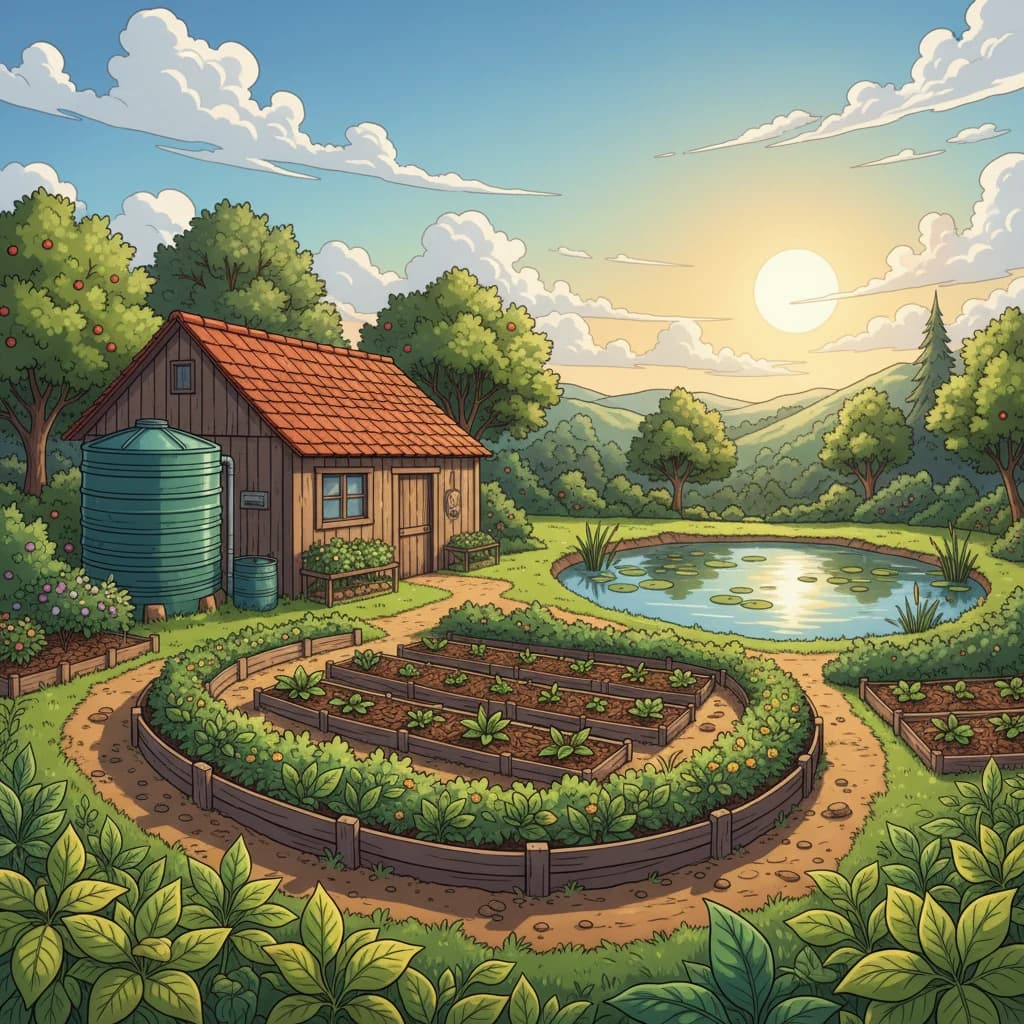
If you only do one "catch and store energy" thing, do water. It's the single highest-leverage move on most sites.
- Swales on contour — long shallow ditches that catch runoff and let it sink into the ground. Free, made with a shovel, last decades.
- Ponds — store water for irrigation, attract wildlife, create microclimates.
- Rain tanks/cisterns — collect roof runoff. A 1,000 sq ft roof catches ~620 gallons in a 1-inch rain.
- Mulch — keeps soil from drying out, multiplies effective rainfall.
- Soil organic matter — every 1% increase in organic matter holds an additional 25,000 gallons of water per acre.
Water is the resource that limits everything else. A site that holds water grows food in droughts that kill conventional gardens.
Did You Know?
A single hectare of healthy permaculture soil holds enough water for a 90-day drought. The same hectare under conventional tillage holds maybe 20 days of water. The difference is what catch-and-store does over a few years of practice.
Storing Energy as Plants and Soil
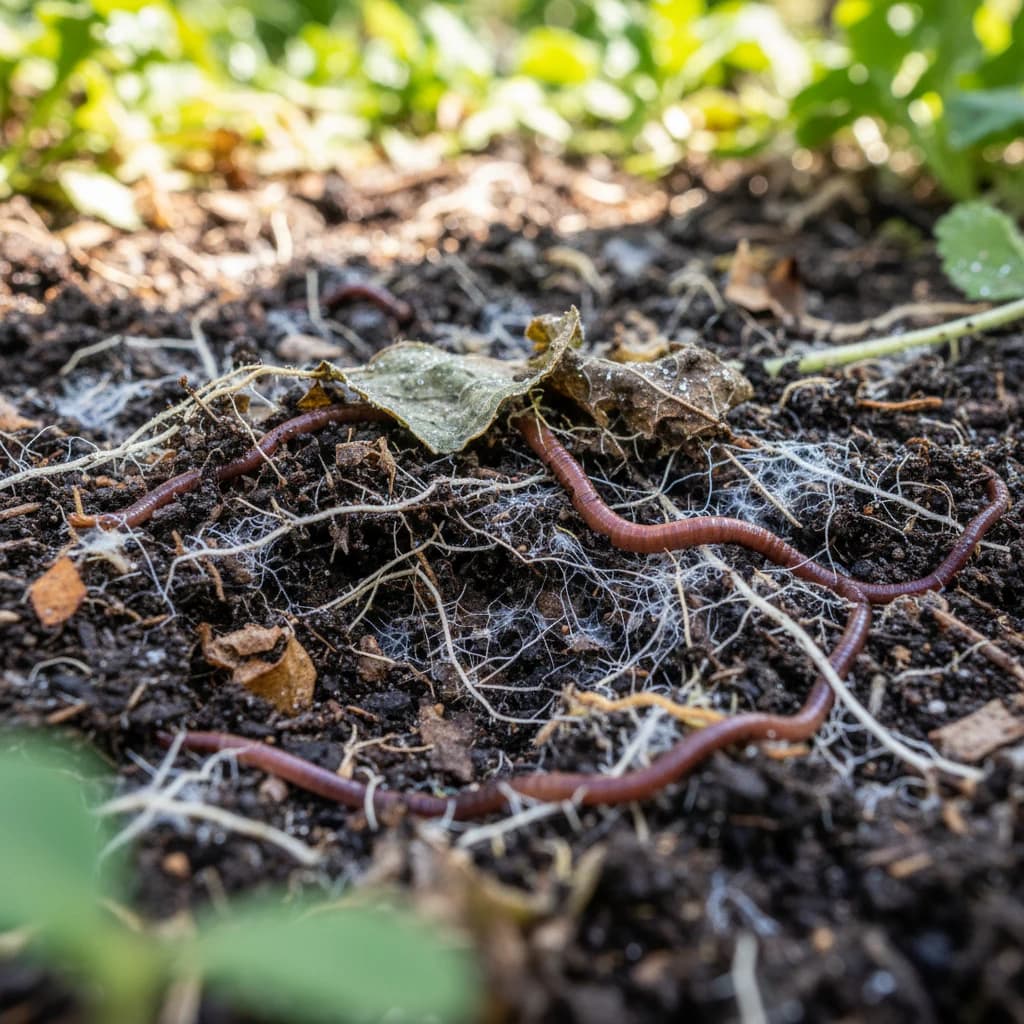
Beyond water, the most important storage on a site is the soil itself. Living soil is a battery that holds:
- Carbon captured from the air via plants → stored as organic matter.
- Water held in the spongy structure of soil rich in organic matter.
- Nutrients stored in microbial bodies, slowly released to plant roots.
- Future crops — every square foot of healthy soil is potential food next year.
Building soil is permaculture's long game. It compounds. A site managed well for ten years has hugely more "stored energy" than the same site at year zero. That's why mature systems get easier, not harder.
Tip
The fastest way to build soil-stored energy is also the laziest: stop hauling biomass off the site. Leaves, grass clippings, and prunings should stay where they fell or move to compost. Every truckload of "yard waste" you remove is energy walking out the gate.
Storage Beyond the Garden
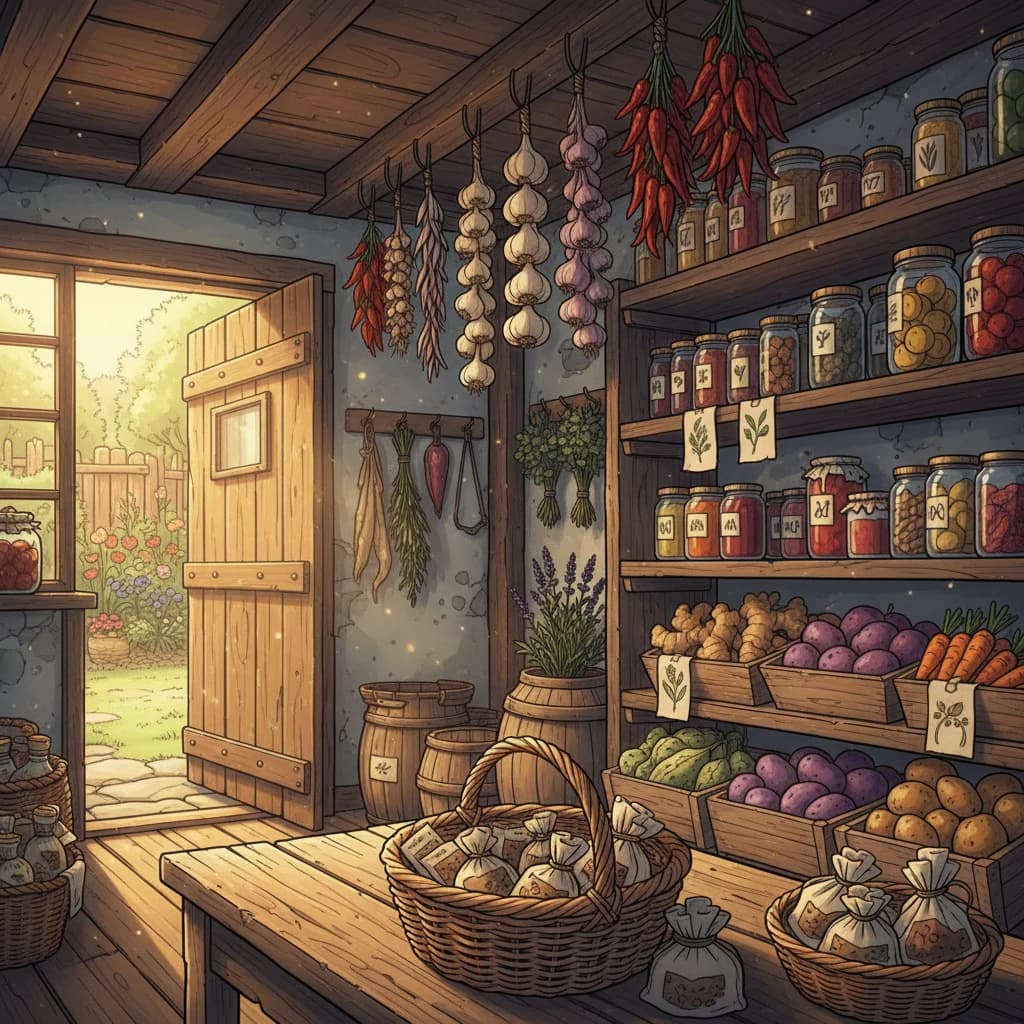
The principle scales beyond plants and water. Stored energy includes:
- Preserved food. Canning, drying, fermenting, freezing. A summer of tomatoes becomes 12 months of pasta sauce.
- Saved seeds. Next year's garden, paid for once with this year's effort.
- Compost. Banked nutrients ready for next planting.
- Wood for heat or building. Tree prunings stored as firewood or stacked as habitat.
- Knowledge. Notes from your garden journal compound year over year.
Every form of storage is the same idea: capture surplus when energy is abundant, use it when it's scarce.
What This Means For You
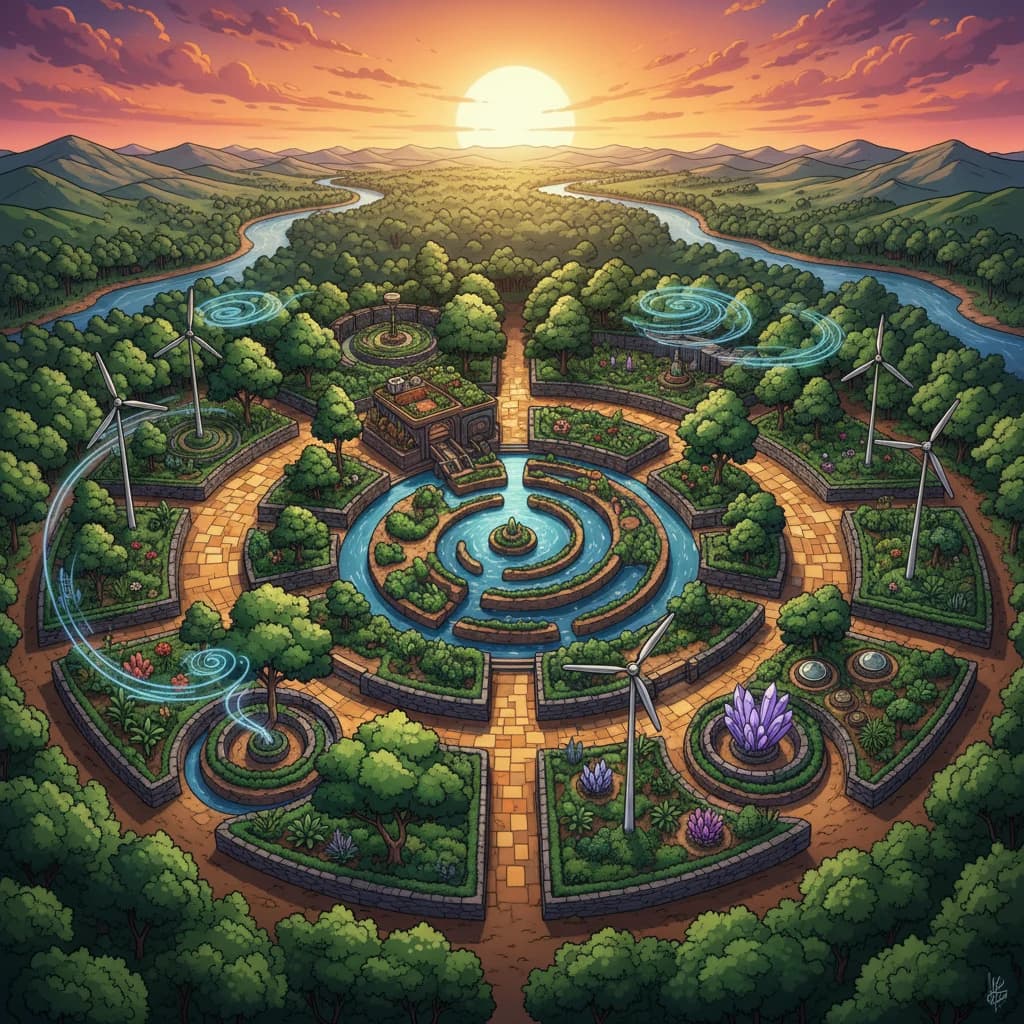
Catch and store energy is the principle that turns a garden into a long-term wealth-builder.
What to take away
- Six energies hit your site — sun, water, wind, biomass, soil life, animals. All of them want to leave.
- Plants are five-way catchers — sun, water, biomass, wind, habitat. Plant a lot of them.
- Water is the highest-leverage move — swales, ponds, mulch, tanks, soil organic matter.
- Soil is the battery — building it compounds for decades.
- Storage scales beyond the garden — preserved food, saved seeds, knowledge.
Mistakes to skip
- Don't haul biomass off the site. Every leaf you rake to the curb is energy walking away.
- Don't over-engineer water systems on day one. Start with a swale you can dig in a weekend before contemplating a backhoe-built pond.
- Don't forget the social storage. Knowledge passed to the next person is the longest-lasting energy capture there is.
Next lesson: Produce No Waste — the principle that connects every "catch" to the next "use."
Check Your Understanding
Answer these questions to complete the lesson and see how other learners responded.
Question 1 of 3
In permaculture, what is the highest-leverage "energy" to catch and store on most sites?
Enjoying the Academy?
Sign up for free to track your progress, earn skills, and get personalized planting dates.
Sign Up for Free