Types of Garden Beds and Containers
9 min read

What You'll Learn
Learn about in-ground beds, raised beds, containers, and vertical systems — and figure out which one is right for your space and budget.
You Don't Need a Farm

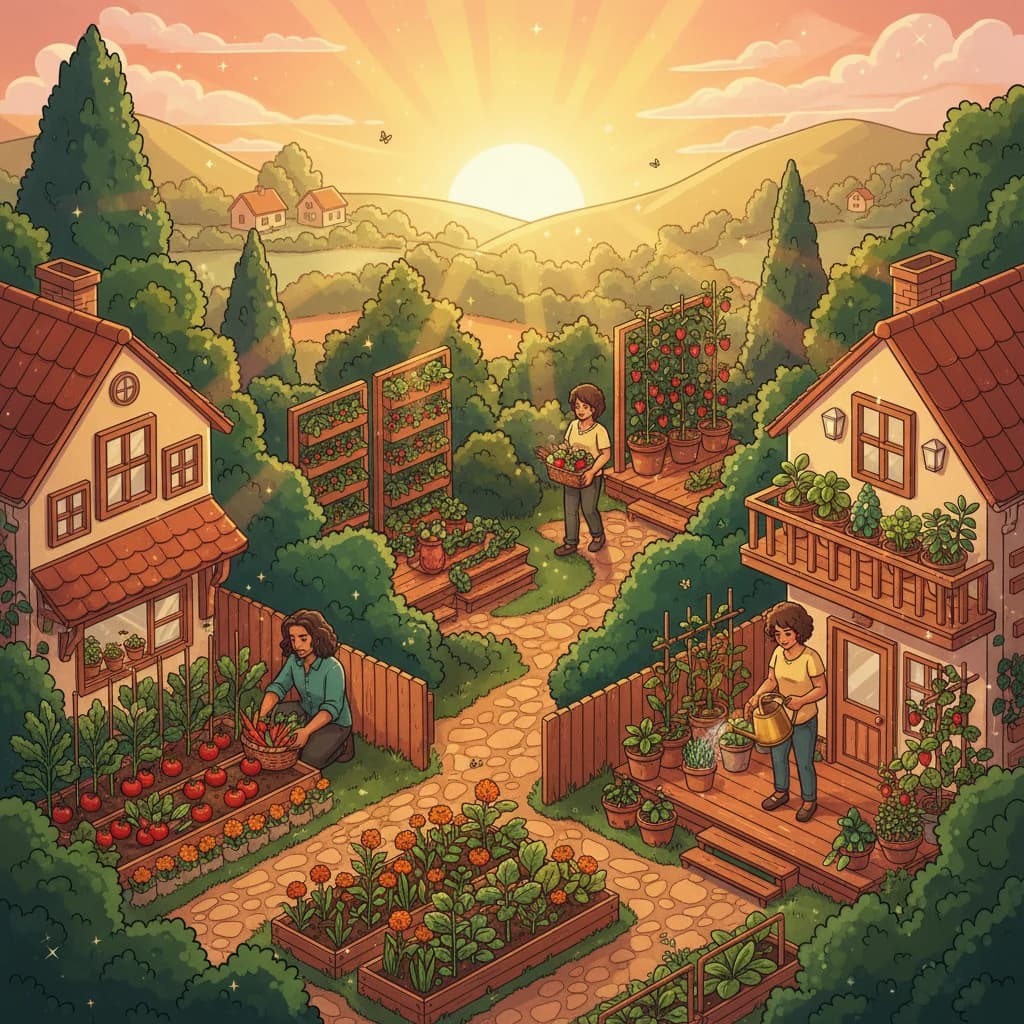
One of the biggest myths in growing is that you need a big backyard with rows of tilled soil. You don't. People grow food on balconies, patios, rooftops, windowsills, and in tiny urban backyards all over the world. The key is choosing the right growing setup for your space.
In this lesson, we'll cover the main types of garden beds and containers, what each one is best for, and how to decide which one fits your situation. By the end, you'll have a clear plan for where your plants are going to live.
In-Ground Garden Beds

If you have a yard with decent soil and good sunlight, in-ground gardening is the most straightforward approach. You're planting directly into the earth — the way humans have grown food for thousands of years.
Pros:
- Free — you're using soil that's already there
- Deep root space — roots can grow as deep as they want
- Natural ecosystem — earthworms, beneficial microbes, and soil life are already present
- Holds moisture well — large soil volume stays moist longer than containers
Cons:
- Soil quality varies — your native soil might be heavy clay, sandy, or compacted
- Harder to control — weeds, pests, and drainage are harder to manage
- Bending and kneeling — you're working at ground level
Tip
Before planting in-ground, do a simple soil test. Grab a handful of moist soil and squeeze it. If it forms a tight ball that doesn't crumble, you have clay soil (needs amending). If it falls apart immediately, you have sandy soil (needs organic matter). If it holds together but crumbles when poked, you've got good soil.
Raised Garden Beds

Garden beds built above ground level, typically framed with wood, stone, or metal, and filled with a custom soil mix. They offer better drainage, warmer soil, and less bending. are one of the most popular growing methods for a reason — they solve most of the problems that come with in-ground gardening.
A raised bed is simply a frame (usually wood, but also metal, stone, or concrete blocks) filled with a custom soil mix. They can be as small as 2×4 feet or as large as 4×12 feet. The ideal height is 12–18 inches, which gives roots plenty of depth while keeping you from bending too much.
Why raised beds work so well:
- You control the soil — fill them with a mix of topsoil, compost, and organic matter
- Better drainage — water drains through rather than pooling
- Warmer soil — raised soil warms up faster in spring, extending your growing season
- Less bending — easier on your back, especially at 18+ inches high
- Clear boundaries — weeds from surrounding areas don't creep in as easily
- They look great — a well-built raised bed is a design feature, not just a garden tool
Did You Know?
A 4×8 foot raised bed can produce 100+ pounds of vegetables in a single growing season. That's enough to noticeably reduce your grocery bill while feeding your family fresh, chemical-free food.
The main downside is cost — you need lumber, soil, and hardware. But a raised bed built well will last 10+ years, making it one of the best investments in your growing journey.
Container Gardening

No yard? No problem. Growing plants in pots, planters, buckets, or any vessel with drainage holes. It works anywhere — balconies, patios, windowsills, even indoors. is the most flexible way to grow food. If you have a balcony, a patio, a front step, or even a sunny window, you can grow in containers.
Almost anything can be a container: traditional terracotta pots, plastic planters, fabric grow bags, wooden crates, food-safe buckets, even old laundry baskets lined with landscape fabric. The only requirement is drainage holes — water needs somewhere to go.
Size guidelines:
- Herbs and leafy greens — 6–8 inch pots work fine
- Tomatoes, peppers — need at least 5-gallon containers (12+ inches deep)
- Root vegetables — carrots need 12+ inches of depth; radishes can manage 6 inches
- Strawberries — happy in hanging baskets, window boxes, or stacked planters
Container growing tips:
- Containers dry out faster than ground soil — check moisture daily in hot weather
- Use quality potting mix, not garden soil (which compacts in containers)
- Feed more frequently — nutrients wash out with each watering
- Group pots together to create a microclimate and reduce water loss
Tip
Fabric grow bags (also called smart pots) are one of the best container options for beginners. They're cheap, lightweight, have excellent drainage, and When roots reach the edge of a fabric container, they're exposed to air and stop growing outward. This prevents root circling and encourages a denser, healthier root system. the roots naturally, preventing root-bound plants.
Grow Towers and Vertical Systems

When space is truly limited, the only direction left is up. Vertical growing systems — towers, wall-mounted planters, stacked containers — let you grow a surprising amount of food in a very small footprint.
Vertical gardening systems that stack multiple planting pockets in a column, allowing you to grow many plants in the floor space of a single pot. are especially popular for herbs and leafy greens. A single tower can hold 20–30 plants in the floor space of a regular pot.
Types of vertical growing:
- Grow towers — stacked ring or pocket systems, great for herbs and lettuce
- Trellis and vine support — for climbing plants like peas, beans, cucumbers, and tomatoes
- Wall-mounted planters — pocket systems that attach to fences or walls
- Hanging baskets — perfect for strawberries, trailing herbs, and cherry tomatoes
You'll dive deeper into vertical growing methods in Level 3, including how to set up trellises and choose the right system for your plants.
Did You Know?
Some grow tower systems use A method where water moves upward through soil or a wick material from a reservoir below, providing consistent moisture to plant roots without overwatering. reservoirs that can keep plants watered for days. This makes them ideal for people who travel or forget to water — the system does it for you.
How to Choose Your Setup

Here's a simple decision tree:
Do you have a yard with soil?
- Yes → Consider in-ground or raised beds
- No → Containers, grow towers, or vertical systems
What's your budget?
- Minimal → In-ground (free) or repurposed containers (buckets, crates)
- Moderate → Fabric grow bags or a small raised bed
- Investment → Quality raised beds or a grow tower system
How much space do you have?
- Just a windowsill → Small herb pots
- A balcony or patio → Containers and grow bags
- A small yard → One or two raised beds
- A large yard → Multiple raised beds or in-ground rows
How much maintenance do you want?
- Low → Self-watering containers or wicking systems
- Medium → Raised beds with mulch
- Hands-on → In-ground gardening
Tip
You don't have to choose just one. Many growers use a mix — a raised bed for vegetables, containers on the patio for herbs, and a hanging basket for strawberries. Start with one setup and expand as you learn.
What This Means For You

You don't need a big yard, expensive equipment, or years of experience to start growing. You need a space that gets some sunlight and a container (or bed) to put soil in.
Here's what to remember:
- In-ground is free but requires decent native soil
- Raised beds give you the most control and are worth the investment
- Containers work anywhere — balconies, patios, windowsills
- Vertical systems maximize limited space
- Start with one setup and expand as your confidence grows
- Any container with drainage holes can grow food
In the next lesson, we'll cover the basic tools you'll need — and you'll be relieved to learn you don't need many.
Check Your Understanding
Answer these questions to complete the lesson and see how other learners responded.
Question 1 of 3
What is the most common advantage of raised garden beds?
Previous Lesson
← Understanding Sunlight and Water
Next Lesson
Your First Tools — What You Actually Need →
Enjoying the Academy?
Sign up for free to track your progress, earn skills, and get personalized planting dates.
Sign Up for Free