How to Grow Poppy
Poppy At a Glance
Difficulty
Moderate
Category
Flower
Sun Exposure
Full Sun, Partial Sun
Frost Tolerance
Frost Tender
Cold Hardiness
Survives to -23°C
Plant Family
Papaveraceae
Growing Season
Cool Season
Plant Lifecycle
Annual
How to Start It
★ Recommended for beginners
Poppies like a cold start, so sow them in late fall or in early spring about 4 weeks before your last frost. Mix the tiny seeds with a little sand, scatter them on bare soil, and press them in with no more than 0.5 cm of soil on top, since they need light to sprout. They come up in 10 to 14 days: thin them to about 15 cm apart.
Poppies have one long main root and almost never survive being moved, so always sow them where they will flower. Once they bloom they drop plenty of seed and often come back on their own every year.
When To Start
First chance to plant
30 Days Before Last Frost
Last chance to plant
30 Days Before First Frost
When should you plant Poppy?
Your planting dates depend on your local climate. Sign up and add your location to unlock personalized dates.
Your Poppy Planting Window
Start planting
May 15, 2026
Last chance
Sep 10, 2026
Your Poppy Calendar
Set your location to turn these into exact dates and reminders.
Scatter poppy seed outdoors, pressed in but not buried
30 days before your last frost· every year
Enjoy your poppies, and let some pods drop their seed
75 days after your last frost· every year· optional
Did you water your poppy seedlings today? Keep the top of the soil damp until they are up and growing.
About 1 days after you plant it
Time to thin the poppy seedlings: snip the extras at soil level so each one has room to grow.
About 24 days after you plant it
Your poppies are growing! Thin crowded seedlings so each plant has room to spread out.
About 34 days after you plant it
Your poppies are almost ready to show off! Water at the soil level, and try not to move them, since they dislike it.
About 54 days after you plant it
Picking time may be here: check your poppy.
About 60 days after you plant it
The Journey Ahead
Poppy's Lifecycle
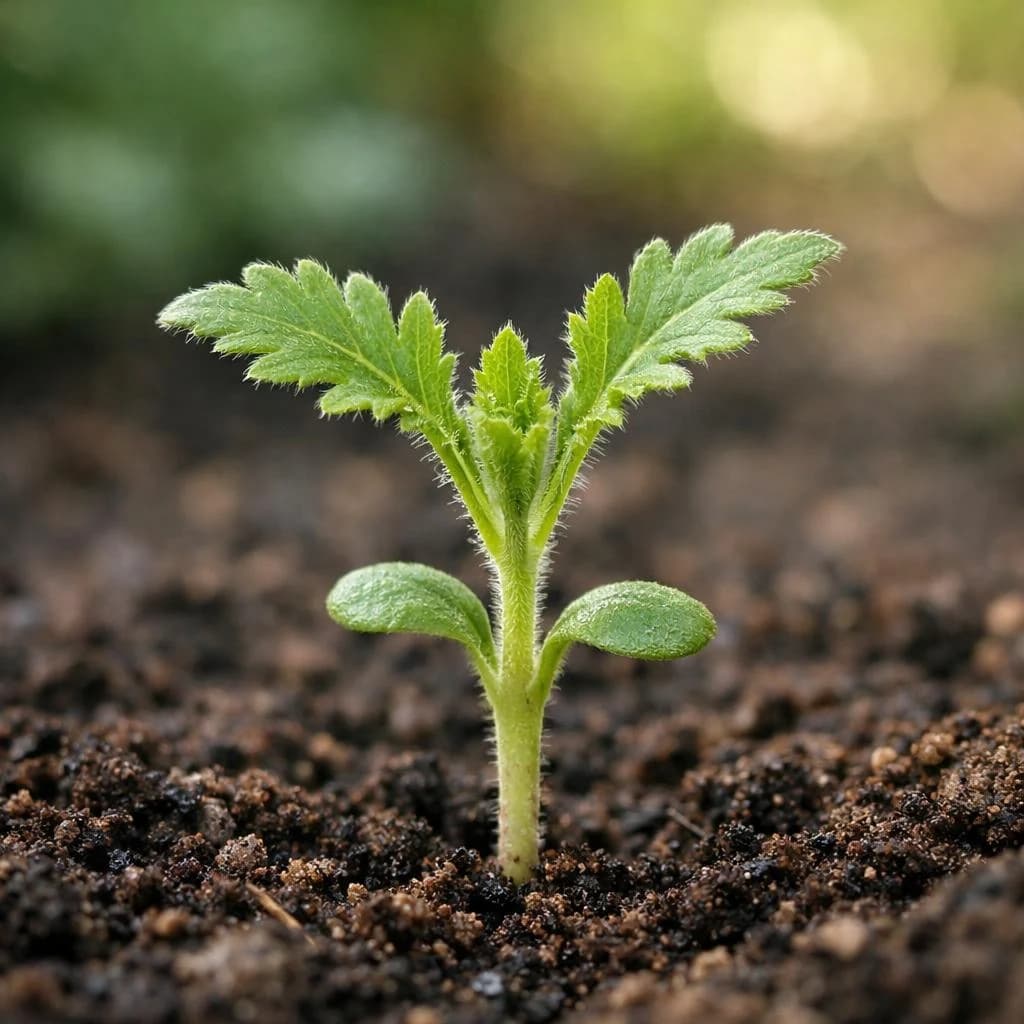
Seedling
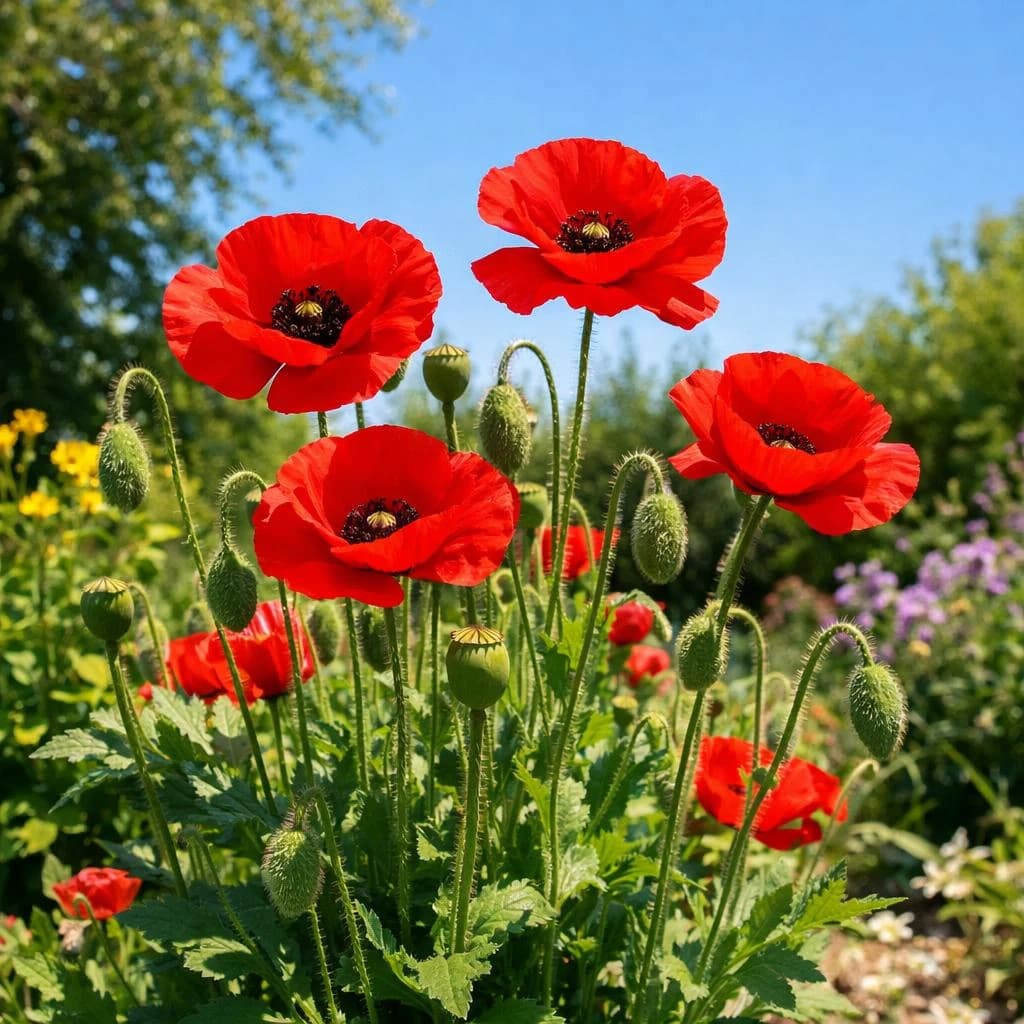
Mature Plant
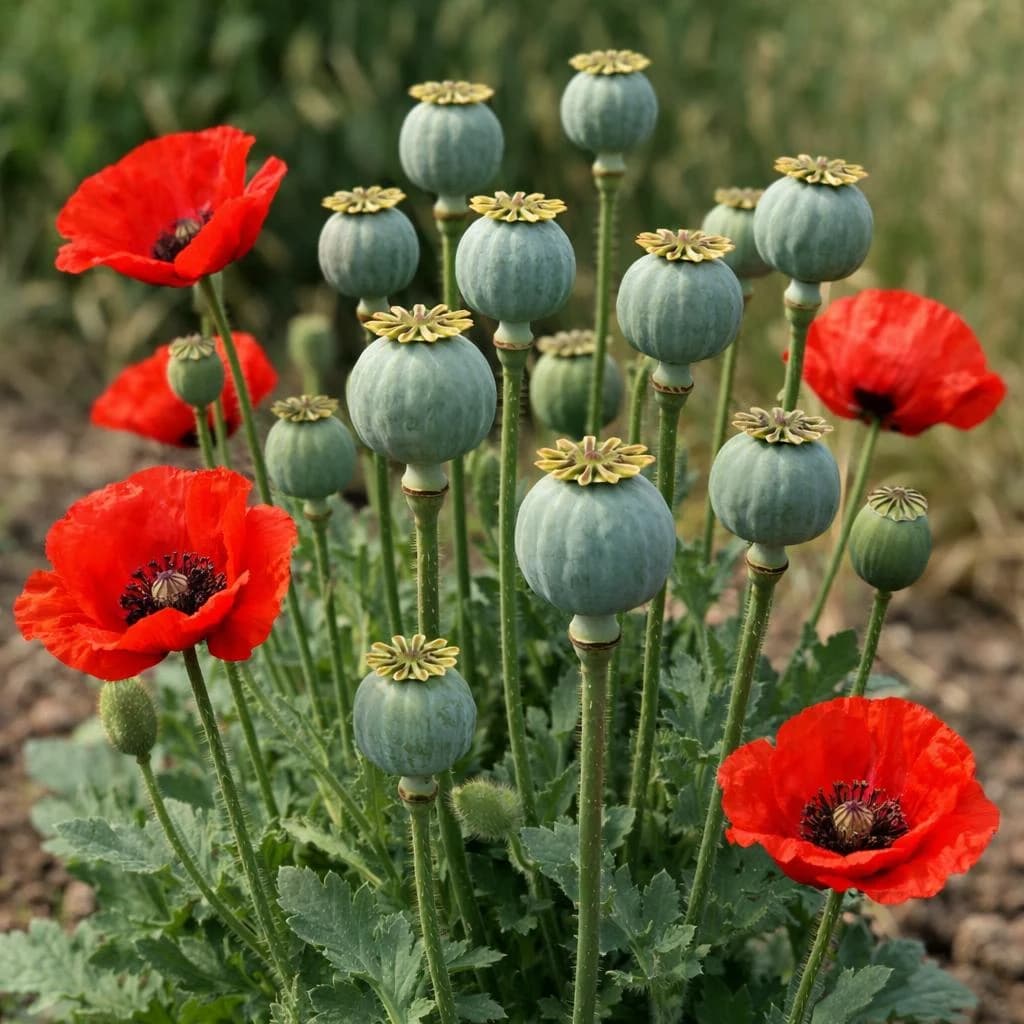
Seed Production
Step 2
Planting & Sprouting
Expect sprouts in 10–14 days
Growing Tips
- 1Sow poppies in full sun.
- 2They like light, well-drained soil, so a little compost is enough, and rich soil only makes floppy stems.
- 3Keep the soil damp until the seedlings are a few cm tall, then water only in long dry spells.
- 4Skip extra feeding, since poppies flower best in lean soil.
- 5Spray aphids off the buds and stems with a strong stream of water.
- 6Poppies are toxic to cats, dogs and other animals, so keep pets from chewing them.
Seedling Phase
Step 3
Growth & Maturity
~60
Days to Maturity
60 cm
Mature Height
30 cm
Mature Width
Pests to Watch For
Diseases to Watch For
Mature Plant
Step 4
Harvesting
Harvest Window
30 days
When to Pick
Harvest flower heads when open
How to Harvest
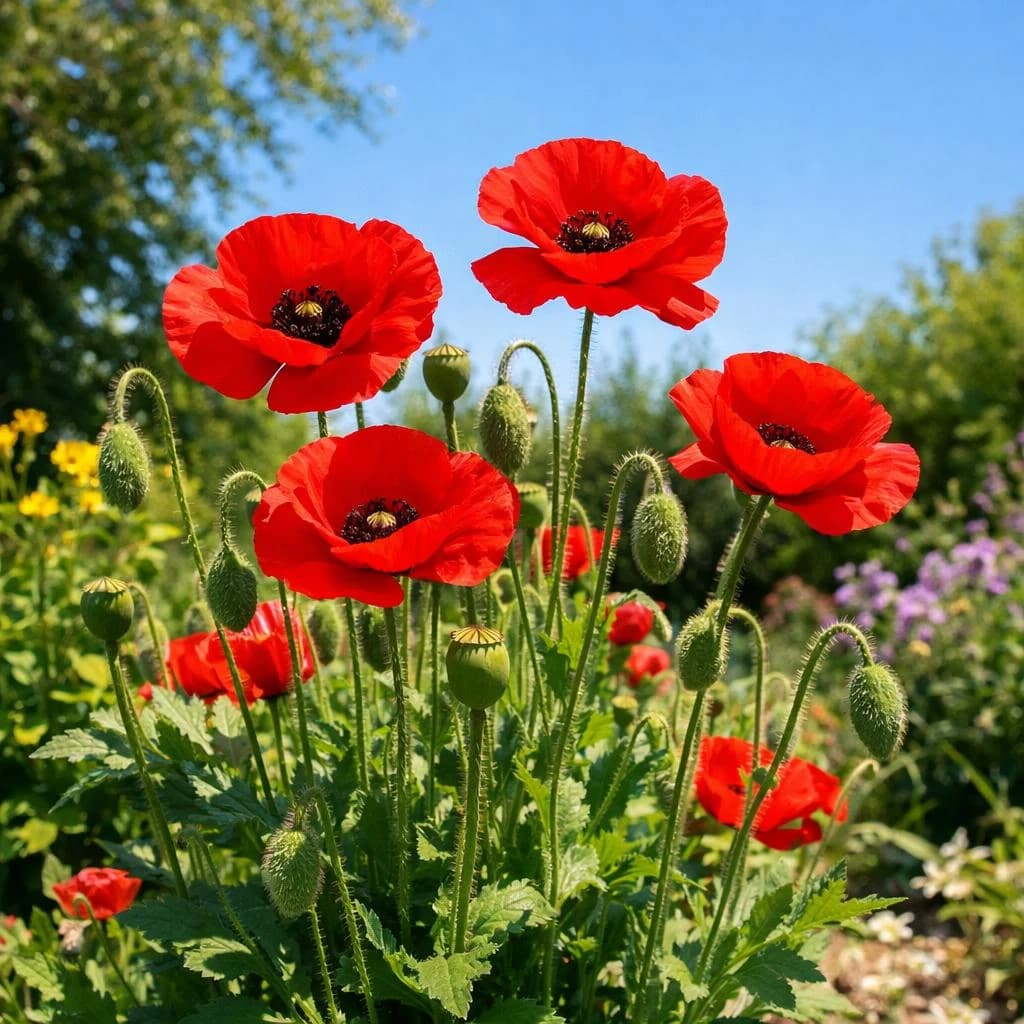
- 1Each poppy flower lasts only a day or two, but new buds keep opening for weeks.
- 2For a vase, cut stems when the buds are just showing colour and dip the cut ends in boiling water for about 10 seconds so they last longer.
- 3Snip off faded flowers to keep new ones coming, or leave them to form seed pods.
- 4Dried pods look lovely in arrangements, so cut them once they turn tan and rattle.
- 5Pull the plants when they turn yellow and tired in midsummer, after shaking their seed over the bed for next year.
Step 5
Saving Seeds
How to Save Seeds
Poppies of the same kind cross with each other, so grow one kind at a time if you want the colours to stay the same, and remember hybrid F1 seeds will not grow true. Leave the pods on the plant until they turn tan, dry and rattle when shaken. Cut them off and tip them upside down over a bowl, and the seeds pour out of the little holes under the cap. Let the seeds dry a few more days, then store them labelled in a cool, dark, dry place, where they keep 3 to 4 years.
Seed Production
Still have a question?
Ask your coach about your poppy.
This page covers what we thought to write down. Your poppy will do something it never mentions, and that is the day a coach beats a guide. Ask Coach Lumen one question right now, free, no account.