How to Grow Clematis
Clematis At a Glance
Difficulty
Moderate
Category
Vine
Sun Exposure
Full Sun
Frost Tolerance
Frost Hardy
Cold Hardiness
Survives to -29°C
Plant Family
Ranunculaceae
Growing Season
Cool Season
Plant Lifecycle
Perennial
How to Start It
★ Recommended for beginners
Clematis is almost always grown from a young potted plant. Plant it in spring, around your last frost, with the base 5 cm deeper than it sat in the pot, which helps it regrow if a stem suddenly wilts and dies. Set it next to a trellis or fence, 150 cm from other climbers, with the roots shaded and the top in sun.
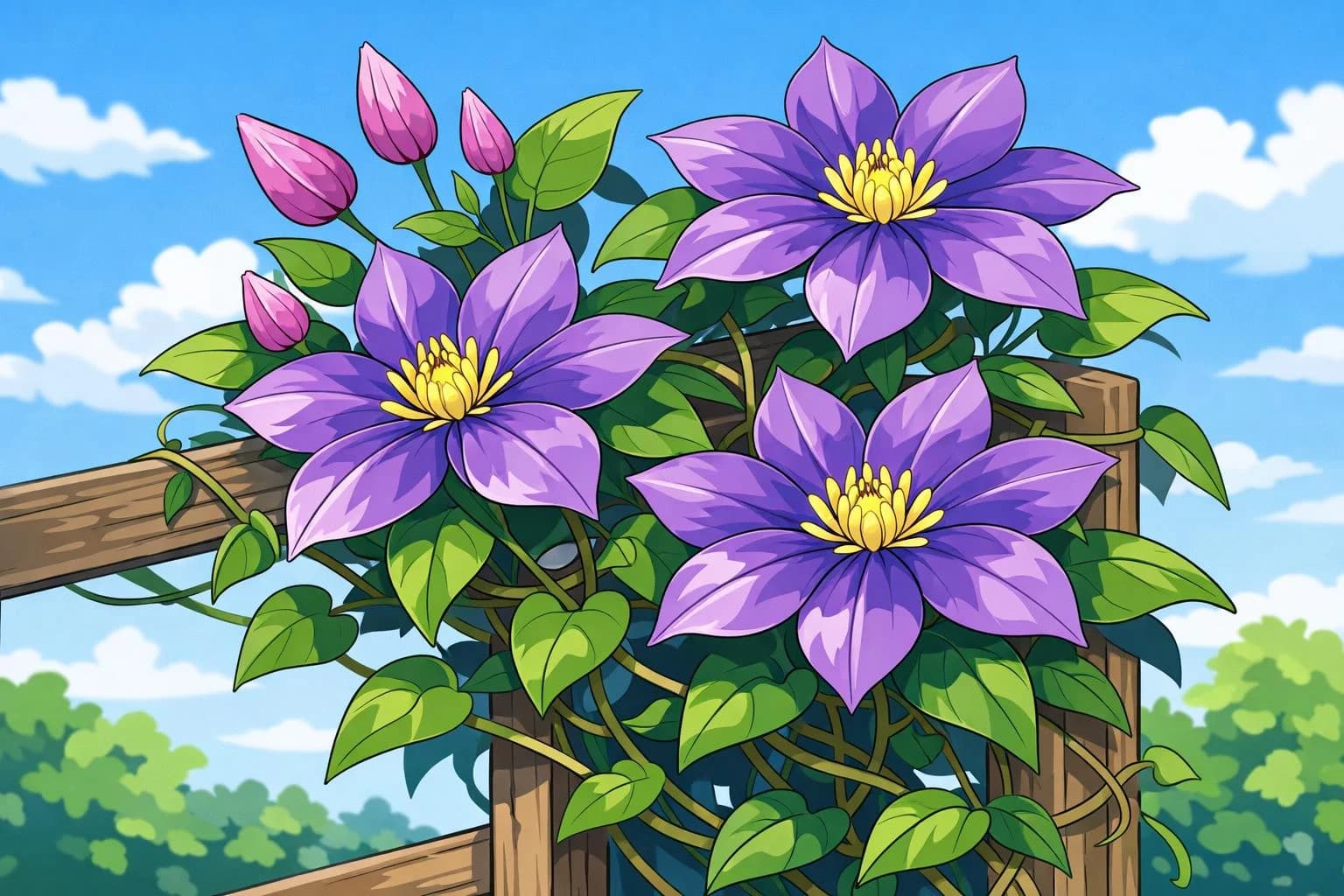
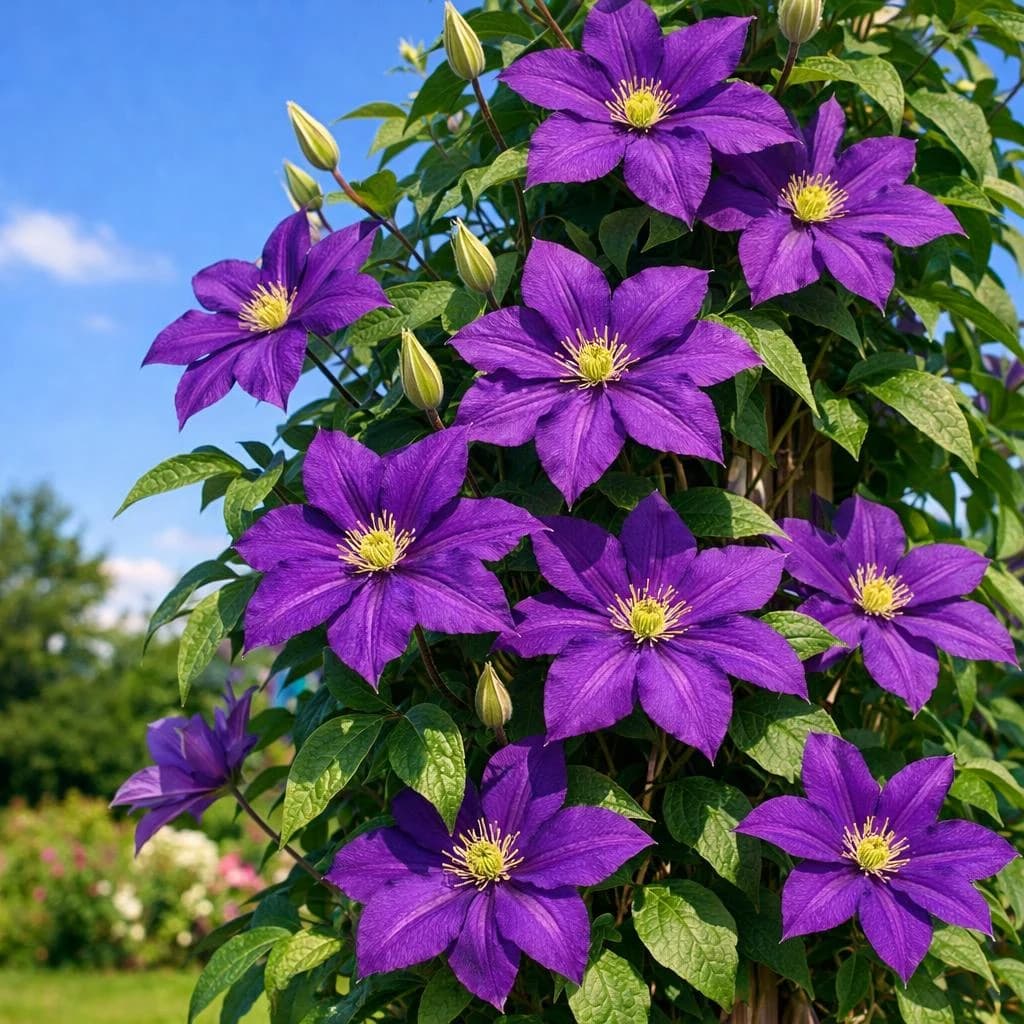
Clematis covers a trellis or fence in big, showy flowers and lives for decades once settled. The rule to remember: flowers in the sun, roots in the cool shade. It often takes a year or two to get going, so do not worry if it is slow at first.
When To Start
Clematis likes cool weather. Sow it in early spring, as soon as the ground can be worked.
We do not have exact sowing dates for this one yet.
When should you plant Clematis?
Your planting dates depend on your local climate. Sign up and add your location to unlock personalized dates.
Your Clematis Planting Window
Start planting
May 15, 2026
Last chance
Sep 10, 2026
Your Clematis Calendar
Set your location to turn these into exact dates and reminders.
Plant clematis deep, roots in shade and top in the sun
Around your last frost
Prune clematis to suit when it flowers, hard for late bloomers
30 days before your last frost· every year
Mulch around clematis to keep its roots cool
1 week after your last frost· every year· optional
Water your new clematis plants well while they settle in. Deep and slow is best.
About 1 days after you plant it
How is your clematis settling in? Guide the new stems gently onto their support.
About 30 days after you plant it
Your clematis is putting down roots. Keep its base shaded and the soil moist.
About 90 days after you plant it
The Journey Ahead
Clematis's Lifecycle

Seedling
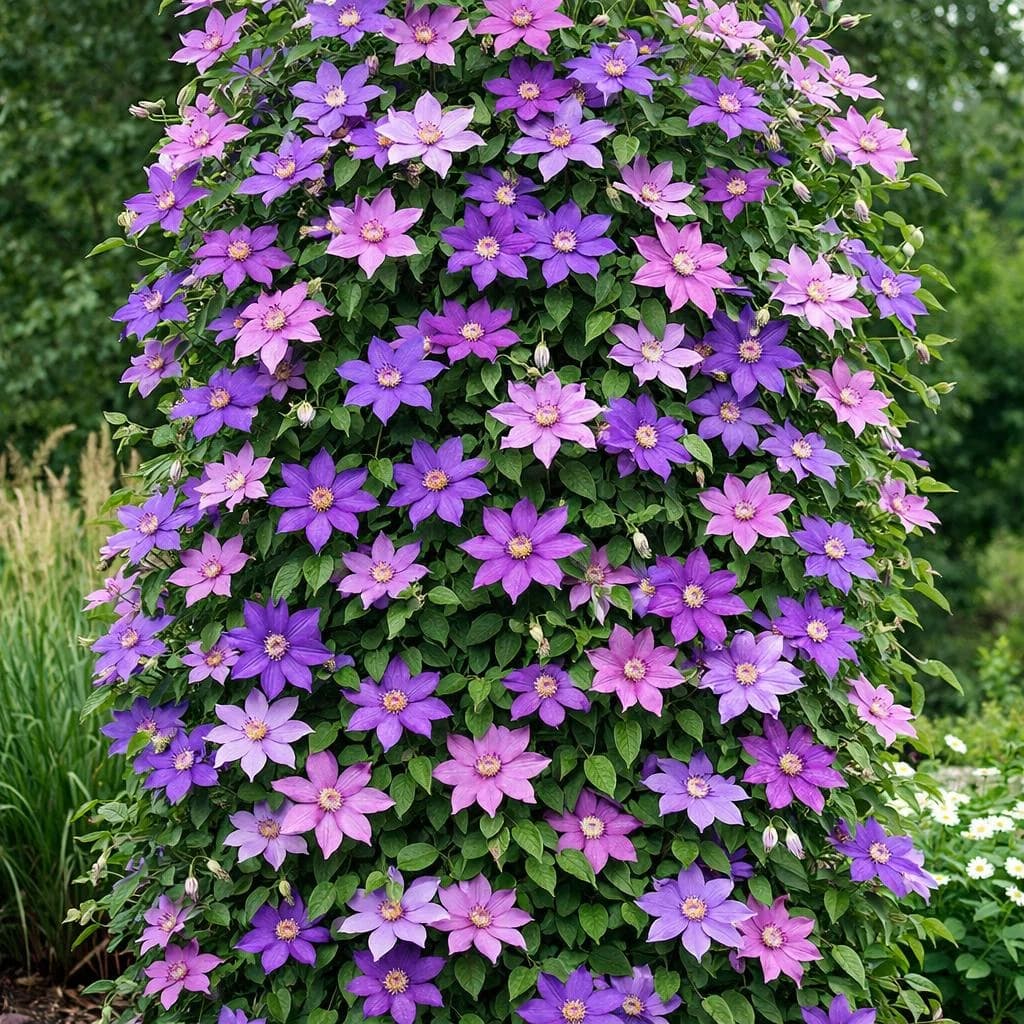
Mature Plant
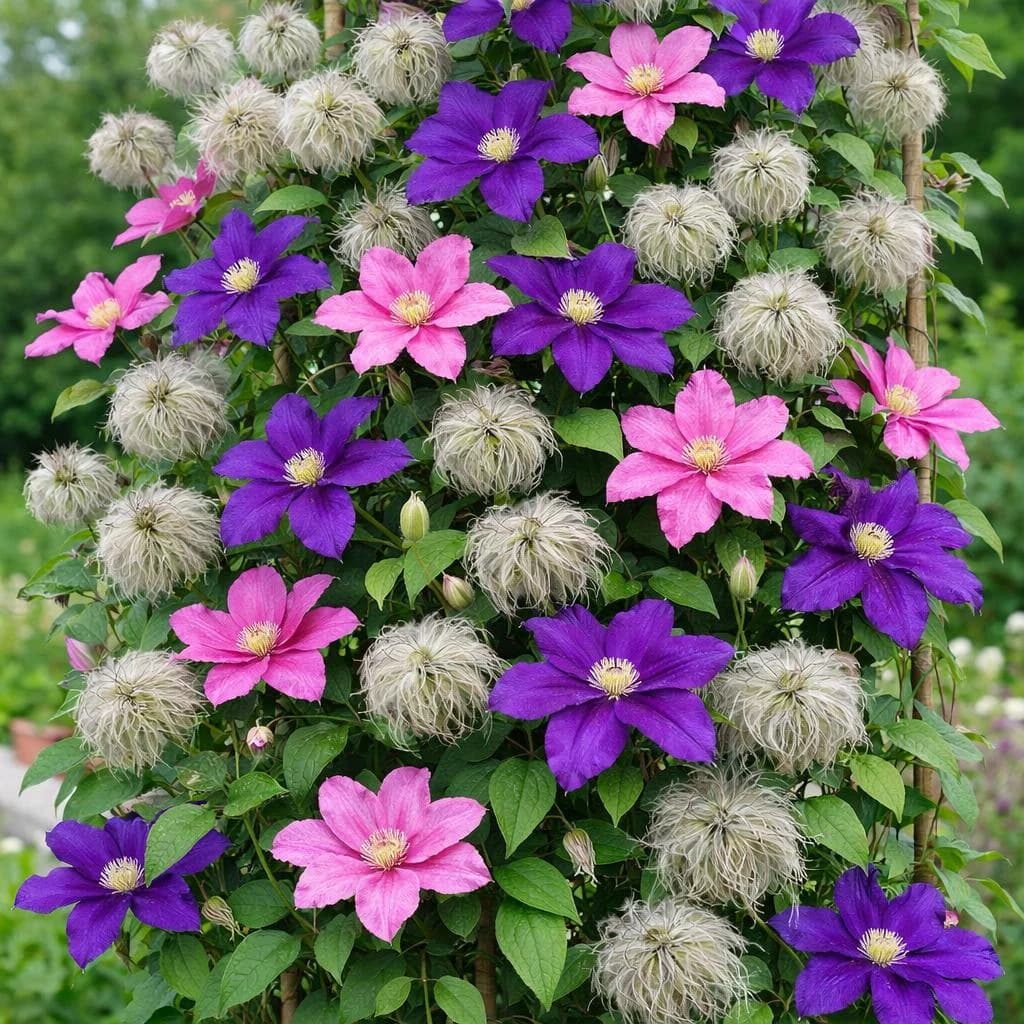
Seed Production
Step 1
Prepare Your Space
150 cm
Plant Spacing
200 cm
Row Spacing
Vertical Growing
Yes: it's a climber; give it a sturdy support to start with.
Succession Planting
No.
Good Companions
Bad Companions
Step 2
Planting & Sprouting
Growing Tips
- 1Give clematis at least 6 hours of sun on its leaves and flowers, but keep its roots shaded with mulch, a flat stone or low plants growing at its feet.
- 2Plant it in rich soil with plenty of compost mixed in, and add a fresh layer of compost around the base each spring.
- 3Water deeply every week in dry weather, since the roots like steady moisture.
- 4Gently tie new stems to the support as they grow, since young stems snap easily.
- 5If a stem suddenly wilts and dies (clematis wilt), cut it off at the base, and new shoots usually come back from below the soil.
- 6All parts of clematis are toxic to people and pets if eaten.
Seedling Phase
Step 3
Growth & Maturity
400 cm
Mature Height
150 cm
Mature Width
Pests to Watch For
Diseases to Watch For
Mature Plant
Step 4
Harvesting
When to Pick
Flowers spring to autumn depending on type; deadhead spent blooms to tidy
How to Harvest
- 1Snip off faded flowers to keep the plant tidy, unless you like the fluffy seed heads, which look pretty into winter.
- 2Prune according to when your clematis flowers, and look at the plant tag if you are not sure.
- 3Plants that flower in spring on last year's stems only need a light trim right after flowering.
- 4Plants that flower in summer or fall on new stems can be cut back to about 30 cm in late winter, before new growth starts.
- 5If you do not know which kind you have, just trim lightly after flowering, which will not harm it.
Step 5
Saving Seeds
Seed Production
Still have a question?
Ask your coach about your clematis.
This page covers what we thought to write down. Your clematis will do something it never mentions, and that is the day a coach beats a guide. Ask Coach Lumen one question right now, free, no account.