
Stack Functions and Use Edges
7 min read
What You'll Learn
Every element in a permaculture design does multiple jobs. The borders between zones (sun/shade, water/land, garden/lawn) are the most productive places on the site. Two principles that compound everything else.
Every Element Earns Multiple Paychecks
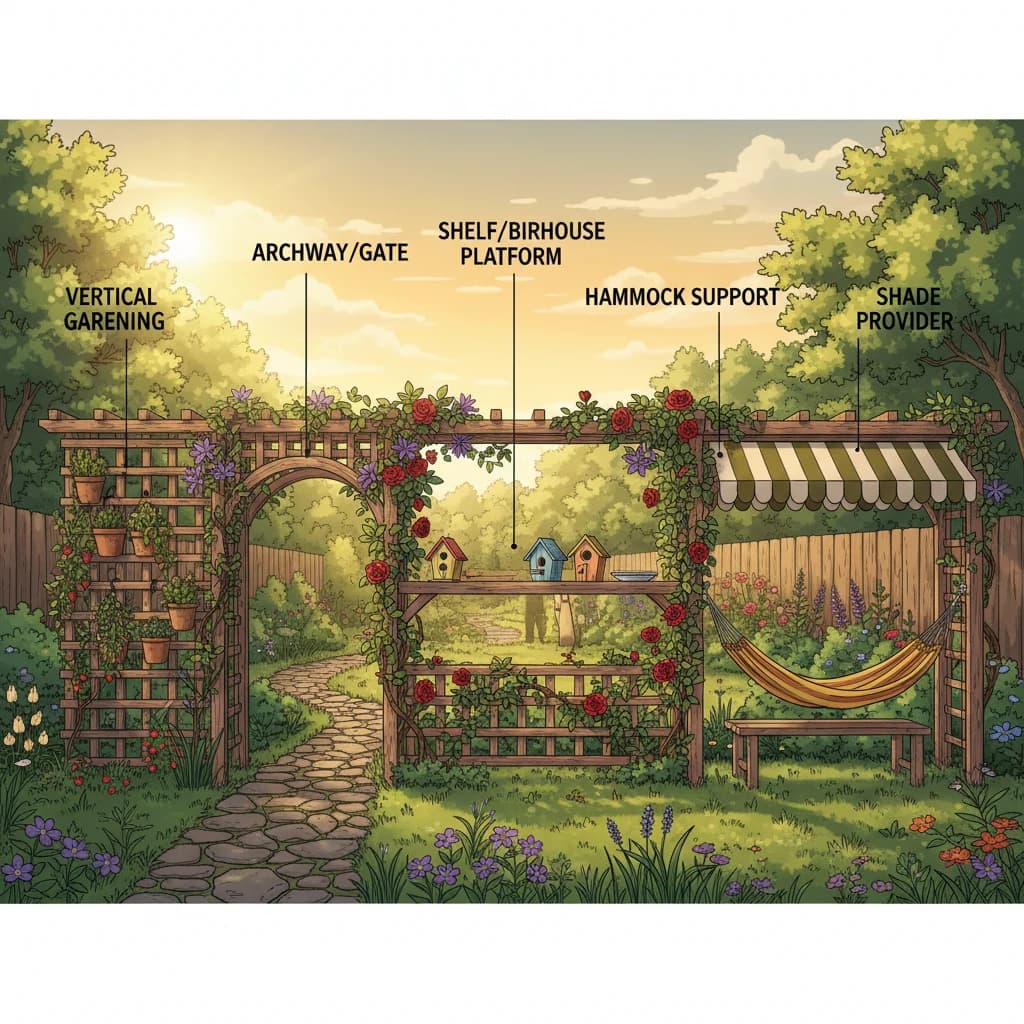
The final foundational principles, taught together because they reinforce each other: stack functions (every element does multiple jobs) and use edges and margins (the boundary between two zones is the most productive place on the site).
A garden where each element does one thing is a hobby. A garden where each element does five things is a system.
What Stacking Functions Looks Like
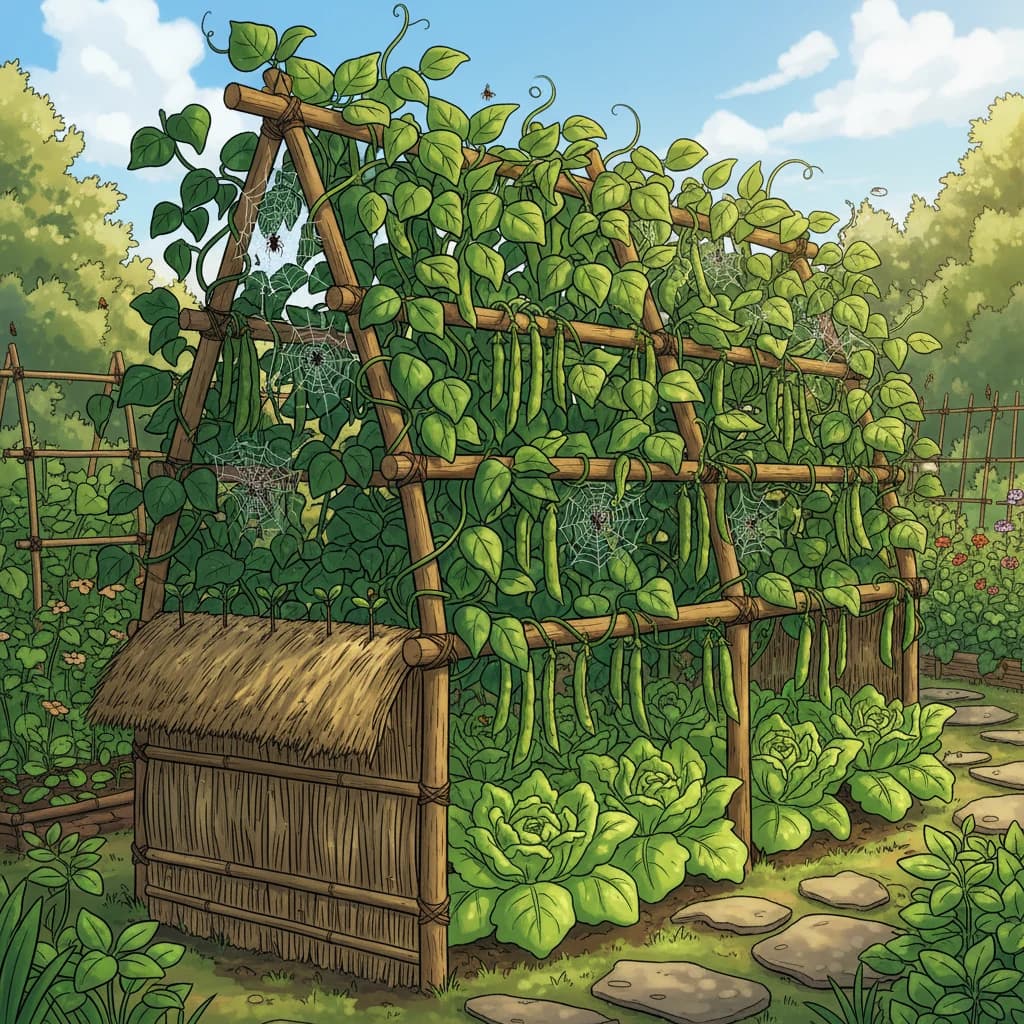
Stacking functions means designing every element so it serves at least three purposes. The classic example is a trellis:
- Function 1: Supports climbing beans.
- Function 2: Casts shade on heat-stressed lettuce growing on its north side.
- Function 3: Acts as a windbreak for tender seedlings.
- Function 4: Provides habitat for spiders that eat aphids.
- Function 5: Adds visual structure to the garden design.
A bare trellis is a bare trellis. A trellis covered in beans, shading lettuce, breaking wind, hosting predators, and shaping the visual design is a system element.
The reverse is also true — every function should be supported by multiple elements. If one source fails, the function still happens. Important functions need redundant elements supporting them.
Common Stacks
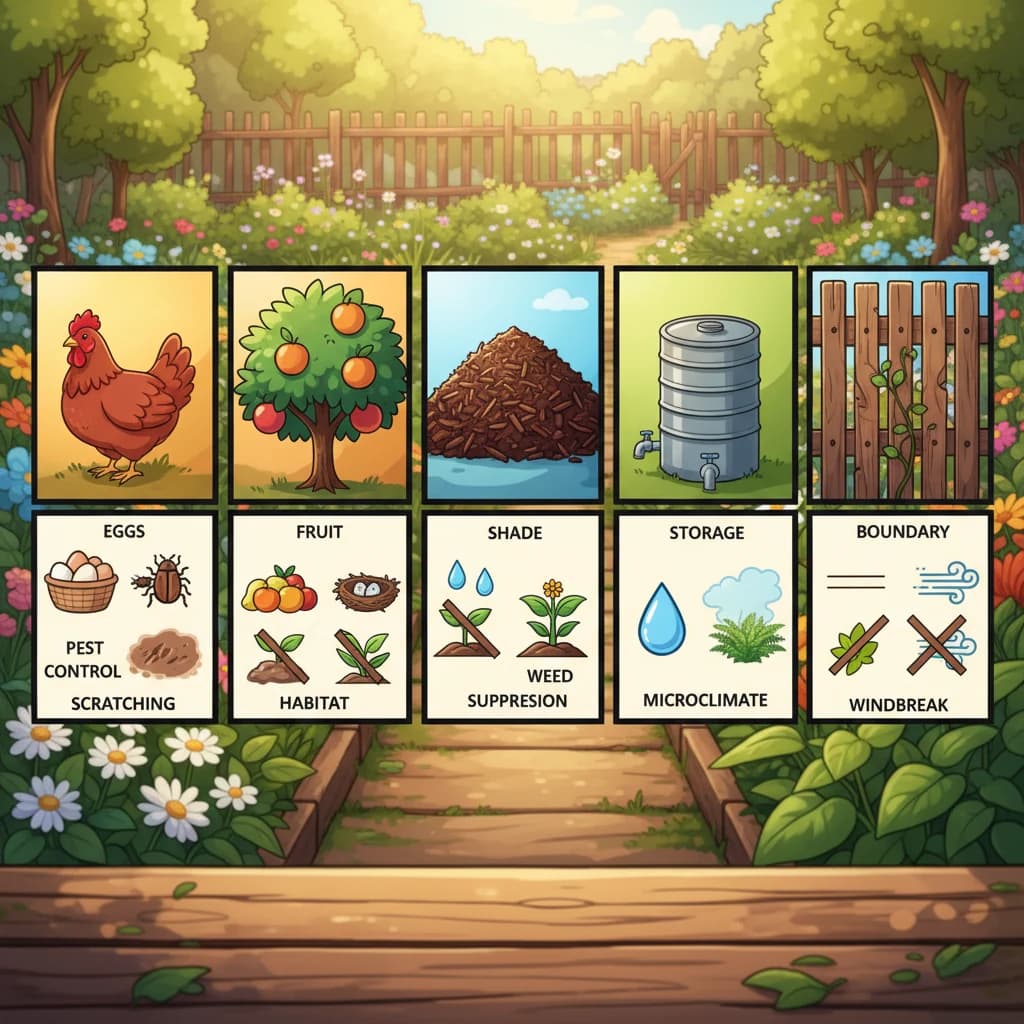
Some classic stacks worth knowing:
A chicken — egg production, pest control, weed seed eating, kitchen-scrap recycling, manure for compost, scratching to prepare beds, garden alarm system.
A fruit tree — fruit, pollinator forage when flowering, summer shade, nesting habitat, deep-rooted nutrient cycling, windbreak, deciduous winter sun-let-through, biomass when pruned.
A pond — fish or aquatic plant production, irrigation reserve, frost moderator, fire break, microclimate creator, wildlife habitat, light reflection into shaded areas.
Mulch — moisture retention, weed suppression, soil temperature buffering, slow-release fertilizer, habitat for ground-dwelling beneficial insects, soil-building biomass.
A fence — boundary marking, windbreak, climbing structure (for grapes, kiwi, espaliered fruit), animal containment, shade-cast direction control, microclimate creator.
When you design, ask: what's this element's third function? If it doesn't have one yet, can you add one without changing what it's already doing?
What Edges Are
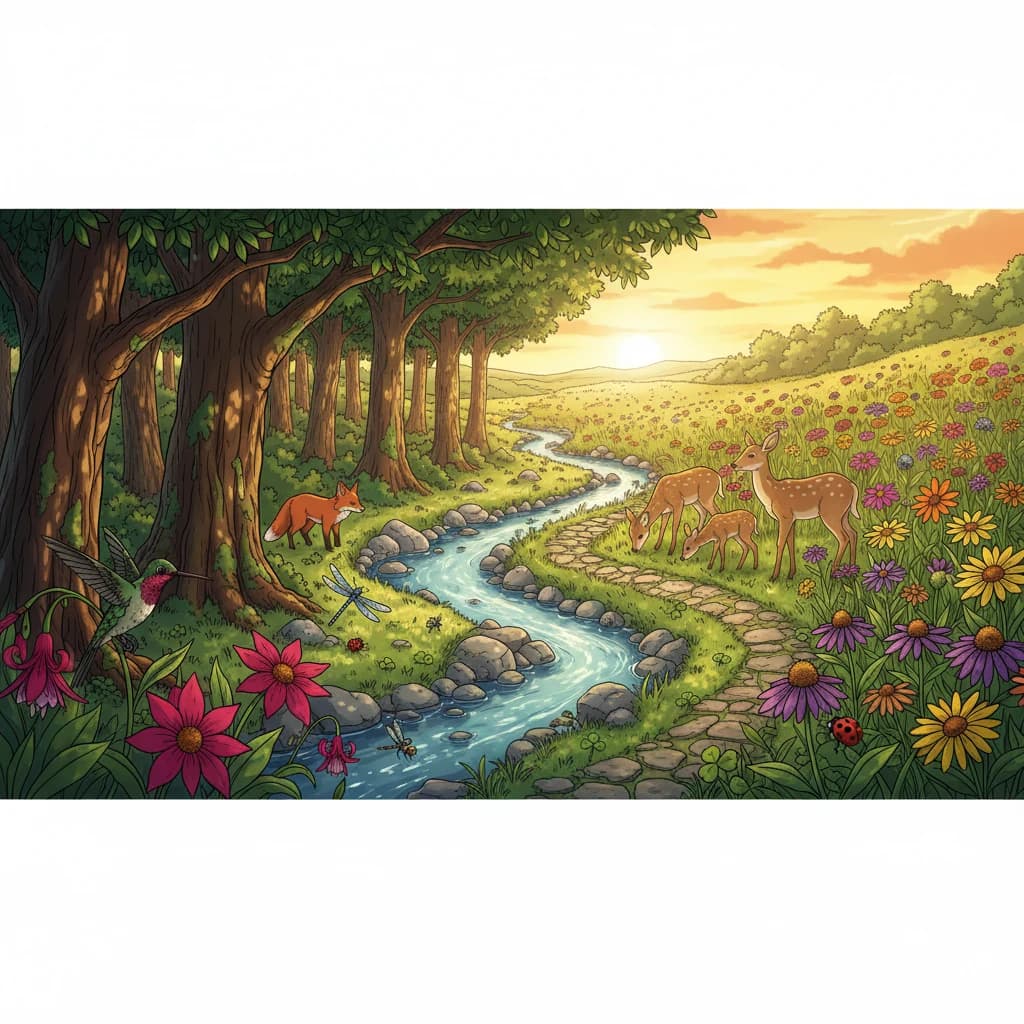
The second half of this lesson: use edges and margins. The border between two zones is almost always the most productive part of either zone.
The reason is biological. Edges have:
- Higher species diversity — plants and animals from both zones meet.
- More microclimates — sun-and-shade transitions create varied conditions.
- More resource flow — water, wind, animals all move along edges.
- Higher plant productivity — edge species often outperform the zones' interiors.
You see this everywhere in nature. The edge of a forest has more bird species than the forest interior. A pond's shore has more life than its open water. A field's margin has more diversity than its center.
Did You Know?
Ecologists call this the "edge effect." Studies show that some forest edges have 3-5x the species diversity of the same forest 100 feet in. Permaculture designers harness this deliberately — the more edges in your design, the more productivity per square foot.
Designing for More Edges

If edges are productive, more edge means more production. Good designs maximize edge length within the same area.
- Wavy bed shapes — a serpentine garden bed has more edge than a rectangular one of the same area.
- Curving paths — a winding path through a garden creates more edge between path and plants than a straight one.
- Pond shorelines — a kidney-shaped or scalloped pond has 2-3x the shoreline of a circular pond at the same surface area.
- Keyhole beds — circular beds with a pie-slice access path. All the bed perimeter is reachable; almost no walking surface needed.
- Layered plantings — a three-tier hedge (tree + shrub + groundcover) has three edges where there used to be one.
The opposite of edge maximization is monoculture — a flat, square field with one crop. Maximum interior, minimum edge, minimum productivity per square foot.
Edges Across Time and Type

Edges aren't just spatial. They show up across many dimensions:
- Spatial edges — the obvious ones. Forest/meadow, pond/land, garden/lawn.
- Temporal edges — dawn and dusk are edges between day and night. Most pollinator activity peaks at edges. Spring and fall are edges between summer and winter — peak garden activity.
- Climatic edges — the transition between two microclimates. The south wall of a stone building is a heat edge that lets you grow plants 2-3 zones warmer than your real climate.
- Vertical edges — the layer between canopy and understory in a food forest. Productive ground because both layers contribute.
A good designer sees edges in time and direction, not just on the ground. A south-facing stone wall is a year-round warm-edge that lets fig trees survive in zone 5.
What This Means For You

Stacking and edges are how a small site produces like a big one.
What to take away
- Every element should do at least 3 things. If you can't name three, redesign.
- Important functions need backup elements. Don't depend on one bee species, one predator, one anything.
- Edges are the most productive zones — sun/shade, wet/dry, garden/wild.
- Maximize edge length with curves, wavy shorelines, layered plantings.
- Edges exist in time — dawn, dusk, spring, fall — not just space.
Mistakes to skip
- Don't add elements just to add functions. A trellis you don't need is still wasted space.
- Don't over-curve every edge. Some structure is functional (paths need to be walkable). Curves are a tool, not a religion.
- Don't forget that maximizing edge has a maintenance cost — more transitions mean more places weeds can sneak in. Design to your maintenance budget.
You've completed Level 100 — Foundations. The skill unlocked is The Permaculture Mindset. The remaining 10 levels build on this foundation: how to design (Level 101), how patterns work (102), climate (103), and so on through to community-scale permaculture (110). Take a breath, then move on.
Check Your Understanding
Answer these questions to complete the lesson and see how other learners responded.
Question 1 of 3
What does "stack functions" mean in permaculture?
Enjoying the Academy?
Sign up for free to track your progress, earn skills, and get personalized planting dates.
Sign Up for Free