Limitless Growth
Lesson 2 of 40% read

Food Miles & Why Local Matters

8 min read

Food Miles & Why Local Matters

What You'll Learn

Dive deeper into the food miles problem and discover how local growing — even at a small scale — reshapes the food system.

1

The True Cost of Distance

A map showing food supply chains stretching across continents to reach a single grocery store

In the previous lesson, you learned that produce travels over 3,000 km on average. But what does that really mean? In this lesson, we'll unpack the true cost of food miles — the hidden environmental, health, and economic impacts — and show how local growing is the most direct solution.

2

What Food Miles Really Cost

An infographic showing fuel, emissions, refrigeration, waste, and nutrition loss from food miles

Every kilometer of food transport has a cost:

Carbon emissions: A single head of lettuce shipped from California to Vancouver produces approximately 0.5 kg of CO2. Multiply that by the millions of heads shipped annually and the numbers become staggering.

Nutritional decline: Produce starts losing nutrients the moment it's picked. Vitamin C degrades by 15–25% within the first 24 hours. By the time shipped produce reaches your plate (5–14 days after harvest), it may contain 30–50% less nutrition than garden-fresh equivalents.

Economic leakage: When you buy food from distant sources, your money leaves your local economy. When you grow your own or buy from local growers, that value stays in your community.

Food waste: An estimated 30–40% of food produced is wasted — much of it during transport, handling, and retail. Home-grown food has virtually zero waste.

Did You Know?

A study by the Leopold Center found that produce in the conventional food system traveled an average of 1,500 miles to reach Iowa consumers. Locally grown produce traveled an average of 45 miles. That's a 97% reduction in transportation distance.

3

The Local Growing Movement

A vibrant community garden with growers tending plots together

The local food movement isn't just about individual gardens — it's a fundamental shift in how communities relate to food:

  • Community gardens turn vacant lots into productive food sources
  • Urban farming brings food production into city centers
  • Farmers' markets connect growers directly with eaters
  • Seed libraries preserve local varieties adapted to specific climates
  • Home gardens — the foundation of all of it

Every person who grows food is part of this movement. You don't need to join an organization or make a declaration. You're already doing it.

4

The Ripple Effect of One Garden

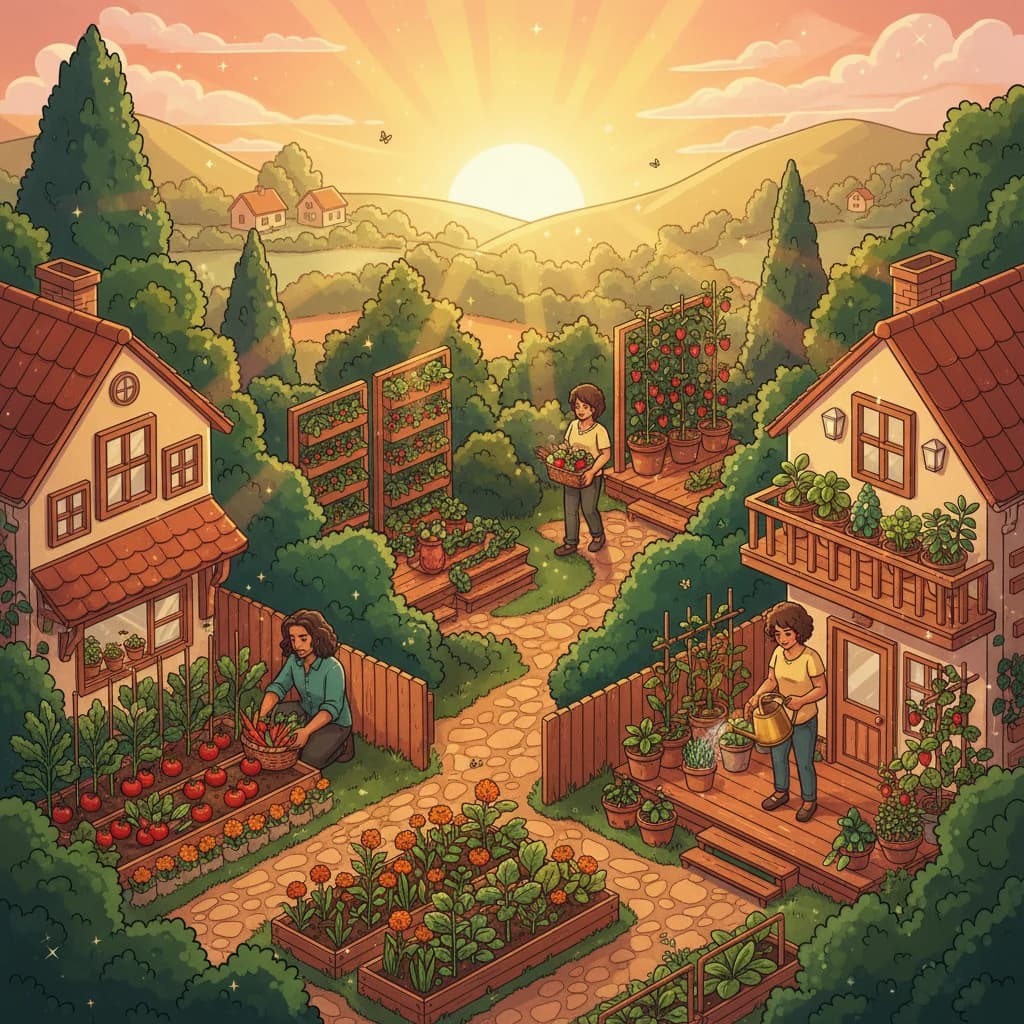
A neighborhood where one garden has inspired others — multiple homes with visible gardens

Research consistently shows that visible food gardens inspire neighbors to start their own. One garden on a street leads to three. Three lead to a community culture shift where growing food becomes normal, not unusual.

This is how movements grow — not through marketing campaigns, but through visible examples. Your garden, seen from the sidewalk, is more persuasive than any argument about sustainability.

Your garden is a demonstration. When a neighbor sees your tomato plants and says "I want to try that," you've done more for the food system than any policy paper or corporate sustainability report. Growing is contagious.

5

What This Means For You

A grower sharing their harvest with neighbors — food connecting people

Local growing reshapes everything:

  • Nutrition — home-grown food is dramatically more nutritious than shipped produce
  • Economy — your growing saves money and keeps value in your community
  • Environment — zero miles, zero packaging, zero waste
  • Community — visible gardens inspire others to start
  • You're already part of the movement — every seed you plant is a vote for a different food system

Check Your Understanding

Answer these questions to complete the lesson and see how other learners responded.

Question 1 of 3

How much nutrition can produce lose during transport to stores?

Enjoying the Academy?

Sign up for free to track your progress, earn skills, and get personalized planting dates.

Sign Up for Free